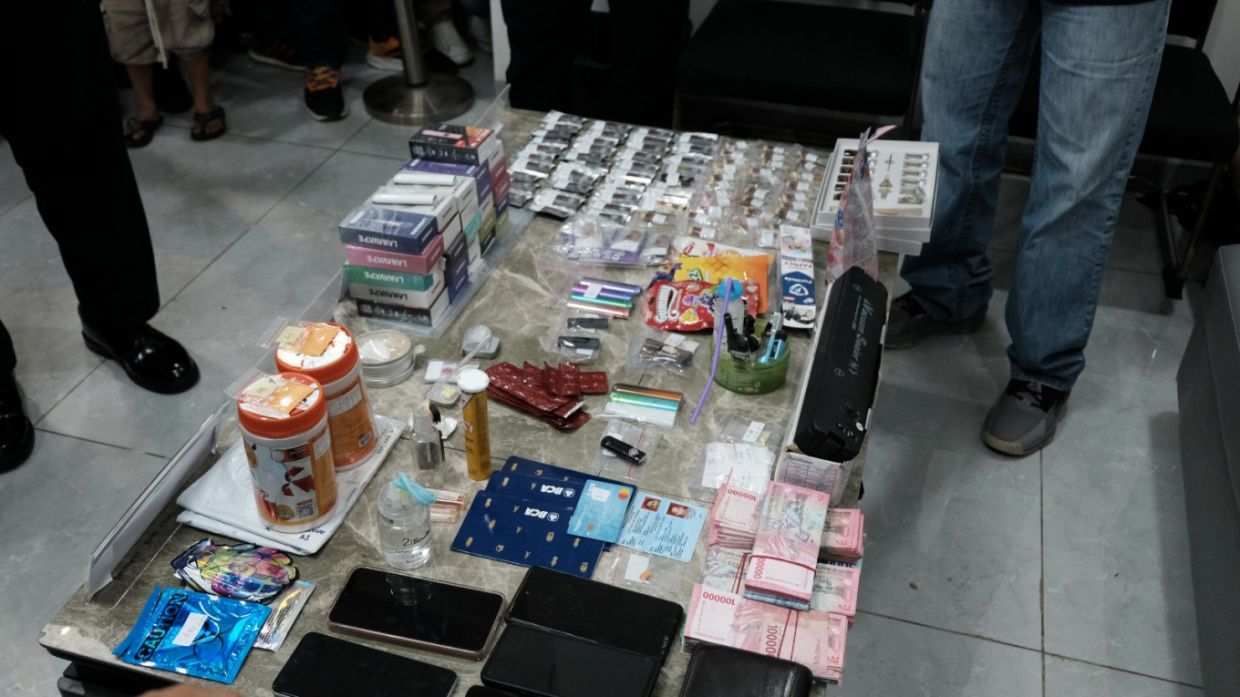
Indonesian law enforcement agencies have successfully dismantled a sophisticated cross-border narcotics operation that channelled drugs from Malaysia into the Riau Islands, resulting in six arrests and the confiscation of substantial quantities of controlled substances. The National Narcotics Agency (BNN) and Indonesia's Customs and Excise Directorate General coordinated raids across multiple locations in Batam on Wednesday and Thursday, disrupting what officials characterised as a highly organised smuggling and distribution network.
The breakthrough came when Customs officers at Soekarno-Hatta International Airport intercepted a suspicious parcel arriving from Malaysia that had been deceptively labelled as Orange Fiber Xtra food supplement. Laboratory analysis at the Customs and Excise Laboratory in Jakarta revealed the package contained MDMA, ketamine and other dangerous drugs—findings that prompted immediate collaboration between the two enforcement agencies to trace the recipients and dismantlers of the shipment across Batam.
During the investigation, authorities arrested a suspect identified as BAP who was attempting to collect the package at a Batam location on Wednesday. His subsequent testimony led officers to rapidly apprehend three additional suspects at a Baloi hotel: ED, who had allegedly placed the order; NC; and TFS. The coordinated enforcement action expanded to encompass raids on an apartment belonging to TFS in Teluk Tering and a boarding house in the Sakura Garden area of Batu Ampar, where officers discovered two further suspects, AJ and DA. At these locations, the joint team recovered dozens of electronic cigarette pods, various tablet formulations and powder narcotics hidden within the premises.
The operation revealed a deliberate pattern of deception that underscores the sophistication of this particular criminal network. The syndicate employed advanced concealment techniques, systematically disguising drugs and etomidate cartridges inside dried food packages and nutritional supplement sachets before carefully resealing them with plastic devices to create an authentic appearance. This modus operandi suggests significant experience in evading border detection systems and exploiting the volume of legitimate food trade between Malaysia and Indonesia.
Insp. Gen. Aswin Sipayung, the BNN's deputy for enforcement, detailed how the network operated across multiple stages of the supply chain, from initial smuggling through unmonitored seaports to subsequent repackaging and systematic distribution throughout the Riau Islands. The operation demonstrated textbook characteristics of an organised criminal enterprise, with clear divisions of labour and established supply chains. The discovery of numerous seized items—vehicles, scales, bongs and sealing equipment—indicates this was not a casual trafficking arrangement but rather an established commercial operation with dedicated infrastructure.
The magnitude of the seizure reflects the scale of the suspected distribution network. Authorities recovered more than one kilogramme of MDMA, 50 grammes of methamphetamine, over 25 grammes of ketamine powder, 170 vape cartridges containing etomidate, 12 vials of pure etomidate totalling 226 grammes, 86 Happy Five tablets, 10 ecstasy pills and 88 vape devices. Additionally, officers confiscated four vehicles including a Toyota Alphard van, a Toyota Agya hatchback and a Chery SUV, along with two motorcycles, suggesting the operation maintained dedicated logistics assets. Police also recovered paraphernalia including nine bongs and three plastic sealing devices, supporting the narrative of a professional-grade distribution operation.
A separate enforcement action at Batam Centre International Ferry Terminal highlighted the persistence of Malaysian trafficking attempts. Customs officers intercepted a Malaysian passenger identified as PS attempting to smuggle 48 etomidate-filled cartridges from Stulang Laut International Ferry Terminal in Johor Bahru. The timing and nature of this interception suggests Malaysian actors continued attempting drug movements even as the primary network was being dismantled, indicating either a broader ecosystem of smugglers or contingency efforts by individuals connected to the targeted syndicate.
For Malaysian readers and policymakers, the case underscores the ongoing vulnerability of the Malaysia-Indonesia border to organised drug trafficking networks. The ease with which Malaysian suppliers apparently arranged shipments through air cargo and ferry terminals points to gaps in interdiction capabilities on both sides of the border. The use of food sector camouflage and sophisticated repackaging represents an evolution in trafficking techniques that demands enhanced intelligence sharing and coordinated border protocols between the two nations.
The investigation remains incomplete, as Indonesian authorities continue hunting two Malaysian nationals identified as SL and WKC, suspected of being the primary suppliers for the entire network. These individuals have been formally placed on wanted lists, indicating authorities view them as orchestrators rather than mere participants. Their location and operational base remain unknown, suggesting the possibility of organised trafficking infrastructure existing within Malaysia that extends beyond this single syndicate.
From a public health perspective, Batam Customs head Agung Widodo noted that the enforcement action potentially protected some 6,770 people from drug consumption and prevented hypothetical state healthcare rehabilitation costs estimated at Rp10.8 billion, or approximately US$599,000. This calculation reflects Indonesia's systematic approach to quantifying the social and economic benefits of narcotics interdiction. The numbers underscore why both Malaysia and Indonesia maintain aggressive enforcement postures against transnational drug trafficking.
The arrested suspects face severe consequences under Indonesia's stringent narcotics legislation. They are being prosecuted under multiple provisions of Law No. 35/2009 on Narcotics, with potential sentences ranging from five years imprisonment to the death penalty, alongside maximum fines of Rp10 billion. These harsh penalties reflect both nations' policy stance on combating drug trafficking, particularly operations involving significant quantities and cross-border organisation. The severity of potential sentences aims to deter participation in transnational smuggling networks.
Beyond the immediate enforcement action, this operation demonstrates how Malaysian actors continue to feature prominently in regional drug trafficking networks. The pattern of Malaysian suppliers arranging shipments to Indonesia for repackaging and distribution reflects broader Southeast Asian trafficking trends, where Malaysia's geographic position and transport infrastructure have made it a convenient origin point for drugs destined for other regional markets. Ongoing cooperation between Malaysian and Indonesian enforcement agencies remains critical for disrupting such networks at their source rather than merely intercepting shipments at borders or within Indonesia.

