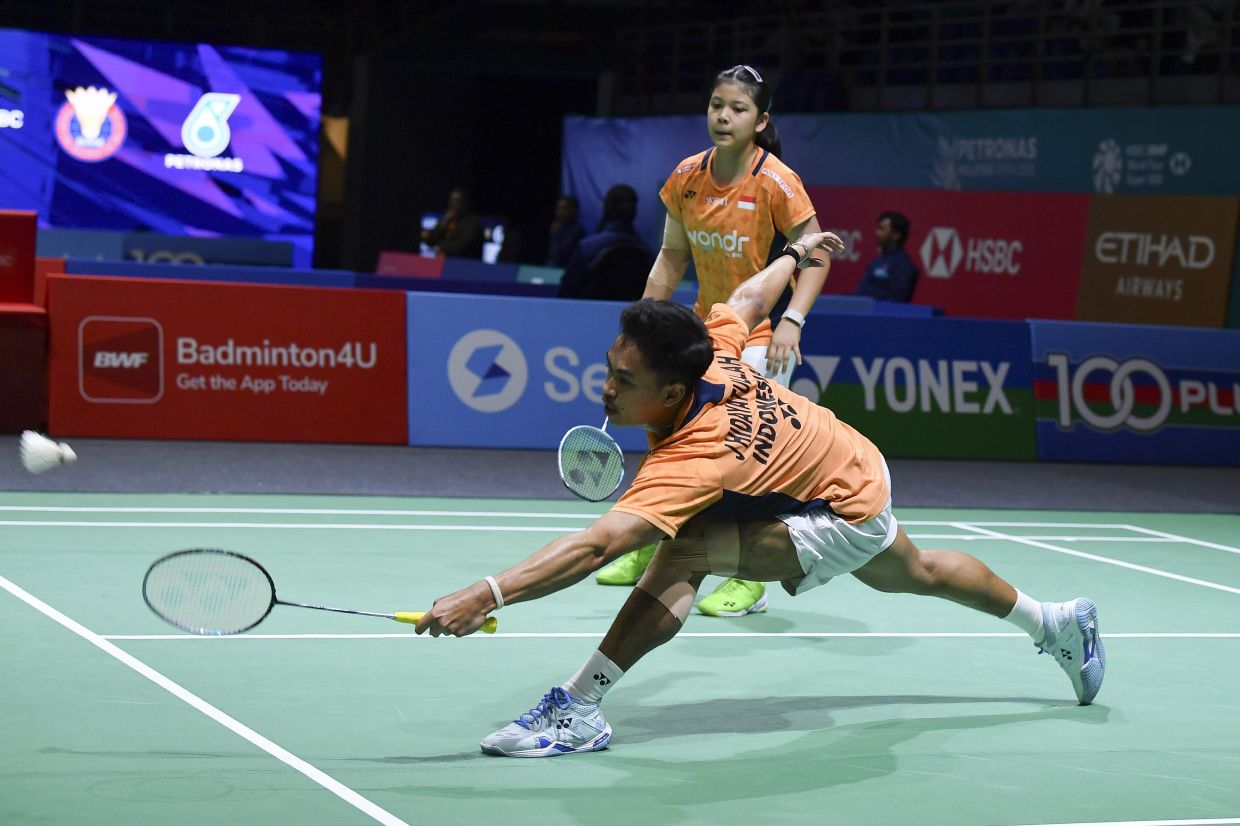
The badminton world faces fresh integrity concerns as two Indonesian mixed doubles pairs have withdrawn from the World Championships, casting a shadow over the sport's credibility just as major competition looms. The Indonesian Badminton Association (PBSI) announced the removal of Jafar Hidayatullah-Felisha Pasaribu, ranked 13th globally in the mixed doubles category, along with Adnan Maulana-Indah Cahya Sari Jamil from its squad. Though the federation framed the decision as routine squad adjustments, the timing coincides with an active investigation by the Badminton World Federation (BWF) into suspected match-fixing allegations that reportedly ensnare numerous Indonesian competitors.
Indonesia's badminton programme, long one of the sport's most successful at the international level, now faces internal turbulence that threatens both its reputation and immediate competitive prospects. The PBSI has maintained official silence on the precise grounds for the withdrawals, merely characterising them as part of administrative restructuring intended to align all athlete participation with prescribed international tournament regulations. This measured language appears designed to sidestep amplifying speculation, yet the near-simultaneous investigations and squad changes have inevitably fuelled public conjecture about potential wrongdoing. The reticence from federation officials reflects the delicate position of Indonesian badminton, which has historically dominated the sport but must now navigate institutional scandal that could undermine decades of excellence.
The BWF's independent judicial proceedings represent a serious escalation in the badminton integrity crisis. PBSI secretary-general Ricky Soebagdja released a statement acknowledging that the federation recognises the federation-wide probe examining alleged breaches of competition integrity rules, whilst simultaneously pledging full cooperation with the BWF's investigative mechanisms. This deferential posture suggests that Indonesian badminton leadership recognises the gravity of the situation and the paramount importance of demonstrating institutional commitment to clean sport. The association has deliberately avoided commenting further on specifics, explicitly urging all stakeholders—media, fans, and affiliated parties—to refrain from premature conclusions pending the formal judgment from the BWF Independent Hearing Panel.
The withdrawal timeline itself provides clues about the investigation's progression. Adnan and Indah withdrew from the World Championships on July 13, suggesting they may have been among the first to receive formal notification regarding the inquiry or preliminary findings. Jafar and Felisha followed suit sixteen days later on July 29, indicating either a staged investigation process or sequential notifications as the BWF examined different competitive relationships and match records. This staggered approach is consistent with rigorous investigative methodology that requires meticulous examination of historical data, betting patterns, and player communications before drawing conclusions. For Malaysian badminton observers, the investigation serves as a cautionary tale about the vulnerability of Southeast Asian badminton to manipulation, given the region's prominence in the sport and existing networks of competitive players.
The implications for Indonesian badminton extend beyond these immediate withdrawals. The scandal arrives at a particularly sensitive moment for the nation's badminton programme, which has invested substantially in player development and international infrastructure. A widespread integrity crisis could jeopardise Indonesia's standing within global badminton governance and potentially trigger punitive measures from the BWF affecting future tournament allocations, coaching accreditation, or competitive sanctions. International sponsors and broadcasters may also reassess their commitment to Indonesian badminton events if the sport's fundamental credibility appears compromised.
Despite the controversy, Indonesia retains meaningful representation at the World Championships through replacement pairings. Amri Syahnawi and Nita Violina Marwah will represent the nation in mixed doubles, while Rehan Kusharjanto and Gloria Widjaja, promoted from the reserve list, add depth to the delegation. This continuity ensures that the nation maintains competitive presence even as disciplinary processes unfold, preventing the investigation from completely derailing Indonesia's championship aspirations. The promotion of reserve athletes demonstrates that the PBSI has contingency planning in place and can manage squad transitions without entirely sacrificing competitive performance.
The broader regional dimension of this investigation warrants attention from the Malaysian badminton community. Southeast Asia's badminton ecosystem comprises interconnected professional circuits, player movements, coaching partnerships, and sponsorship networks that span multiple nations. If match-fixing conspiracies operate within Indonesian badminton, they potentially implicate players, coaches, or match officials from neighbouring countries including Malaysia. The investigative scope and any eventual sanctions could therefore have ripple effects throughout regional badminton, establishing precedents for how the BWF addresses integrity violations and potentially triggering parallel investigations elsewhere.
For badminton governance at the international level, the investigation underscores the persistent challenges surrounding match-fixing prevention in sport. Despite established integrity codes, disciplinary frameworks, and monitoring systems, sophisticated match-fixing networks continue to exploit weaknesses in detection and enforcement. The badminton community, like other professional sports, faces determined actors who view competitive manipulation as a profitable enterprise. The BWF's response, including these high-profile investigations and visible support from national associations like the PBSI, sends a necessary message that integrity violations carry serious consequences.
The investigation also raises questions about transparency and communication going forward. The PBSI's decision to avoid detailed public disclosure, while understandable from a legal perspective, creates a vacuum that encourages speculation and undermines public confidence. Malaysian and regional media will naturally scrutinise the eventual BWF findings and any penalties imposed, using these details to evaluate whether the badminton authorities have genuinely tackled corruption or merely managed its public visibility. The credibility of any subsequent statement or decision announcement depends partly on the perceived rigor of the investigative process and the thoroughness with which the BWF Independent Hearing Panel has examined evidence.

