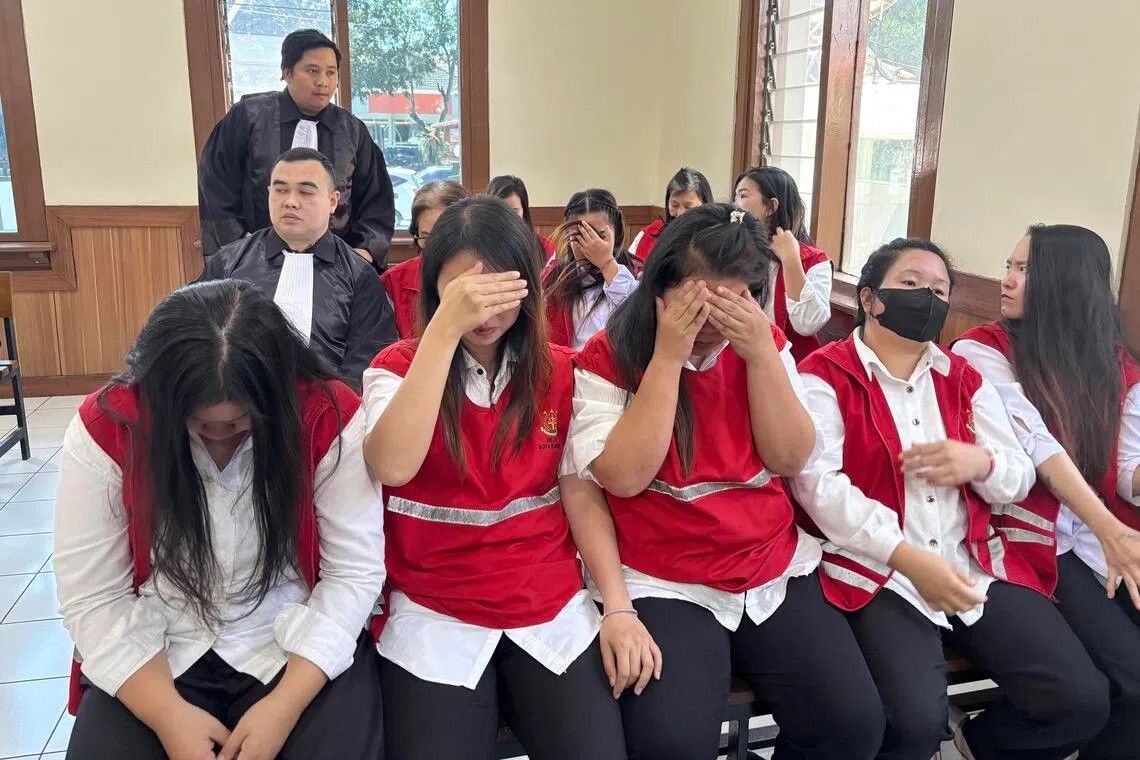
An Indonesian court has concluded a significant human trafficking case by convicting all 19 members of a baby-smuggling network, with the operation's ringleader receiving a seven-year prison sentence. The Bandung District Court in West Java delivered its verdict on Tuesday, marking the conclusion of a trial that has drawn international attention due to the involvement of Singaporean buyers among the alleged customers. The conviction represents a major victory for Indonesian law enforcement in combating one of Southeast Asia's most heinous forms of exploitation, though the sentences imposed fell short of prosecution demands in several instances.
Lie Siu Luan, a 70-year-old woman operating under aliases Popo and Lily, stood at the centre of the criminal operation, orchestrating the recruitment of infants, manufacturing fraudulent adoption paperwork, and facilitating international transport of the victims. Judge Gatot Ardian Agustriono, presiding over the three-judge panel, formally declared Lie guilty of recruiting, harbouring, sending, transferring, and receiving persons for exploitation within Indonesian territory. The judge's pronouncement underscored the systematic nature of the enterprise, which prosecutors characterised as a sophisticated network rather than opportunistic trafficking. However, Lie's sentence of seven years fell two years short of the prosecution's request for a decade-long prison term, a discrepancy that reflects ongoing debates within Indonesian justice circles about appropriate penalties for human trafficking convictions.
The syndicate's operations spanned approximately two years, from 2023 through early 2025, generating substantial illicit revenue through the sale of at least 34 infants. Prosecutors established that individual babies commanded prices between 200 and 250 million rupiah, equivalent to approximately S$18,110 per child. The financial dimensions of the case underscore how human trafficking represents not merely a crime against vulnerable individuals but a lucrative criminal enterprise that attracts sophisticated organisational structures. The involvement of Singapore as a destination market illuminates how transnational networks exploit regulatory gaps and economic disparities between neighbouring countries, creating demand in wealthier territories and supply networks in less affluent regions.
At minimum, 12 of the trafficked infants were transported to Singapore, establishing the cross-border character of the operation and triggering international cooperation in the investigation. This regional dimension distinguishes the case from purely domestic trafficking matters and suggests the need for enhanced coordination between Indonesian and Singaporean authorities to prevent similar operations. The fact that infants were being actively marketed and sold in Singapore indicates potential gaps in adoption screening processes or regulatory oversight in the destination country, raising questions about whether Singapore's safeguards adequately prevent participation in transnational trafficking schemes.
Astri Fitrinika, identified as the syndicate's principal recruiter, received a sentence of six years and seven months, matching the punishment meted to fellow recruiters Djaka Hamdani and Elin Marlina. These individuals bore direct responsibility for identifying infants and their families, then facilitating the separation necessary for the trafficking operation to function. The differentiation between the mastermind's seven-year sentence and the recruiters' slightly lighter terms of six years seven months reflects judicial recognition of their respective roles in the hierarchy, though the distinctions remain marginal. Lai Su Hua, tasked with fabricating official adoption documents, also received six years and seven months, emphasising that technical specialists enabling the scheme face serious consequences alongside those with more visible operational roles.
The remaining 14 defendants, primarily women employed as caregivers for the infants prior to their transfer overseas, were convicted and sentenced to three years and four months imprisonment. These individuals ostensibly provided custodial functions during the vulnerable period when babies were separated from biological families but not yet transferred to purchasing families abroad. The lighter sentences for caregivers compared to orchestrators and recruiters suggests the court recognised the comparative disadvantage these defendants may have faced within the hierarchy, though it does not diminish their legal culpability in facilitating human trafficking. The demographic composition of the defendants—18 women alongside one man—reflects patterns common in trafficking networks, where women are disproportionately represented both as victims and as operators of lower-tier functions.
During investigation and judicial proceedings, both Lie and Astri acknowledged guilt regarding most allegations against them, yet maintained that no children were forcibly abducted and that all infants were surrendered voluntarily by parents. This defensive posture attempts to recharacterise commercial trafficking as consensual family arrangement, a narrative that Indonesian courts ultimately rejected. The claim that children were treated well and suffered no abuse attempts to minimise the fundamental exploitation occurring through the commodification of human beings, particularly vulnerable infants incapable of consent. Such arguments, while technically addressing physical welfare, fail to address the core moral and legal violations inherent in separating children from families and selling them internationally.
The case exposes critical vulnerabilities in infant protection systems across Southeast Asia. Indonesia's substantial population of economically disadvantaged families creates supply-side vulnerability, while neighbouring territories' affluent populations and permissive adoption frameworks generate demand. The operation's success in trafficking dozens of infants across international borders before detection indicates that monitoring mechanisms along adoption pipelines remain inadequate. Regulatory authorities in both Indonesia and importing countries failed to identify red flags associated with bulk infant transfers, fraudulent documentation, and the involvement of unauthorised intermediaries.
The conviction of all 19 defendants and the severity of sentences imposed—ranging from three to seven years—represent significant deterrent messaging to potential trafficking networks. However, the prosecution's inability to secure the full sentences it requested suggests that Indonesian courts may view human trafficking offences as serious but not catastrophically serious within the hierarchy of crimes. For regional policymakers, the case underscores the necessity for bilateral and multilateral agreements enhancing transparency in international adoptions, improving vetting of prospective parents, and strengthening coordination between law enforcement agencies. The human cost of this particular syndicate—dozens of infants separated from biological families and placed with unknown buyers in foreign countries—validates the urgency of implementing more robust protective frameworks before additional networks operate with similar impunity.

