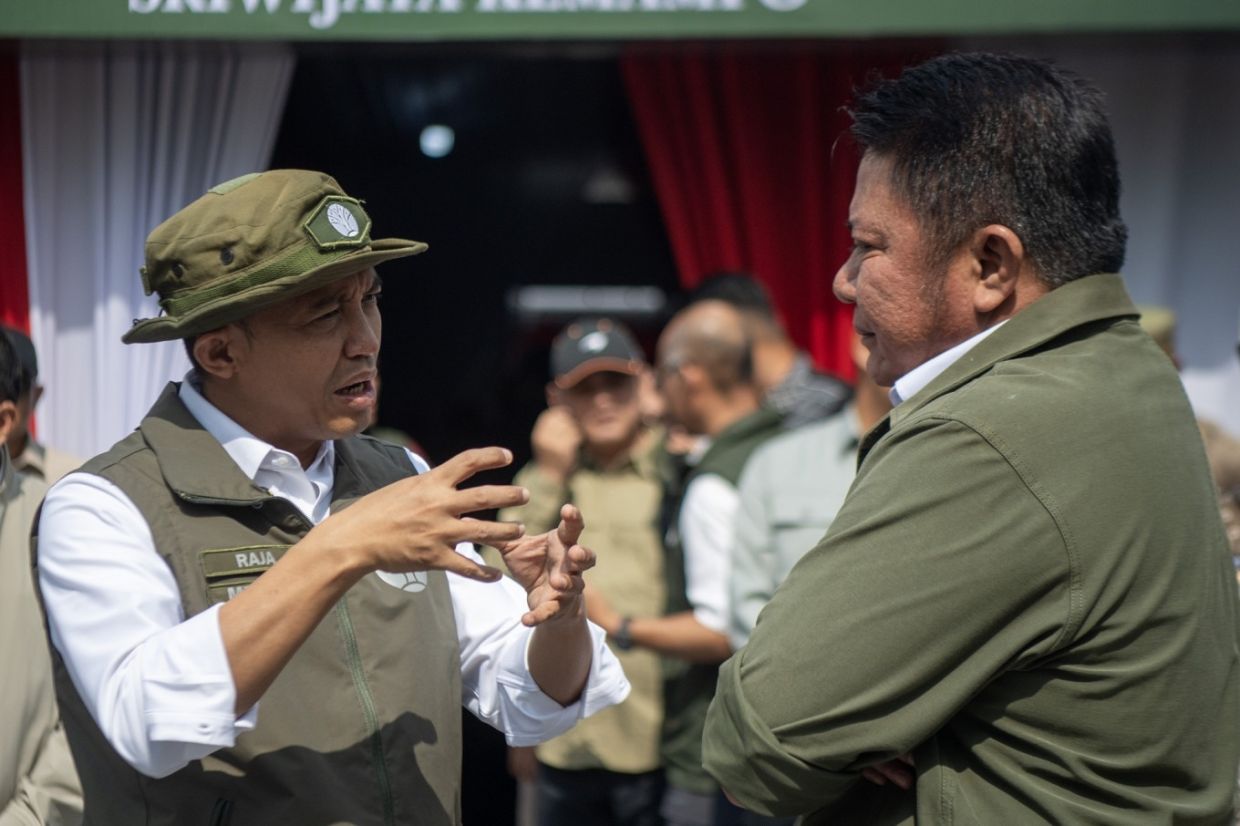
Indonesia's anti-corruption watchdog has reopened its investigation into allegations of bribery involving Forestry Minister Raja Juli Antoni, focusing on whether the minister has truthfully accounted for all illicit money allegedly passed to him by a regional administrator seeking regulatory favours. The Corruption Eradication Commission (KPK) suspects discrepancies between the amount of illicit funds the minister initially reported and the total sum he actually received from Suhardiman Amby, the regent of Kuantan Singingi in Riau province, according to a statement by KPK spokesperson Budi Prasetyo on Thursday, August 6.
The alleged improper transfer occurred during an official meeting on June 2 between representatives of the Forestry Ministry and the Kuantan Singingi regional administration. Following this encounter, Suhardiman purportedly presented Raja Juli with an envelope containing S$14,000 in Singaporean currency, equivalent to approximately US$10,919. Beyond the minister, other forestry ministry officials allegedly received additional payments totalling S$12,500 from various Kuantan Singingi officials involved in the transaction. The KPK's forensic accountants are currently examining the gap between the documented amount transferred and what Raja Juli claims to have returned, probing whether the minister's official account aligns with physical evidence and witness testimony.
Raja Juli's version of events, which he reported to the KPK on July 3, differs substantially from the commission's findings. The minister asserted that he rejected Suhardiman's attempted bribe and subsequently surrendered the envelope at Kuantan Singingi Police headquarters on June 12—a full ten days after the initial meeting. He maintained that he neither requested nor was entitled to accept such a payment. However, this timeline creates procedural complications under Indonesian law, which mandates that public officials receiving improper gifts must report them to the KPK within thirty days, not to the police. The discrepancy between Raja Juli's stated actions and the investigation's emerging evidence suggests potential violation of these reporting requirements, which could independently constitute a criminal offence.
Investigators are probing whether the alleged kickbacks were intended as inducement for facilitating a controversial proposal from the Kuantan Singingi administration to reclassify approximately 1,800 hectares of limited production forest (HPT) within the regency's territory. The Forestry Ministry wields considerable power to determine forest classification status, deciding whether land remains under strict environmental protection or becomes available for industrial and settlement purposes. Such reclassification decisions carry enormous economic implications for regional development projects and represent precisely the type of ministerial prerogative that creates opportunities for corruption in resource-rich regions.
The investigation has also identified a pattern of repeated contact between the two officials prior to the June meeting. According to Budi Prasetyo, Raja Juli and Suhardiman met on at least three separate occasions during April, May, and June, though investigators have not yet established whether these meetings were coordinated discussions building toward the eventual monetary transfer or represented coincidental administrative interactions. The frequency and timing of these encounters suggest a developing relationship that warranted particular scrutiny from the anticorruption body as it constructs a timeline of alleged improper influence.
The underlying corruption case extends beyond Raja Juli. Suhardiman was arrested and formally designated a suspect by the KPK in late June on separate allegations of soliciting kickbacks from Zulkarnain, the regency's secretary, in exchange for approving Zulkarnain's appointment to his administrative position. This internal bribery scheme demonstrates a broader pattern of alleged corruption within Kuantan Singingi's governance structure. The KPK subsequently expanded its investigation to encompass the alleged improper payments directed toward the Forestry Ministry regarding forest conversion permits, thereby interconnecting what initially appeared as separate fraud schemes into a comprehensive corruption network.
Political ramifications have intensified as the scandal unfolds. Raja Juli's position as both Forestry Minister and secretary-general of the Indonesian Solidarity Party (PSI) amplifies public concern about ministerial integrity and party leadership standards. The House of Representatives Commission IV, responsible for overseeing forestry planning and environmental policy, demanded clarification from the minister regarding the bribery allegations. However, Raja Juli conspicuously failed to attend a scheduled meeting with Commission IV on July 14, with Commission IV deputy chair Alex Indra Lukman from the Indonesian Democratic Party of Struggle (PDI-P) explaining the minister was observing umrah, the Islamic minor pilgrimage. This absence during a critical moment of parliamentary accountability drew criticism from lawmakers and contributed to mounting pressure on the minister's tenure.
Suhardiman's affiliation with President Prabowo Subianto's Gerindra Party adds a dimension of political sensitivity to the investigation. The case raises questions about whether the ruling coalition adequately vets regional party officials for corruption risk before they ascend to administrative authority. In Indonesian politics, where regional strongmen frequently coordinate with central party structures, such scandals can reverberate across broader networks and implicate party leadership credibility. The timing of the investigation, occurring months into the Prabowo administration, tests the government's demonstrated commitment to anticorruption enforcement against figures within its own political coalition.
The Forestry Ministry has issued public statements reaffirming its commitment to cooperate fully with the KPK's ongoing investigation and pledging to provide any requested documentation or information. The ministry defended its decision-making process by emphasising that it has not approved any reclassification requests from Kuantan Singingi to date, noting that the three most recent proposals remain under review or have been formally rejected. This defensive posture suggests ministry leadership is attempting to insulate the broader bureaucratic apparatus from reputational damage while isolating Raja Juli's alleged misconduct as the actions of an individual official rather than systemic institutional failure.
Under Indonesian criminal law, public officials convicted of accepting illicit gifts face severe penalties including up to twenty years imprisonment and fines reaching Rp 1 billion (approximately US$55,867). These substantial sanctions reflect the legislative determination to deter corruption among government functionaries with access to significant discretionary authority. For Malaysia and other Southeast Asian nations with similar resource-dependent economies and comparable corruption vulnerabilities, the Kuantan Singingi case illustrates how forest policy decisions—ostensibly technical administrative matters—become targets for bribery schemes when regulatory authority concentrates in ministerial hands without adequate oversight mechanisms. The investigation demonstrates that regional natural resource governance remains a critical corruption risk area requiring institutional reform, transparent decision-making frameworks, and vigilant anticorruption enforcement across the region.

