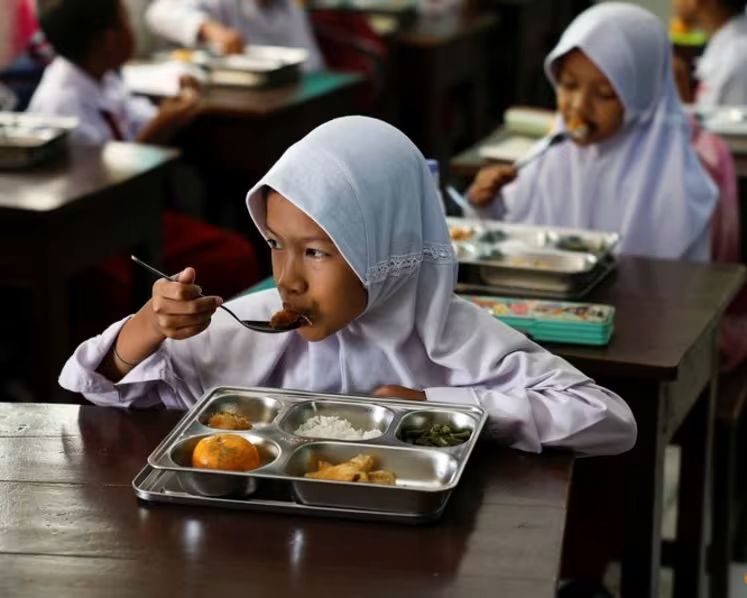
President Prabowo Subianto's ambitious free meals initiative—one of his most prominent campaign commitments—has descended into fresh institutional chaos following the resignation of National Nutrition Agency chief Nanik Sudaryati Deyang on health grounds. Her departure represents the second abrupt leadership transition at the embattled agency in barely more than a month, signalling deepening operational instability at a programme designed to nourish millions of Indonesians and costing billions in public funds.
Nanik, who assumed leadership of the National Nutrition Agency only since June, announced her departure through a Facebook statement, attributing her decision to medical advice. She disclosed that her physician had warned of arterial blockage stemming from extreme work-related stress, compelling her to seek treatment abroad. In framing her exit, Nanik emphasised that President Prabowo had consented to her resignation on compassionate grounds, maintaining a diplomatic tone that underscored the programme's continued political sensitivity at the highest levels of government.
The resignation unfolds against a backdrop of cascading difficulties besetting the free meals scheme since its January 2025 rollout. Beyond logistical bottlenecks and inconsistent food quality, the programme has been marred by at least several episodes of mass food poisoning, raising public health concerns and damaging public confidence. These tangible failures represent far more than administrative missteps; they strike at the credibility of a flagship presidential initiative and expose potential gaps in food safety oversight and supply chain management across an extraordinarily vast distribution network.
Nanik's departure is inextricably linked to the tumultuous circumstances surrounding her predecessor. That official was dismissed by Prabowo last month and subsequently arrested on corruption charges directly tied to the multibillion-dollar programme. The previous leadership change, therefore, was not voluntary but constituted a dramatic removal coupled with criminal prosecution, reflecting allegations of malfeasance at the institutional centre of a high-visibility government project. This pattern of instability inevitably hampers long-term strategic planning and operational consistency.
The financial pressures compounding these leadership challenges are equally severe. The agency announced a second round of budget reductions, slashing allocations from 268 trillion rupiah to 229 trillion rupiah—equivalent to USD 12.79 billion—for 2026. This reduction represents a staggering 106 trillion rupiah shortfall against the original budgetary provision of 335 trillion rupiah. Such dramatic downward revisions signal either miscalculation in initial planning or shifting fiscal priorities within government, and they occur while further cuts remain technically possible pending additional reviews. These reductions directly undermine the programme's original scope and ambition.
The scale of the programme underscores what is at stake. Originally conceived to reach 83 million Indonesians encompassing schoolchildren, infants, and pregnant women, the initiative targets some of Indonesia's most nutritionally vulnerable populations. Before the latest budgetary reductions, the agency reported having already delivered meals to 62.5 million individuals. The phased contraction of resources threatens to exclude progressively larger cohorts from the nutrition support Prabowo pledged to provide, potentially creating a credibility gap between campaign rhetoric and practical delivery.
Parallel to the budgetary constraints runs a criminal investigation into programme operations that has already claimed one agency head. This investigative dimension introduces legal jeopardy and reputational risk that extend beyond mere operational difficulty. Corruption allegations, if substantiated, would fundamentally delegitimise the programme in public perception and potentially spark broader questions about financial governance across Prabowo's administration. Such concerns resonate particularly in Southeast Asia, where citizens across the region remain acutely sensitive to misappropriation of public resources intended for vulnerable groups.
Nanik's statement regarding Prabowo's contemplation of establishing a supervisory board suggests the presidency recognises the need for enhanced institutional oversight. She indicated she had been asked to lead such a body, implying a lateral rather than complete exit from government involvement with the programme. This manoeuvre may represent an attempt to salvage both her involvement and the initiative's credibility through restructured governance, though whether such a mechanism can meaningfully address systemic problems remains uncertain. The announcement provides no clarity regarding who will assume operational leadership of the agency itself.
Interestingly, Nanik explicitly rejected characterisations of the programme as politically motivated, asserting instead that it constitutes a legitimate nutritional intervention targeting child health outcomes. This defensive posture suggests the initiative has become subject to political weaponisation and public scepticism that extends beyond technical performance issues. In Indonesia's charged political environment, opposition parties and critics have apparently framed the programme as serving electoral rather than humanitarian purposes, a perception that institutional crises and financial retrenchment have evidently reinforced.
The programme's trajectory carries implications extending well beyond Jakarta's immediate political preoccupations. Throughout Southeast Asia, governments have launched competing nutrition and social welfare schemes, and Indonesia's stumbling implementation provides cautionary lessons regarding the complexities of scaling massive feeding initiatives. Sustainable delivery across a geographically dispersed, economically heterogeneous population of 270 million demands robust supply chain architecture, incorruptible institutional cultures, and realistic financial projections—deficiencies now visibly apparent in the Indonesian model.
As the agency searches for Nanik's replacement—whom she indicated would be drawn from her own junior staff—fundamental questions persist about the programme's future trajectory. Will further budget reductions materialise as threatened? Can a replacement leadership figure, likely lacking the seniority typically expected for such high-stakes positions, command the political authority and operational expertise to stabilise operations? Will the corruption investigation expand to ensnare additional agency officials, perpetuating an atmosphere of institutional mistrust? These uncertainties compound the original implementation challenges that prompted the investigation and leadership transitions in the first place.
The Indonesian free meals programme exemplifies how well-intentioned social initiatives can deteriorate when foundational planning proves inadequate, oversight mechanisms prove insufficient, and financial frameworks prove unstable. For Malaysia and other regional governments contemplating comparable schemes, the Indonesian experience underscores the imperative of establishing robust governance structures, realistic budgeting discipline, and credible anti-corruption mechanisms from inception rather than attempting retrofitted corrections after institutional failures become public.

