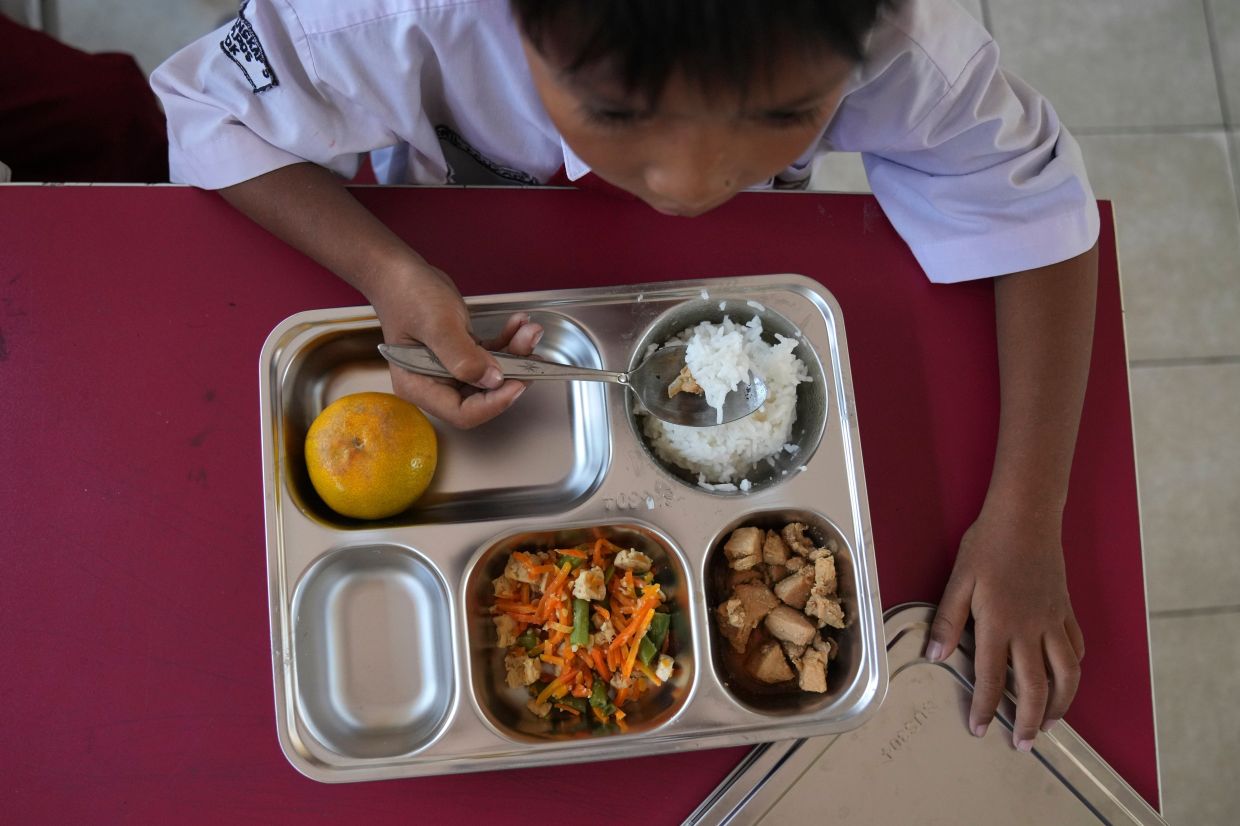
President Prabowo Subianto's ambitious free meals programme, intended to combat malnutrition and poverty across Indonesia, faces mounting scrutiny as anti-corruption organisations call for its suspension and a comprehensive overhaul of the scheme's oversight mechanisms. Indonesia Corruption Watch, a prominent civil society group advocating for institutional reform and clean governance, has gone further than previous critics by demanding the outright dissolution of the National Nutrition Agency (BGN), the body responsible for administering what has become one of the world's largest government feeding initiatives.
The mounting pressure follows the government's announcement of a corruption investigation into Dadan Hindayana, the former head of BGN, who was dismissed just days before authorities initiated formal proceedings against him. The agency he led oversees a programme budgeted at approximately 268 trillion rupiah—roughly US$15 billion—and currently provides meals to more than 60 million Indonesians. Beyond Hindayana's detention, four other individuals have been apprehended in connection with the scandal, including two of his former deputies, signalling that the investigation may extend well beyond the agency's top leadership.
Wana Alamsyah, who heads the law and investigation division at Indonesia Corruption Watch, has articulated a damning assessment of how the programme was conceived and executed. Speaking in recent interviews, he characterised the initiative as fundamentally undermined by inadequate planning and compressed implementation timelines that compromised oversight capacity. Rather than viewing the current detentions as sufficient accountability, Wana contends that law enforcement authorities must pursue a far wider net, examining not only agency officials but also the vendors supplying meals, members of procurement committees, and any other beneficiaries who may have exploited weak governance structures for personal advantage.
The scale of the free meals programme makes such concerns particularly acute. Launched less than two years ago, BGN has rapidly expanded to reach the majority of Indonesia's school-age population and vulnerable communities. This extraordinary growth trajectory, while demonstrating administrative ambition, has created multiple vulnerabilities. Wana's organisation previously published research examining 102 foundations operating meal kitchens across 38 provinces, revealing extensive connections between these entities and politically-connected figures spanning politicians, government officials, military personnel, and business networks. Such entanglement between government programmes and patronage networks represents a structural risk that extends far beyond individual misconduct.
Government responses to the crisis have attempted to balance accountability with programme continuity. Nanik S. Deyang, who assumed leadership of BGN following Hindayana's removal, has announced a strategic recalibration focusing on efficiency and geographical targeting. Rather than chasing the target of 82.9 million recipients, the agency now prioritises nutritional quality and aims to spend less than the full budgeted allocation by concentrating resources on remote and underserved regions. She has also implemented a moratorium on establishing new feeding kitchens, instead leveraging existing school canteen infrastructure to reduce both costs and opportunities for corrupt procurement practices.
President Prabowo has publicly committed to zero tolerance for corruption within the programme, declaring during an address to thousands of officials and implementing partners that he will not permit public funds to be diverted. However, such pronouncements have done little to quell public concern or street-level activism. In mid-June, police in Jakarta deployed water cannons and riot units against students protesting the free meals scheme and broader spending priorities. More significant demonstrations erupted in multiple major cities a few days later, prompting authorities to mobilise over 6,000 police and military personnel in the capital alone—a show of force that underscored the programme's emergence as a flashpoint for broader public anxiety about governance and budget allocation.
The financial dimensions of the controversy extend beyond questions of corruption to encompass macroeconomic management. Investors and budget analysts have expressed concern that the enormous fiscal commitment threatens Indonesia's broader budgetary stability, particularly as regional geopolitical tensions have inflated fuel subsidy costs. Economists and policy research organisations question whether the programme will deliver the employment, health, and economic outcomes officially projected. Some critics note the apparent disconnect between the universal scope of the initiative—encompassing all Indonesian schools—and a more targeted approach that would concentrate resources where nutritional need is greatest, such as rural and low-income areas where poverty and malnutrition remain concentrated.
The selection of certain individuals for prosecution while broader systemic issues receive less direct attention has prompted scepticism within watchdog communities. Wana has observed that problems within the programme were extensively documented through social media commentary, procurement critiques, and reports of food poisoning incidents and substandard meal quality well before formal corruption charges emerged. His analysis suggests that the timing of enforcement actions may reflect fiscal desperation rather than principled anti-corruption commitment, with the government potentially requiring scapegoats to justify programme restructuring while maintaining political credit for the initiative itself. By sacrificing high-profile officials, the theory suggests, authorities create political cover for refocusing the programme without appearing to abandon Prabowo's signature policy.
Additional research has amplified concerns about structural vulnerabilities. A Centre of Economic and Law Studies analysis found that 79 percent of surveyed respondents recognised potential conflicts of interest inherent in the direct vendor appointment process. Earlier studies warned of uneven geographical distribution, inconsistent food quality standards, and substantial inefficiencies in budget deployment. These findings suggest that corruption may be symptomatic of deeper design flaws rather than isolated aberrations requiring only personnel changes.
The programme's trajectory reflects broader tensions within Indonesian governance regarding the balance between ambition and capacity. Prabowo inherited a political commitment to the free meals initiative from his predecessor, but has made it a centrepiece of his administration's development agenda. Yet the rapid scaling from conception to implementation serving 60 million people within 18 months appears to have overwhelmed institutional safeguards and created conditions where corrupt actors could operate with relative impunity. Whether cosmetic reforms under Deyang's leadership will adequately address these structural weaknesses, or whether more fundamental restructuring will prove necessary, remains uncertain as investigations continue and public scrutiny intensifies.