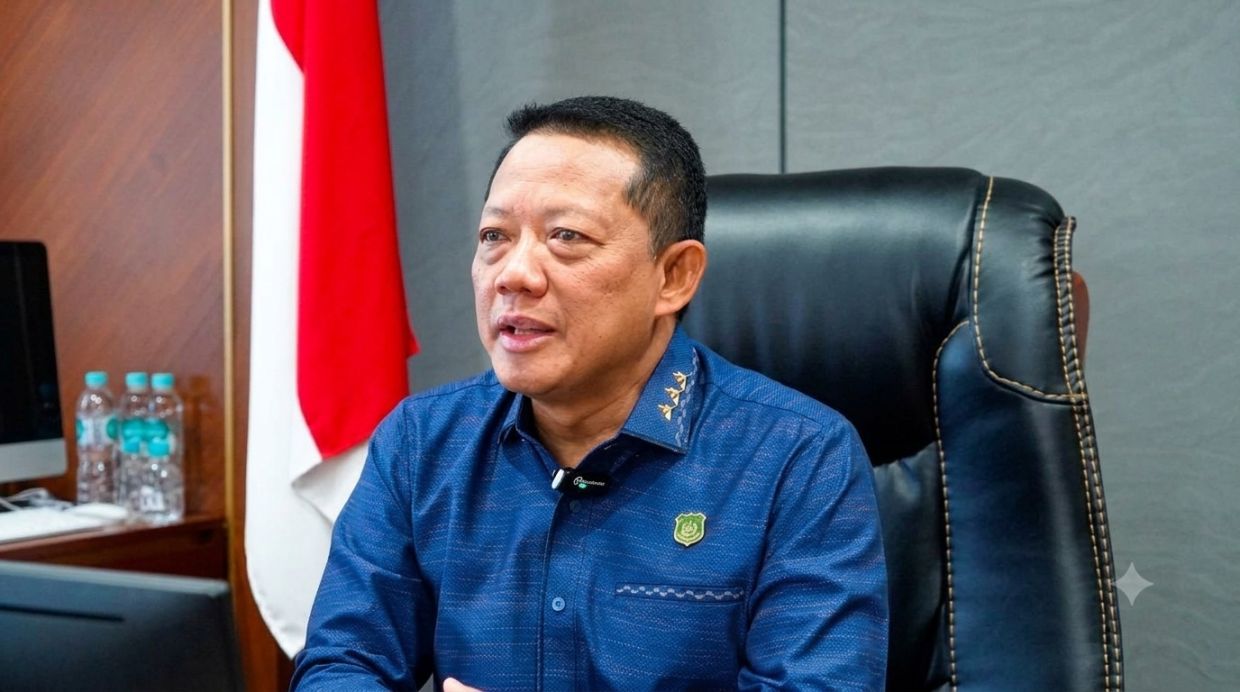
Indonesia's top anti-corruption prosecutor has abruptly stepped down following a high-profile police operation that recovered millions of dollars in cash and significant quantities of gold from properties connected to him, marking a stunning blow to the country's graft-fighting efforts at the highest levels. Febrie Adriansyah, who held the position of Assistant Attorney General for Special Crimes, submitted his resignation on Saturday, according to the Attorney General's Office, just days after police raided at least 12 locations including his residence.
The seizures, conducted by Indonesia's National Police, netted 74 kilograms of gold bars alongside US$5.8 million and Sg$17.2 million in cash. Police spokesman Budi Hermanto identified the targeted properties as including a residential house in the Bogor district south of Jakarta, a cafe in South Jakarta, and additional properties in the capital region. The scale of the operation and the amounts recovered have sent shockwaves through Jakarta's political establishment, raising uncomfortable questions about wealth accumulation among senior law enforcement officials tasked with investigating financial crimes.
Meanwhile, the Attorney General's Office spokesperson Anang Supriatna characterised Febrie's departure as a principled decision, stating that the resignation exemplified "commitment to maintain the integrity, objectivity, and neutrality of law enforcement." This framing attempts to position the exit as a voluntary measure to preserve institutional credibility rather than an acknowledgment of potential wrongdoing. The careful language reflects the delicate political situation surrounding the case, as the resignation occurs amid broader scrutiny of corruption within senior government ranks.
Before stepping aside, Febrie disputed suggestions that the seized assets were linked to corrupt activities. He acknowledged that the Bogor property was his private residence but maintained that all assets discovered during the raids could be fully accounted for through legitimate means. This defence has done little to quell public speculation about the source of such substantial wealth holdings, particularly given the modest official salaries typically earned by government prosecutors. The statement highlights a common pattern in Indonesian corruption cases, where officials facing investigation assert the legality of their holdings without necessarily clarifying their origins.
The investigation currently involves at least two suspects, referred to formally as FA and DR, who face multiple charges including corruption and money laundering. Authorities have questioned 15 witnesses in connection with the inquiry. Head of the National Police's Corruption Eradication Corps Totok Suharyanto disclosed that the suspect designated FA could potentially face life imprisonment if convicted on all charges, underlining the seriousness of the allegations. The severity of potential penalties reflects Indonesian law's approach to large-scale financial crimes, though convictions in such high-profile cases remain challenging to secure.
Media reports indicate that police investigations are focusing on three distinct cases involving suspected corruption and money laundering. Two of these centre on coal procurement contracts for PLN, Indonesia's state-owned electricity company, while a third concerns PT Asabri, a state enterprise managing benefits for military personnel and their families. These procurement-related investigations are particularly significant given the enormous sums typically involved in contracts with major state utilities, and the historical pattern of such arrangements becoming conduits for illicit wealth transfers.
The timing of Febrie's resignation carries additional weight given his recent statements regarding high-profile graft investigations within President Prabowo Subianto's administration. Before his departure, Febrie affirmed that the Attorney General's Office would continue pursuing corruption cases connected to the President's flagship free meal initiative, a nationwide programme intended to improve nutrition among schoolchildren. This commitment to investigating presidential-linked scandals, coupled with the sudden development of a serious case against Febrie himself, has created an awkward dynamic within the prosecution apparatus at precisely the moment when public confidence in anti-corruption efforts is essential.
The incident underscores a recurring challenge in Indonesian institutional reform: the vulnerability of anti-corruption agencies to the very problems they are supposed to combat. When senior officials within institutions dedicated to fighting graft become subjects of investigation themselves, it inevitably damages public faith in the entire system. This paradox has plagued Indonesia's anti-corruption drive for years, with multiple previous instances of senior prosecutors, police officials, and judges facing corruption charges, suggesting systemic vulnerabilities rather than isolated misconduct.
For Malaysia and other Southeast Asian nations, Indonesia's experience offers sobering lessons about institutional oversight and accountability mechanisms. The case demonstrates that formal anti-corruption structures, while necessary, are insufficient without robust internal controls, transparent wealth declaration systems, and genuine political will to hold senior officials accountable regardless of rank or position. The regional implications are significant, as Indonesia's struggles with prosecutorial integrity affect cross-border cooperation on financial crime investigations and complicate multilateral efforts to combat organised crime and corruption networks operating throughout Southeast Asia.

