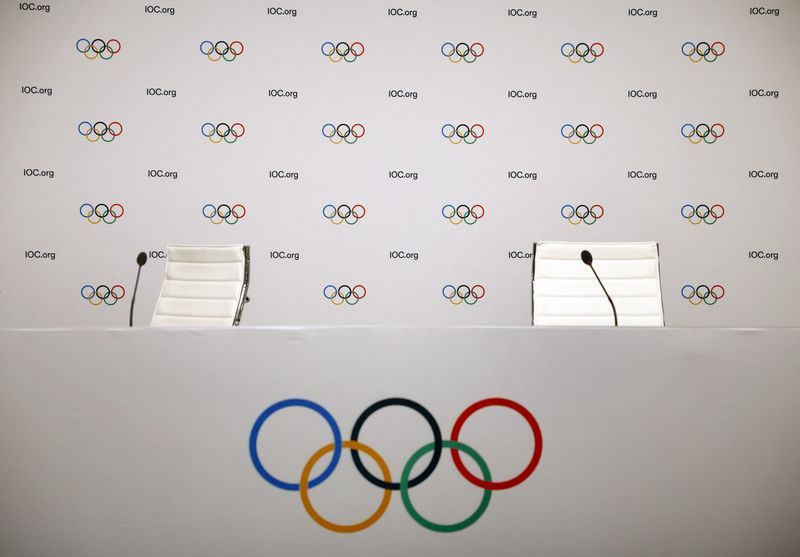
The International Olympic Committee is poised to examine modifications to the Olympic Charter this week that are framed around protecting sport from political interference, though the timing and substance of the proposed changes have raised concerns about their potential impact on Russian athletic participation. The amendments specifically target language reinforcing the principle that sporting competitions should remain insulated from governmental, cultural, societal, and economic pressures, with the IOC positioning itself as a guarantor of this neutrality across all circumstances.
Official IOC communications emphasise that these reforms serve a protective function, shielding athletes and competitions from external manipulation and preventing the Olympic Games from becoming platforms for geopolitical messaging. The governing body argues that strengthening neutrality provisions represents a logical evolution in Olympic governance that would benefit the international sporting community broadly. This framing appeals to a straightforward principle that sport and politics ought to exist in separate spheres, a concept with considerable intuitive appeal among many observers.
However, advocacy organisations and sports governance experts have interpreted the proposed changes through a considerably different lens. Global Athlete's director general Rob Koehler has articulated concerns that the amendments, rather than reinforcing Olympic principles, could paradoxically undermine them by creating sufficient conceptual space to accommodate Russia's full return to international competitions. He contends that the neutrality emphasis could functionally neutralise existing consequences for what he characterises as patterns of state-backed doping and systematic charter violations.
The trajectory of IOC decisions regarding Russian participation in recent years illustrates why critics view the timing of these charter amendments with suspicion. Following the 2014 Sochi Winter Games, investigations revealed a state-directed doping programme involving Russian athletes across multiple sports, resulting in long-term sanctions that persisted even after initial suspension periods. The committee had maintained these restrictions even as the global sporting community gradually re-engaged with Russian athletic talent in various contexts.
Russia's geopolitical position shifted dramatically following the 2022 invasion of Ukraine. The IOC responded by recommending comprehensive bans on Russian and Belarusian athletes from international competitions, a position that reflected both the gravity of the military aggression and the symbolic importance of denying sports platforms to nations engaged in active conflict. This represented a significant assertion of the IOC's capacity to enforce political consequences despite its formal commitment to sport's separation from politics.
Yet the committee's recent actions suggest a trajectory toward permitting Russian return. In October 2023, it suspended the Russian Olympic Committee after discovering that this body had recognised regional Olympic councils operating in Russian-occupied Ukrainian territories, a move the IOC determined constituted both a charter violation and an infringement on Ukraine's territorial sovereignty. Rather than representing a hardening of position, this suspension paradoxically opened a pathway for gradual rehabilitation by establishing specific conditions that, once addressed, could lead to reinstatement.
The pace of relaxation has accelerated noticeably. December brought approval for Russian and Belarusian youth athletes to compete internationally without restrictions, a decision that lowered a key barrier to broader participation. By last month, the IOC had eliminated all restrictions on Belarusian athletes, permitting their full participation in international events including Olympic qualifiers for the 2028 Los Angeles Games. The committee specifically stated that Russian athletes would not immediately receive similar treatment, yet this carve-out appears to have established a precedent that could be extended northward.
Inside Russia, political leaders have interpreted these incremental concessions as signals of momentum toward comprehensive reinstatement. Sports Minister Mikhail Degtyarev, who also chairs the Russian Olympic Committee, stated in April that Russian authorities were undertaking all necessary measures to secure full return of the national team competing under the Russian flag in international competitions. This language suggests confidence that negotiations with the IOC are proceeding favorably. President Vladimir Putin himself indicated in April that he anticipated a more receptive approach from the IOC's newly constituted leadership.
The ongoing investigations conducted by the World Anti-Doping Agency complicate this picture, as they continue examining Russia's compliance with anti-doping requirements. The IOC's legal affairs commission has been conducting concurrent reviews of information regarding the Russian Olympic Committee while also scrutinising its anti-doping mechanisms. These investigations theoretically constitute barriers to reinstatement, yet their timelines and ultimate conclusions remain unspecified, creating ambiguity about whether they represent genuine obstacles or procedural formalities.
For Southeast Asian readers, the significance of these developments extends beyond Olympic administration. The region's nations maintain varied relationships with both Russia and Western democratic powers, and Olympic politics often serve as proxies for broader geopolitical alignments. Decisions about Russian participation patterns could influence how the IOC calibrates responses to political pressures from other directions, potentially affecting Asian athletes and competitions. The neutrality principle, if interpreted expansively, might constrain the IOC's capacity to respond to future conflicts or human rights concerns through Olympic restrictions.
The proposed charter amendments represent more than bureaucratic refinement. By emphasising neutrality as an overriding principle, they could establish a conceptual framework within which even egregious violations of Olympic values—systematic state doping, invasion of neighbouring nations, territorial integrity violations—become negotiable rather than disqualifying. The amendments would also grant the IOC greater discretion in determining Olympic sport programmes based on practical criteria like cost and logistics, further centralising authority in the committee's hands.
As the IOC prepares to consider these changes, the subtext involves fundamental questions about whether sport can meaningfully insulate itself from politics or whether that aspiration represents a philosophical convenience that protects powerful actors from accountability. The answer the committee provides through these amendments will influence not only Russia's Olympic future but broader expectations about the IOC's willingness to enforce its stated values when confronting determined, resourceful states seeking to circumvent restrictions imposed for serious violations.

