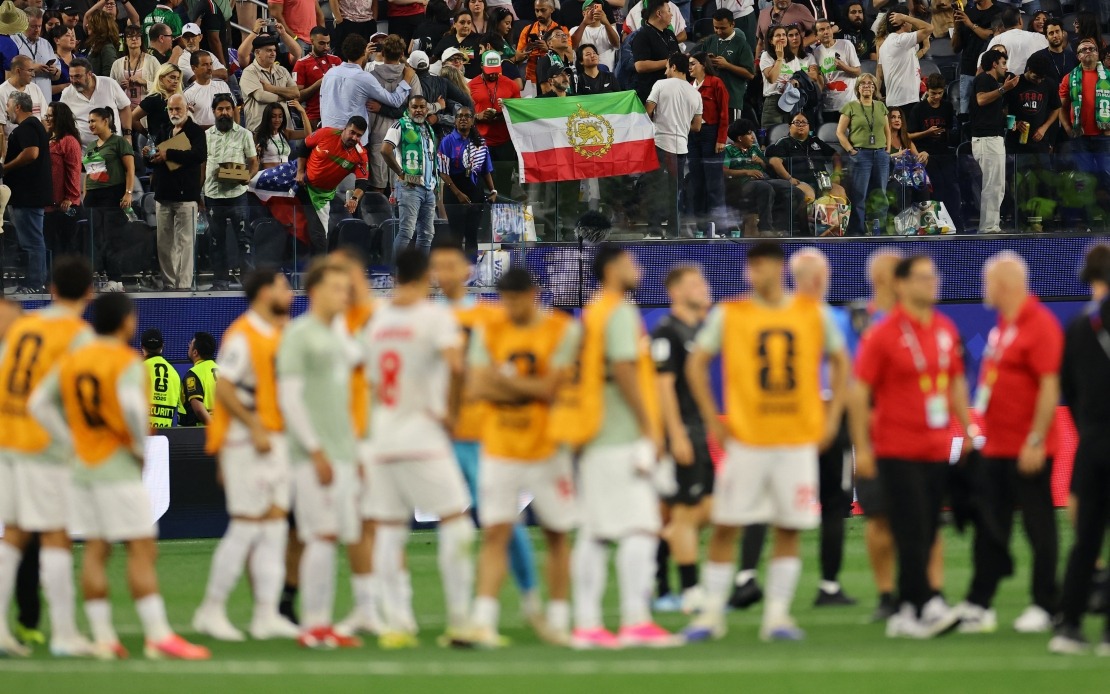
Iran's national football team head coach Amir Ghalenoei has levelled serious allegations against World Cup organisers, describing his squad as the "most repressed team in the whole World Cup" after being instructed to vacate Los Angeles for their training facility in Mexico shortly following their Monday evening fixture against New Zealand. The controversial decision forced the team to abandon their planned overnight stay in California and forgo a scheduled recovery session the following day, instead hitting the road immediately once the final whistle sounded.
Ghalenoei expressed frustration at the logistical burden placed on his players, noting that the constant air travel consumed valuable time that could have been allocated to physical and mental recuperation between matches. Speaking through an interpreter to American sports outlet ESPN, the coach detailed how team officials were informed of the departure requirement in blunt terms. "After the game today, they said to us: 'You have to leave immediately," he recounted, highlighting what he viewed as unnecessary hardship imposed on the Iranian delegation during a demanding tournament schedule.
While Ghalenoei stopped short of naming the specific authority responsible for the instruction, Iran captain Mehdi Taremi provided a significant clue by mentioning that FIFA President Gianni Infantino had visited the team's dressing room following Monday's contest. This detail sparked considerable speculation about whether the world football governing body had orchestrated or endorsed the departure order, though Taremi's comments suggested deeper geopolitical undertones beyond simple tournament logistics.
Taremi's subsequent remarks carried unmistakable political weight, as he cryptically referenced "long-standing tensions between the US and Iran." The captain indicated that multiple layers of complexity surrounded the team's treatment, stating that Infantino "wants to try to help us, but it's about other things, too," before adding ominously: "Everyone knows it." His reluctance to elaborate directly, coupled with his acknowledgement that the reasons were self-evident to observers, painted a picture of international tensions influencing how the Iranian contingent was handled during the competition.
The backdrop to these complaints involves ongoing hostilities between Washington and Tehran, with Taremi's remarks arriving amid reports that a peace agreement between the two nations was expected to materialise within days. The intersection of international diplomacy and sporting competition raised questions about whether geopolitical considerations had influenced logistical decisions affecting the Iranian team's participation and comfort during the tournament.
Iran's original preparation strategy had centred on establishing their World Cup base in Tucson, Arizona, but the delegation relocated their operations to Tijuana, Mexico, in late May after encountering visa complications and logistical obstacles. This earlier migration already demonstrated the challenges the Iranian team faced in securing straightforward arrangements for their World Cup campaign, suggesting a pattern of difficulties rather than isolated incidents.
The forced relocation from Los Angeles compounded these pre-existing complications, forcing players to spend additional hours travelling when recovery and adjustment should have been priorities. For a team already grappling with visa issues and being required to train outside the United States, the latest development appeared to exemplify a broader pattern of institutional hurdles.
For Malaysian observers and Southeast Asian football followers, the situation underscores how major sporting events can become entangled with international diplomacy and bilateral relations. FIFA's ability to manage such sensitivities while maintaining the tournament's integrity represents an ongoing challenge, particularly when competing nations carry complex geopolitical histories.
The incident also raises broader questions about athlete welfare at international tournaments and whether all teams receive equivalent treatment and consideration. Disparities in logistical support and accommodation could theoretically affect competitive balance, particularly for squads already facing external obstacles to preparation and participation.
Taremi's careful but pointed criticism, combined with Ghalenoei's frank assessment of his team's circumstances, created a narrative that extended well beyond football tactics and match preparation into the realm of international relations and institutional fairness. The reluctance of both officials to explicitly blame FIFA or US authorities left the exact source of the decision unclear, but their collective implication suggested high-level involvement in what they characterised as an unjust outcome for the Iranian delegation.
As the World Cup progressed, the treatment of the Iranian national team became a minor diplomatic flashpoint, demonstrating how closely sporting competition remains intertwined with international politics, particularly when nations with strained relations interact at global events. The episode serves as a reminder that even ostensibly neutral sporting competitions operate within complex geopolitical contexts that can affect how teams and players are accommodated and treated throughout their tournament experience.