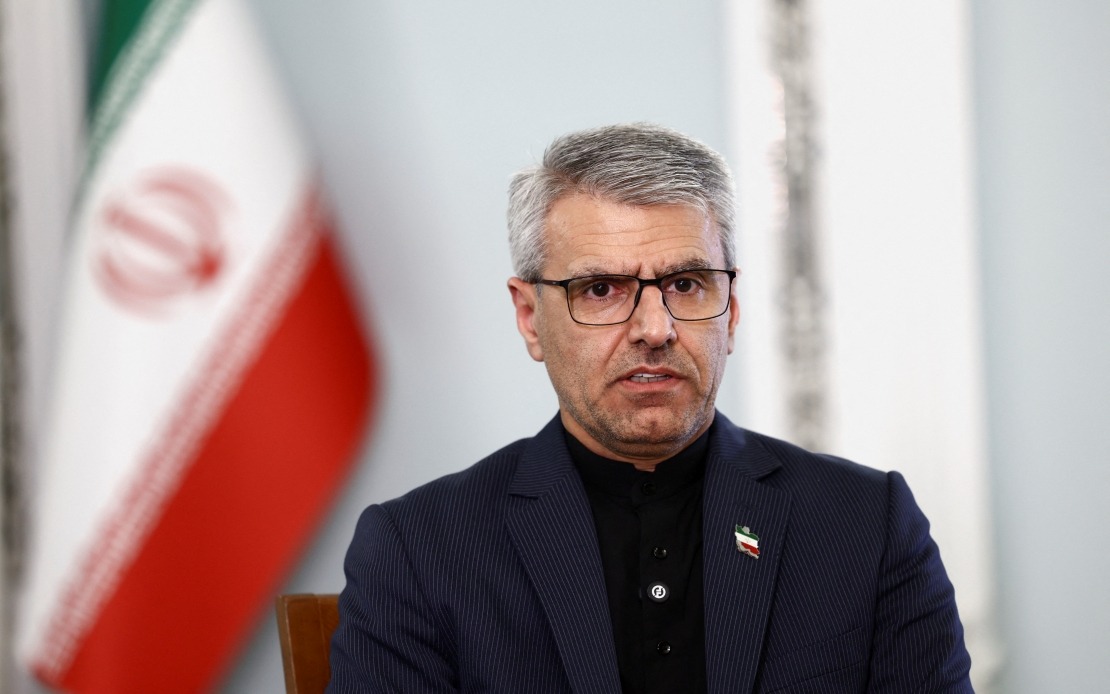
Tehran claims a watershed moment in its prolonged negotiations with Washington after intensive discussions at Burgenstock, Switzerland, produced what Iranian officials characterize as foundational agreements for advancing towards a comprehensive settlement. Foreign Ministry spokesman Esmaeil Baghaei outlined several substantive outcomes from the multisided talks, suggesting both parties have moved beyond preliminary positioning toward concrete operational frameworks.
The establishment of a "deconfliction cell," a novel monitoring apparatus involving international mediators, represents a structural innovation designed to manage ongoing regional tensions. This mechanism, according to Baghaei, will specifically oversee adherence to ceasefire arrangements and the maintenance of de-escalation commitments, with particular attention to the volatile Lebanon situation. The creation of such a body signals recognition that any final agreement must include practical instruments to prevent accidental escalation or hostile actions by non-state actors that could derail the broader diplomatic framework.
Central to Iran's negotiating position have long been its frozen assets and constrained access to international oil markets. Baghaei indicated that discussions produced measurable movement on both fronts, with delegations exchanging substantive proposals regarding licensing mechanisms for crude sales and mechanisms to unlock billions in restricted Iranian funds held in foreign accounts. These financial elements carry profound implications for Iran's domestic economy, which has contracted significantly under comprehensive international sanctions regimes imposed since 2018.
The Strait of Hormuz, through which approximately one-third of global maritime oil trade transits, features prominently in regional security calculations. The agreement to construct monitoring frameworks for this critical chokepoint reflects shared acknowledgment that maritime incidents—whether accidental or deliberate—pose catastrophic risks to both regional stability and global energy supplies. For Southeast Asian economies heavily dependent on reliable Gulf shipping routes, including Malaysia, Singapore, and Vietnam, any mechanism reducing the probability of conflict-driven closures carries material significance.
Implementation details remain contingent on parallel work by technical teams representing all parties. Baghaei's statement that specialists would continue refining operational procedures for the memorandum of understanding suggests these headlines mask extensive granular negotiations required to translate political agreements into functioning institutions. The diplomatic language expressing hope for American "seriousness" in implementation hints at underlying skepticism about enforcement commitment, a persistent tension in Iran-US negotiations given historical precedent.
Mediator nations Qatar and Pakistan announced simultaneously that their facilitation produced agreement on a 60-day roadmap toward final resolution. This compressed timeline, if maintained, would represent accelerated progress compared to the protracted nuclear negotiations that consumed years. The mediation framework itself—with Gulf and South Asian powers positioned as guarantors—reflects broader Middle Eastern and Asian regionalization, as established powers seek voice in determining their strategic environment.
The talks were framed as implementation discussions following a memorandum signed the previous week, itself designed to formalize cessation of hostilities from February 28 onwards. This sequential approach, moving from ceasefire accords to institutional frameworks to final comprehensive agreements, follows conventional international practice but requires sustained political will across all parties. Each phase introduces opportunities for disagreement or backsliding, particularly given the multiple stakeholders involved and their divergent interests.
For observers across Southeast Asia, these negotiations carry implications extending beyond Iran-US relations. Regional powers including Malaysia have traditionally navigated between alignment with Western security architecture and preservation of autonomous decision-making regarding Gulf engagement. Progress toward Iranian-American rapprochement potentially reshapes calculations about regional partnerships, sanctions compliance, and participation in maritime security coalitions operating throughout the Indian Ocean and beyond.
The institutional innovations discussed—deconfliction mechanisms, monitoring cells, maritime security frameworks—establish templates potentially applicable to other regional conflicts. Southeast Asian stability, particularly regarding South China Sea management and straits security, could benefit from comparable structured dialogue mechanisms if such models prove effective in the Middle Eastern context. The diplomatic emphasis on technical implementation teams also suggests sustained engagement regardless of political setbacks, a methodological approach valuable in contexts where multiple actors pursue incompatible objectives.
Critical questions remain regarding enforcement mechanisms and verification procedures for the agreements outlined. Baghaei's statements provided frameworks and principles but limited operational specificity regarding how breaches would be addressed or how mediators would investigate alleged violations. The credibility of any final agreement hinges on these implementation details, which typically prove more contentious than headline principles during actual negotiations.

