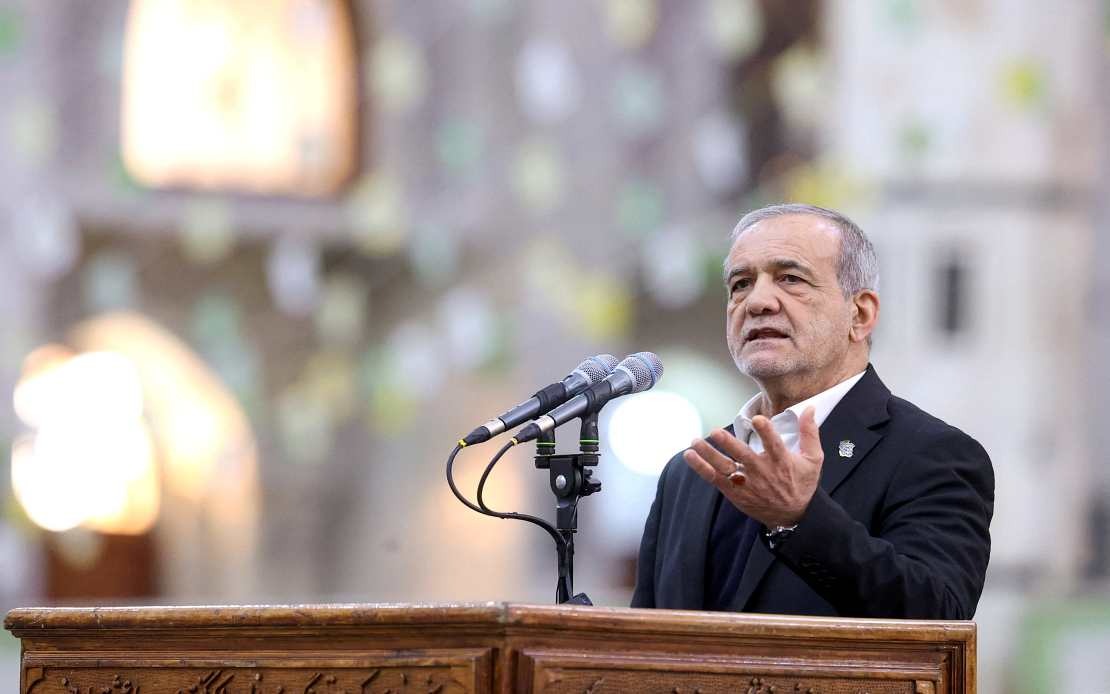
Iranian President Masoud Pezeshkian confirmed on Sunday that his country will recover US$6 billion in frozen assets currently held in Qatar as part of an emerging preliminary agreement with the United States, signalling a significant thaw in relations between the two nations after months of heightened regional tensions. The announcement, made through state broadcaster IRIB, represents one of the first tangible outcomes from renewed diplomatic engagement between Tehran and Washington, though substantial hurdles remain before any comprehensive settlement can be finalised.
The recovery of the Qatar-held funds marks a crucial confidence-building measure for Iran's government, which has faced mounting economic pressure from international sanctions and asset freezes. These assets, accumulated over years of banking relationships and trade transactions, have remained inaccessible to Iranian authorities despite their legitimate claims to the funds. The agreement to release them signals Washington's willingness to make concrete concessions as part of broader negotiations aimed at resolving the deep-seated antagonism that has characterised bilateral relations for decades.
Pezeshkian's statement also reaffirmed Iran's non-negotiable position on uranium enrichment capabilities, underscoring that Tehran views this technical competency as integral to its national sovereignty and security doctrine. The Iranian leader asserted that his country will never surrender its right to pursue nuclear enrichment programmes, and that the United States will ultimately be compelled to accept this reality as a precondition for any lasting settlement. This declaration reflects the ideological and strategic importance that Iranian leadership assigns to nuclear technology, viewing it as both a deterrent and a symbol of scientific advancement.
Delegations from both nations arrived in Switzerland early in the week to commence technical discussions under a memorandum of understanding signed on Wednesday. These negotiations aim to address the months-long Middle East conflict and restore normalised shipping through the Strait of Hormuz, a critical chokepoint through which approximately one-third of the world's maritime oil trade flows. The stakes are exceptionally high, as closure or disruption of this strategic waterway would have severe consequences for global energy markets and regional stability throughout Southeast Asia, which depends heavily on Persian Gulf oil supplies.
The American delegation will be led by Vice President JD Vance, signalling the seriousness with which Washington approaches these discussions and the high political level at which decisions are being made. This representation demonstrates that the negotiations transcend routine diplomatic channels and reflect direct engagement at the highest echelons of the US administration. On the Iranian side, Parliament Speaker Mohammad Bagher Qalibaf and Foreign Minister Abbas Araghchi will head the delegation, indicating that Tehran has also positioned senior figures with genuine decision-making authority to lead its negotiating team.
Notably, Pakistan is serving as mediator in these discussions, reflecting Islamabad's traditional role as a bridge between various regional and international actors. Pakistan's intermediary position stems from its geographic proximity to both Iran and the broader Middle Eastern theatre, as well as its longstanding diplomatic relationships with multiple stakeholders. This mediation role enhances the talks' credibility among regional players and provides a neutral venue outside the immediate Iran-US bilateral framework where sensitive discussions can proceed with greater confidentiality.
The venue selected for these negotiations—Burgenstock in Switzerland—underscores the parties' commitment to finding neutral ground for substantive technical discussions. Switzerland's traditional role as a haven for international negotiations, combined with its diplomatic neutrality and sophisticated infrastructure for managing complex multilateral talks, makes it an ideal location for addressing intricate technical issues spanning nuclear capability verification, sanctions relief mechanisms, and regional security arrangements.
For Malaysia and Southeast Asian nations, the implications of these Iran-US negotiations are substantial and multifaceted. Stability in the Middle East directly influences energy prices, shipping security, and the broader geopolitical environment that affects regional trade patterns and investment flows. Any agreement that reduces tensions in the Persian Gulf and stabilises the Strait of Hormuz would benefit Southeast Asian economies dependent on uninterrupted energy supplies and predictable maritime commerce. Conversely, protracted conflict or failed negotiations could trigger oil price spikes that would strain economies throughout the region.
The preliminary nature of the current agreement suggests that numerous technical and political obstacles remain to be overcome before any comprehensive settlement can materialise. Both nations must navigate competing security concerns, verify compliance mechanisms, and address the legitimate grievances accumulated over decades of antagonism. The presence of senior officials and the formal structure of these talks, however, indicate that serious momentum exists for achieving at least interim agreements that could reduce immediate tensions.
The recovery of Iran's frozen assets represents more than a simple financial transaction; it embodies a broader willingness by both parties to engage in concrete reciprocal exchanges rather than remaining locked in absolute positions. This dynamic suggests that negotiators possess sufficient political space and mandate to explore pragmatic solutions to outstanding disputes. Whether these technical discussions in Switzerland can translate into a durable framework remains uncertain, but the announcement of the US$6 billion asset release provides the first concrete indicator that substantive progress is possible.

