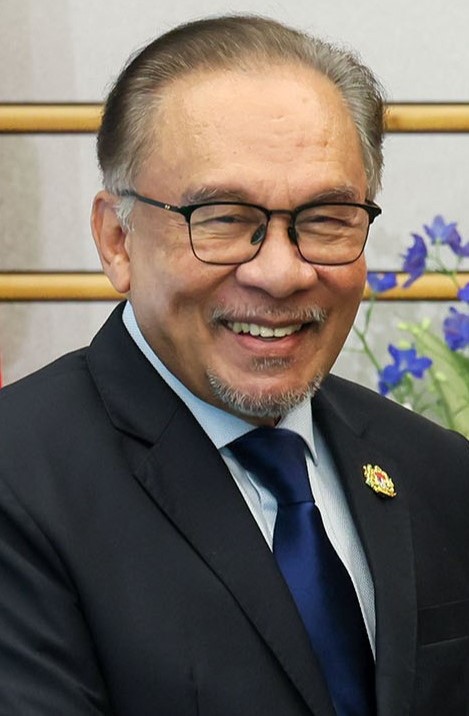
A two-week detention under the Internal Security Act in 1974 became the catalyst that transformed Dr Shukri Abdullah's trajectory, propelling him from a student activist toward a life dedicated to education and social mentorship. Recognised as Kedah's Tokoh Maal Hijrah, the 76-year-old received a certificate of appreciation and RM15,000 in cash from Tengku Sarafudin Badlishah Sultan Sallehuddin, Raja Muda of Kedah, during the state-level Maal Hijrah celebration in Alor Setar, underscoring the profound impact of his personal transformation on the broader community.
The detention stemmed from Dr Shukri's involvement in the Baling Demonstrations while he was a student leader at Universiti Sains Malaysia. Rather than crushing his ambitions, this traumatic episode—which resulted in the withdrawal of his scholarship—became an inflection point that clarified his sense of purpose. Speaking to journalists after the ceremony, he reflected on how the experience crystallised his understanding of education's transformative power and the necessity of purposeful planning. What could have derailed his future instead sparked a profound recommitment to self-improvement and social contribution.
The journey from activist detainee to celebrated educator was neither swift nor straightforward. After his release, Dr Shukri recognised that regret could consume him or spur him forward. He chose the latter path, channelling his energies entirely into academic pursuits. His discipline and focus yielded remarkable results: he not only recovered academically but surpassed his peers to emerge as USM's top graduate overall. The achievement carried special weight because his secondary schooling had been undistinguished, marked by average grades that initially led to rejection when he first applied to university. This trajectory—from mediocrity through adversity to excellence—would later become the cornerstone of his motivational work.
Before eventually gaining admission to USM, Dr Shukri worked as a journalist with Utusan Melayu for a year starting in 1980, a period that exposed him to Malaysia's media landscape and perhaps deepened his understanding of public discourse. Upon his eventual acceptance and completion at the university, his achievements were crowned when he delivered the valedictory address as the institution's top graduate. This honour represented not merely academic success but vindication of his decision to rebuild his life after the ISA detention had threatened to derail it entirely.
Education did not end at the undergraduate level. Dr Shukri pursued postgraduate studies in the United Kingdom, obtaining a doctorate from the University of Essex in just over two years—a testament to his intellectual capacity and sustained commitment to knowledge accumulation. Upon returning to Malaysia, he embarked on a career in academia at USM, establishing credentials as both scholar and educator. However, he eventually recognised that his greatest impact lay not in traditional classroom instruction but in direct engagement with students, parents, and communities seeking guidance on life direction and personal excellence.
For more than three decades, Dr Shukri has been active in motivational programme delivery, drawing extensively on his own experiences to illustrate how personal transformation is achievable through discipline, self-awareness, and unwavering determination. His message resonates across generations because it is grounded in lived experience rather than abstract theory. The father of ten children and grandfather of twenty-two, he embodies the values he preaches—family commitment, continuous growth, and service to others. His contemporary speaking engagements and advisory work represent a deliberate choice to multiply his influence by shaping the mindsets of young people and families navigating Malaysia's complex social landscape.
Dr Shukri's insistence on the primacy of discipline and self-awareness reflects a particular understanding of what distinguishes those who transcend adversity from those who are consumed by it. He articulates clearly that excellence is not innate but cultivated through deliberate practice and mental resilience. This perspective is particularly valuable in the Malaysian context, where educational systems are increasingly scrutinised and where many young people struggle with direction and motivation. His emphasis on goal-setting as a preventive measure against unproductive activities addresses a genuine concern among parents and educators nationwide.
The role he assigns to parental guidance is equally significant. By stressing that parents must help children establish direction from an early age, Dr Shukri underscores the foundational importance of family structures in shaping life trajectories. This insight carries particular weight at a time when Malaysian families face competing demands and when adolescent disengagement from productive pathways remains a persistent social challenge. His advocacy for early intervention and clear goal-setting represents a practical framework that schools, community organisations, and policymakers can adapt and implement.
The significance of recognising Dr Shukri as Kedah's Tokoh Maal Hijrah extends beyond honouring an individual. The award reflects societal appreciation for those who transform personal setbacks into contributions to collective wellbeing. In awarding him this recognition and financial appreciation, Kedah's state leadership signals that individual reformation and lifelong service are values worthy of formal acknowledgement. This public recognition, delivered at a state-level celebration, elevates his narrative from personal inspiration to a case study in how institutional systems—including those that may constrain individuals through detention—can paradoxically contribute to profound personal growth and, subsequently, broader social contribution.
Dr Shukri's five-decade journey from detained student activist to motivational leader and social mentor offers multiple layers of meaning for contemporary Malaysia. It demonstrates that educational access, when pursued with determination after initial setbacks, can fundamentally redirect life paths. It illustrates how personal transformation need not be instantaneous but can unfold across years of deliberate effort. It validates the notion that those who have endured adversity often possess insights that younger generations require. And it suggests that in Malaysia's ongoing process of national development, the contributions of individuals who consciously dedicate themselves to mentoring and guidance constitute an underrecognised but essential social infrastructure. Dr Shukri's example reminds us that the most lasting national progress emerges not only from policy and institutions but from individual citizens who choose, as he has done, to convert personal struggle into purposeful service.