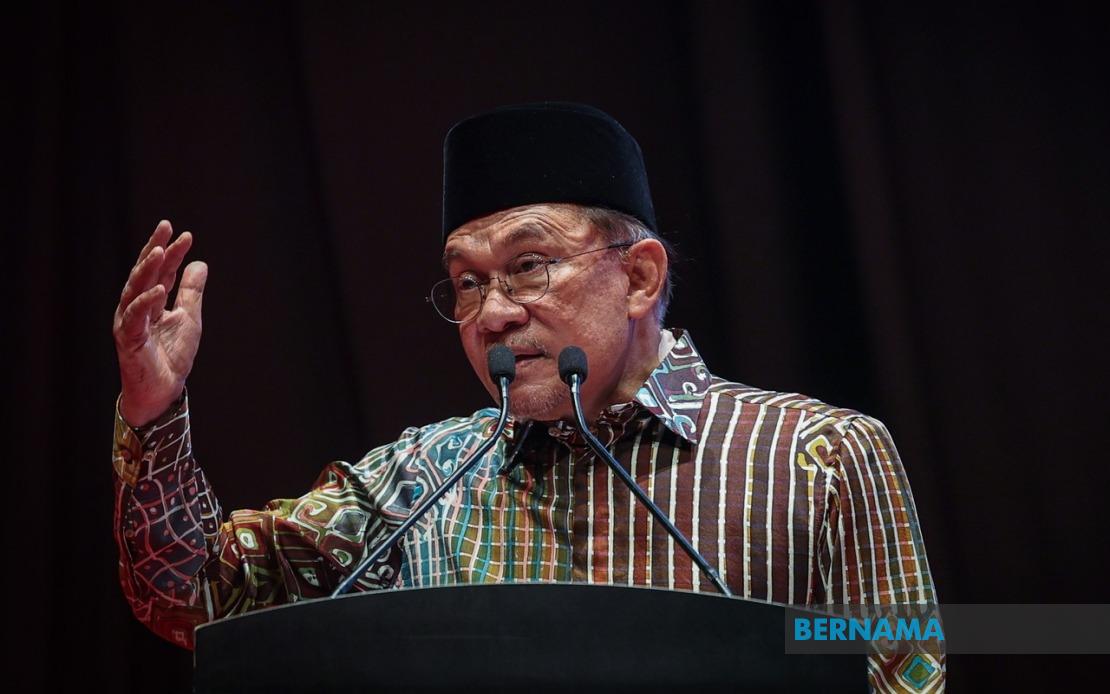
Prime Minister Datuk Seri Anwar Ibrahim has issued a pointed call for Malaysia's Islamic institutions to engage with artificial intelligence and digital transformation, whilst simultaneously ensuring that technological advancement does not come at the expense of fundamental religious and moral principles. Speaking at the closing ceremony of the 2026 International Waqf Dakwah Convention held at Kuala Lumpur Convention Centre, Anwar framed the challenge facing waqf bodies and dakwah movements as fundamentally one of balance—how to capture the benefits of modern technology without allowing it to hollow out the ethical and spiritual foundations that give these institutions their purpose and legitimacy.
The Prime Minister's remarks reflect growing awareness within government circles that Malaysia's Islamic sector risks irrelevance if it remains insulated from technological change. Waqf institutions, which manage charitable endowments central to Islamic social welfare, and dakwah organisations, responsible for Islamic propagation and community engagement, have traditionally operated within frameworks shaped more by convention than innovation. Anwar's intervention signals an expectation that these bodies must modernise their operational infrastructure, adopt sophisticated data management systems, and leverage digital platforms to extend their reach—particularly to younger demographics increasingly accustomed to engaging through online channels rather than traditional venues.
Yet Anwar moved quickly to articulate the specific dangers he perceives in unchecked technological adoption. His warning that artificial intelligence, information technology, and quantum computing absent moral anchoring will "erode humanity, dignity and ethics" reflects a sophisticated understanding of how technological systems embed and propagate values. He offered this as more than rhetorical caution; it represents a substantive concern that Islamic institutions risk compromising their identity if they simply transplant Western technological frameworks without adapting them to Islamic ethical requirements. The phrase "reaching for the skies while remaining firmly rooted to the ground" encapsulates his vision—aspiration matched with groundedness, progress tempered by tradition.
Anwar's articulation of what it means to remain "rooted to the ground" provides concrete substance to this abstract principle. He identified the essential anchors as strengthened faith and belief, cultivation of moral character and personality, preservation of cultural and linguistic competency, maintenance of distinct identity, and connection to national and local history. This enumeration suggests that the modernisation process should not be treated as a neutral technical exercise but rather as one requiring conscious effort to preserve and reinforce Islamic and Malaysian identity markers at each step. Where algorithms are deployed, they should reflect Islamic values. Where data systems are implemented, they should maintain rather than erode community connection.
The convention itself adopted three substantial resolutions that operationalise this vision beyond rhetoric. The establishment of a working consortium designed to strengthen waqf institutions suggests recognition that the fragmentation of waqf management across multiple entities has become a liability. Centralised coordination, enabled by digital infrastructure, could facilitate knowledge sharing and standardised best practices across Malaysia's waqf sector. The second resolution explicitly mandates adoption of technology and digitalisation in waqf management, acknowledging that traditional paper-based record keeping and cash-based accounting no longer suffice. The third resolution—strengthening the waqf ecosystem through improved governance and strategic stakeholder collaboration—indicates that institutional modernisation must be accompanied by structural reform.
Anwar's endorsement of these resolutions, coupled with his statement that they will be studied by government before submission to Cabinet and the Conference of Rulers, places these proposals within Malaysia's highest decision-making frameworks. This elevation from convention output to potential Cabinet directive signals seriousness about implementation. It also suggests that government is prepared to invest political capital and potentially financial resources in waqf modernisation, viewing it not merely as sectoral improvement but as part of broader national development strategy.
The Prime Minister singled out two organisations for commendation—the Malaysian Islamic Welfare Organisation (PERKIM) and the Regional Islamic Da'wah Council of Southeast Asia and the Pacific (RISEAP), led by Sarawak Premier Tan Sri Abang Johari Tun Openg—for demonstrating that progressive approaches to dakwah need not undermine Islamic authenticity. By highlighting RISEAP's leadership, Anwar implicitly validated a regional approach to Islamic engagement that transcends national boundaries whilst remaining rooted in local contexts. This has particular significance for Malaysia, which aspires to play a leading role in articulating moderate Islamic perspectives globally whilst managing its own diverse Muslim population.
The focus on dakwah and waqf bodies addresses what government perceives as strategic challenges. Dakwah organisations, in an age of competing narratives and ideological competition, must engage digital platforms where recruitment and radicalisation sometimes occur. By professionalising their digital presence and deploying technology strategically, they can counter extremist messaging and present Islamic teachings in forms that resonate with digitally native audiences. Similarly, waqf institutions managing potentially billions in assets require modern governance frameworks to ensure transparency, prevent mismanagement, and maximise their developmental impact. Digitalisation enables tracking of waqf performance, beneficiary outcomes, and asset utilisation in ways that paper systems cannot.
Yet Anwar's repeated emphasis on values suggests awareness that institutional modernisation carries risks that cannot be ignored. There exists genuine concern, both within Malaysia and across the Muslim world, that uncritical adoption of secular technological frameworks might gradually shift institutional cultures in unwanted directions. Algorithmic decision-making in waqf disbursement, for instance, requires careful calibration to ensure it reflects Islamic principles of justice and mercy rather than merely maximising efficiency. Social media engagement by dakwah bodies must maintain theological integrity whilst adopting platform conventions designed by non-Muslim engineers. These tensions cannot be resolved through rhetoric alone; they require sustained engagement between technologists and Islamic scholars.
The timing of this convention and Anwar's intervention reflects Malaysia's position within broader Muslim world dynamics. As Islamic finance and Islamic social institutions gain prominence globally, Malaysia—already a hub for Islamic finance—has opportunity to establish itself as a centre for Islamic institutional innovation. By demonstrating that Islamic institutions can embrace technology without compromising faith, Malaysia could become a model for other Muslim-majority nations grappling with similar questions. Conversely, should Malaysian waqf and dakwah bodies stumble in their modernisation efforts, the reputational damage extends beyond individual institutions to Malaysian Islam's global standing.
The framework Anwar articulated—maintaining moral character whilst pursuing technological advancement, remaining rooted whilst reaching for the skies—provides philosophical guidance rather than detailed implementation blueprints. Translating this vision into practical institutional change will require sustained effort from multiple stakeholders. Waqf managers must develop technological literacy; Islamic scholars must engage substantively with questions of algorithmic ethics; technologists must understand Islamic principles sufficiently to embed them into systems design. Government, having signalled its expectations, will need to follow with resources, policy clarification, and regulatory frameworks that enable rather than hinder this transformation.
The success of this modernisation endeavour carries implications extending well beyond Malaysia's Islamic sector. In a region where digital technology is advancing rapidly and Islamic institutional capacity increasingly intersects with development outcomes, Malaysia's experience will inform how other Southeast Asian Muslim communities navigate similar transitions. Whether these institutions can genuinely achieve Anwar's vision of technological capability matched with spiritual authenticity remains to be seen, but the ambition itself—modest as it may appear to secular observers—represents a significant shift toward deliberate rather than reactive engagement with modernity.

