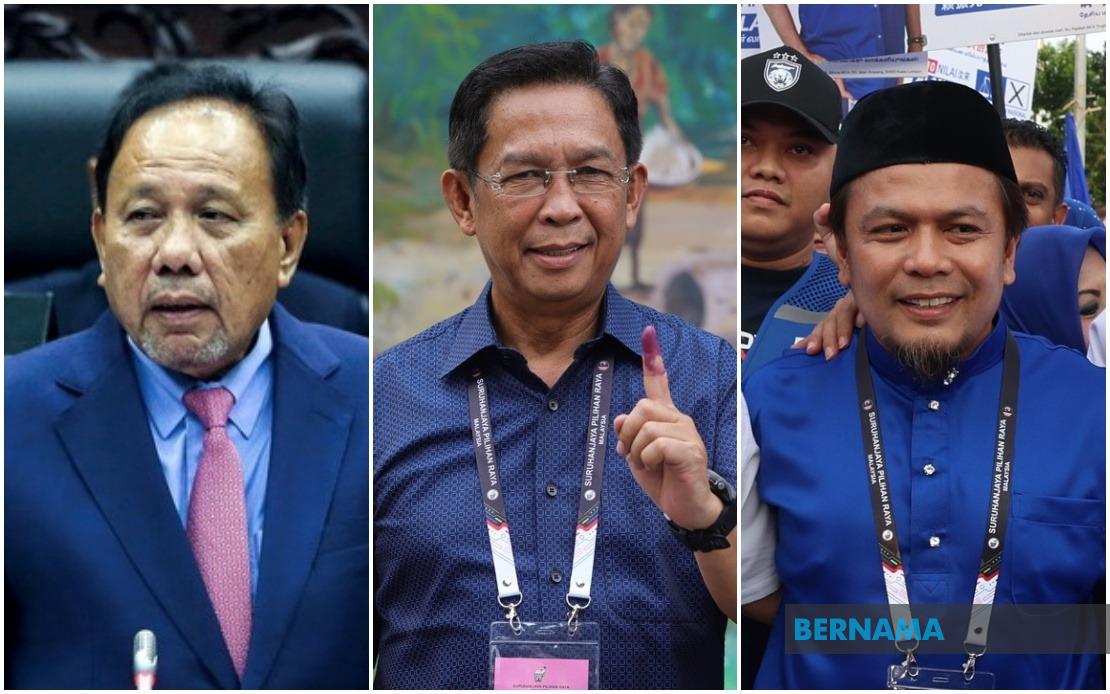
Kuala Pilah UMNO chief Datuk Ismail Lasim has emerged as one of three leading contenders for the position of Negeri Sembilan Menteri Besar following the state's recent electoral contest. The 67-year-old politician, who serves on UMNO's Supreme Council, successfully retained the Juasseh state seat in Negeri Sembilan's 16th state election held recently, strengthening his credentials for the chief minister role. As the oath-taking ceremony for the incoming Menteri Besar was scheduled for early August at Istana Besar Seri Menanti in Kuala Pilah, political observers anticipated the formal announcement of the state's new leadership.
The other two names circulating in political circles for the Menteri Besar position reflect the competitive dynamics within Negeri Sembilan's political establishment. Datuk Seri Jalaluddin Alias, aged 62, holds the position of Negeri Sembilan UMNO liaison chairman while representing Jelebu as a federal Member of Parliament. He managed to retain his state seat in Pertang during the recent election, demonstrating continued electoral support from his constituency. Datuk Mohd Asna Amin, the youngest among the three candidates at 47 years old, previously served as the state's deputy speaker before securing victory in the Lenggeng seat. The combination of their parliamentary experience, seniority within party structures, and recent electoral victories positioned all three as credible candidates for the top state position.
The electoral landscape shifted significantly in Negeri Sembilan during this contest, with the Barisan Nasional coalition securing 18 state assembly seats out of the 36 contested. This result represented a substantial turnaround from the previous state election, when the same coalition had managed only 14 seats. The Perikatan Nasional bloc captured 11 seats, allowing these two coalitions to jointly form the state government with a commanding two-thirds majority in the assembly. A total of 103 candidates participated in the election, competing across all 36 constituencies in what represented a significant political realignment at the state level.
The path to this electoral outcome had been marked by considerable political turbulence in Negeri Sembilan. The state assembly was formally dissolved on June 5 after the Negeri Sembilan branch of Barisan Nasional withdrew its support from then-Menteri Besar Datuk Seri Aminuddin Harun. This withdrawal had occurred on April 27, triggering the sequence of events that led to the dissolution and subsequent state election. The decision to withdraw support fundamentally altered the state's political configuration, which had previously seen Pakatan Harapan governing in coalition with Barisan Nasional following the previous election cycle.
In the preceding state election, the political configuration had been markedly different, with Pakatan Harapan securing 17 seats to emerge as the largest bloc. Barisan Nasional had finished second with 14 seats, while Perikatan Nasional held only five seats. This configuration had enabled Pakatan Harapan and Barisan Nasional to form a coalition government, with Aminuddin Harun serving as Menteri Besar under this arrangement. The collapse of this coalition partnership less than two years into the term demonstrated the fragility of cross-coalition arrangements at the state level and the significance of numerical arithmetic in securing stable governance.
BN chairman Datuk Seri Dr Ahmad Zahid Hamidi had previously held an audience with Tuanku Muhriz at Istana Hinggap in Seremban to formally present the three names for consideration as Menteri Besar. This presentation followed established constitutional protocol, where the Ruler receives nominations from the winning coalition and makes the final determination on appointment. The Ruler's discretionary role in selecting among the candidates presented represents an important constitutional safeguard in Malaysia's system of governance at the state level.
The outcome carries broader implications for Malaysia's political landscape. The strong performance by Barisan Nasional in Negeri Sembilan reverses recent patterns where the coalition had faced electoral challenges in several state contests. The ability to secure 18 seats and form a government with Perikatan Nasional indicates that the traditional political forces remain capable of mobilizing support when circumstances favour realignment. For Perikatan Nasional, the partnership with Barisan Nasional in Negeri Sembilan provides the coalition with a foothold in the state apparatus, expanding its influence beyond its core strongholds.
The restoration of Barisan Nasional's dominance in Negeri Sembilan reflects broader political shifts occurring across several Malaysian states. The coalition's revival of its electoral fortunes after the setbacks of 2018 demonstrates the complex and fluid nature of Malaysian electoral politics. Voters in different states continue to make distinct choices based on local circumstances, personalities, and grievances, resisting simple national narratives that might predict uniform outcomes across the country. Negeri Sembilan's experience illustrates how state-level factors such as local leadership credibility, economic performance, and community relationships can drive different electoral outcomes than might be expected from national political trends.
For the incoming Menteri Besar and his administration, the substantial two-thirds majority provides a secure foundation for governance without the constraints that coalition governments often face. Such supermajorities traditionally provide greater legislative flexibility and reduce the vulnerability to defections that can plague slimmer majorities. However, the majority also brings expectations for effective governance and service delivery from both coalition partners and the electorate. The next state administration will need to balance the interests of multiple coalition partners while demonstrating tangible improvements in areas such as economic development, public services, and infrastructure that matter to Negeri Sembilan residents.

