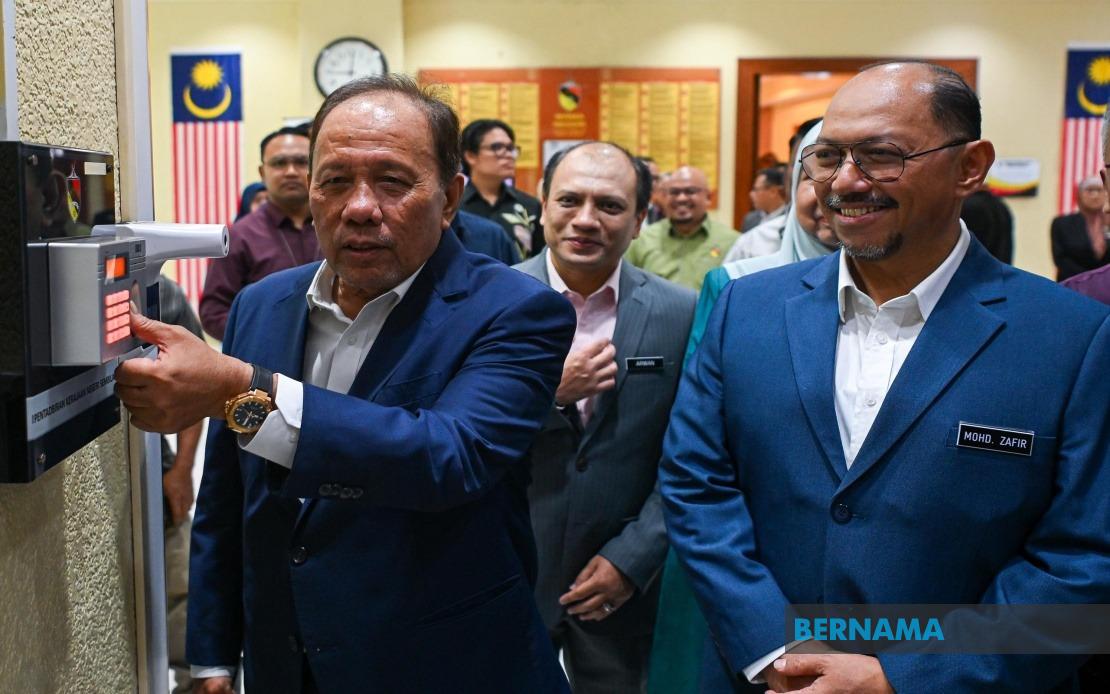
Newly installed Negeri Sembilan Menteri Besar Datuk Ismail Lasim has moved to defend the circumstances surrounding his assumption of office, insisting that all prescribed constitutional and administrative procedures were followed correctly when he took on the role. Speaking to journalists after formally commencing his duties at the state secretariat building in Seremban, Ismail dismissed suggestions that the appointment process contained irregularities or fell short of the standards expected of a state-level executive transition.
The appointment has drawn scrutiny from Tan Sri Rais Yatim, chairman of Wawasan, who publicly questioned the manner in which the Menteri Besar was selected. Rais Yatim's concerns extended beyond procedural questions to encompass broader allegations regarding external interference in matters touching upon Negeri Sembilan's constitutional framework and long-established customs governing state governance. These claims have triggered a wider conversation about safeguarding institutional integrity in the selection of chief executives at the state level, an issue that carries significance for how Malaysia's federal system operates.
Ismail, who secured the Juasseh state constituency during the most recent Negeri Sembilan state election, underwent the formal ceremonial process of taking office before Yang Dipertuan Besar of Negeri Sembilan Tuanku Muhriz Tuanku Munawir at Istana Besar Seri Menanti the previous Sunday. This swearing-in ceremony represents the culmination of the state's electoral process and provides the constitutional foundation for his executive authority. The timing and formality of such ceremonies underscore the significance Malaysia places on respecting the constitutional monarchy's role in state administration.
The political arithmetic that enabled Ismail's elevation to the Menteri Besar position reflects the results of the state election, which produced a landscape in which two major coalitions jointly command sufficient numbers to govern. Barisan Nasional secured 18 of the 36 available state seats, while Perikatan Nasional won seven seats, together giving both groupings the two-thirds supermajority necessary to form an administration and implement legislation without opposition obstruction. This concentration of power between two blocs represents a significant feature of contemporary Negeri Sembilan politics.
For Malaysian observers, the debate surrounding Ismail's appointment highlights persistent tensions between formal constitutional procedures and broader political expectations about how leadership transitions should unfold. Questions about external interference—whether from federal-level actors or other extra-state influences—touch upon fundamental issues of federalism and the autonomy that state governments should retain when making appointments. The concern that outside forces might shape outcomes in state-level governance strikes at the heart of how effectively Malaysia's constitutional division of power functions in practice.
The Negeri Sembilan situation also carries implications for how other states might conduct similar appointments in the future. If questions arise about whether standard procedures were genuinely observed, or whether informal arrangements overrode formal processes, it potentially establishes patterns that could spread to other jurisdictions. Malaysia's track record with smooth institutional transitions depends significantly on the perception that all actors respect established procedures, particularly when circumstances become politically sensitive or when multiple factions compete for influence.
Ismail's explicit statement defending the propriety of the appointment process represents an early assertion of legitimacy by the new administration. By framing the procedure as correct and constitutional, he attempts to move beyond controversy and establish his standing to lead the state. However, the persistence of questions about the appointment's circumstances suggests that some stakeholders remain unconvinced or harbour deeper concerns about how power-sharing arrangements were negotiated between Barisan Nasional and Perikatan Nasional.
The broader context of Malaysian politics suggests that such disputes about appointment procedures often reflect underlying coalitional tensions or disputes over portfolio allocation and administrative decision-making authority. When two major blocs share power, disagreements about how leadership positions are filled can mask competition over control of state resources and policy direction. Understanding the appointment controversy therefore requires attention not only to formal procedures but also to the political agreements that enabled Ismail to assume office in the first place.
Moving forward, the credibility of Ismail's administration will depend on demonstrating that governance is conducted transparently and that decisions reflect the constitutional framework rather than informal understandings reached outside public view. For Negeri Sembilan residents, the appointment debate's outcome matters insofar as it affects confidence in state institutions and the perceived legitimacy of the government making decisions that affect their welfare. The state now enters a new chapter in which Ismail must translate his procedurally defended appointment into effective administration that builds broader political consensus.

