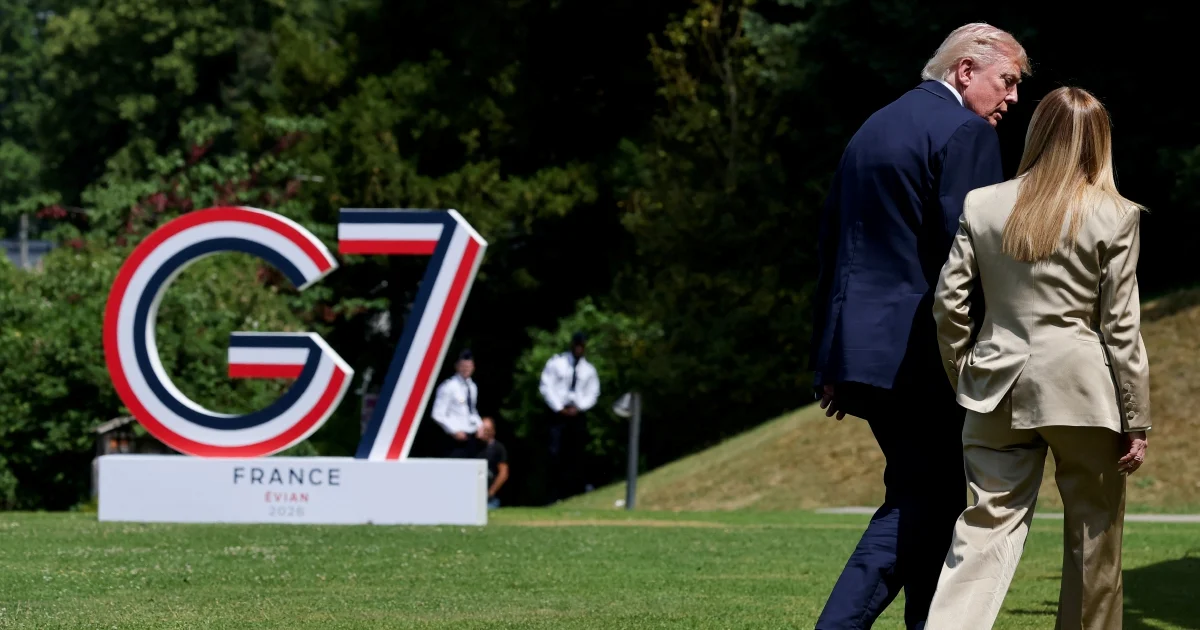
Italy's ruling coalition erupted in criticism on Friday after US President Donald Trump allegedly dismissed Prime Minister Giorgia Meloni's efforts to coordinate with him, suggesting she had sought a photograph in an unflattering manner. The remarks triggered a significant diplomatic incident between Rome and Washington, with senior figures in the Italian government responding sharply to what they characterised as disrespectful treatment of their head of administration.
The controversy emerged as Italy navigates a delicate relationship with the incoming Trump administration. The European Union's third-largest economy has positioned itself as a bridge between Brussels and Washington, with Meloni cultivating a relatively close relationship with Trump's political movement. The alleged comments therefore struck an especially raw nerve, suggesting that personal rapport between the leaders might not translate into diplomatic courtesy at crucial moments.
In an immediate and symbolic response to Trump's reported remarks, Italy's foreign minister announced the cancellation of a scheduled visit to the United States. The decision signalled the government's intention to register formal disapproval through concrete diplomatic action rather than through statements alone. This move reflected broader frustration within Rome's political establishment about being treated with what officials viewed as casual disrespect by the incoming American leader.
The incident highlights lingering tensions between aspects of the American political right and European centre-right formations. Although Meloni has cultivated relationships across the Atlantic and is often cited as ideologically closer to Republican politics than many European centre-right leaders, the remarks suggested Trump may compartmentalize such political affinities from personal diplomatic interactions. For Italy, which has long sought to maintain strong transatlantic bonds across successive administrations, the episode presented an awkward challenge to that traditional strategy.
Diplomatic observers across the continent noted the incident comes at a particularly sensitive moment for European relations with the incoming Trump administration. Several European governments have expressed concerns about potential tariffs, NATO commitment levels, and American support for Ukraine. Italy's public rupture with Trump over alleged personal slights could complicate efforts to present a united European front on substantive policy issues, even as individual capitals attempt to maintain bilateral relations.
The timing also carries domestic political weight for Meloni. Her government has positioned itself as a stabilizing force capable of managing relations with both Brussels and Washington, a credibility that depends partly on demonstrating that Italy commands respect from international counterparts. Public criticism from Trump, especially framed in terms that question her dignity, potentially undermines that carefully cultivated image of competence and influence.
Within Italy's domestic political arena, the controversy provided opponents of Meloni's government with ammunition for criticizing her international partnerships. Progressive and centrist parties could point to the incident as evidence that alignment with Trump-aligned politics yields insufficient returns in terms of national standing. For supporters of Meloni, meanwhile, the episode demanded a response that balanced defending national honour against maintaining potentially valuable relations with the incoming American administration.
The broader context involves Trump's well-documented tendency to characterize diplomatic interactions and negotiations through a personalised lens. His remarks about world leaders frequently focus on personal dynamics and perceived transactional elements rather than formal bilateral relationships. This approach has historically created friction with allied governments accustomed to more conventional diplomatic protocols, where personal criticism of leaders is generally avoided even amid substantive disagreements.
Italy's response suggests the government will not simply absorb such remarks as part of normal diplomatic discourse. The cancellation of the foreign minister's visit carries symbolic weight while potentially providing a face-saving mechanism for both sides. Such moves typically precede either a period of coolness or a negotiated resolution that allows both parties to claim vindication of their positions.
For Malaysian observers monitoring regional power dynamics, the episode underscores how relationships between major powers remain volatile and personality-dependent. As Southeast Asian nations balance between American and Chinese influence, incidents such as this demonstrate that even established Western alliances experience friction and require constant diplomatic management. The Italian case illustrates that shared ideological positioning does not guarantee smooth relations or insulation from personal slights from powerful figures.
The incident also reflects broader questions about the nature of Trump's approach to international relations. Whether the reported remarks represent his actual negotiating position or casual commentary remains unclear, yet the impact proves real regardless of intent. This unpredictability creates challenges for allied governments attempting to formulate coherent strategies for engaging with Washington during his administration.
Moving forward, diplomatic channels will likely work toward resolution, though the public nature of Italy's response complicates quiet resolution mechanisms. The episode serves as an early indicator that the Trump administration's interactions with even ideologically proximate allies may prove transactional and occasionally contentious, with personal dynamics playing an outsized role in shaping bilateral relations. For Italy and other American allies globally, navigating this reality will require balancing firmness in defending national dignity with flexibility in maintaining strategically important relationships.

