A meticulously coordinated police operation across Jakarta last week culminated in one of Indonesia's most significant law-enforcement scandals in recent memory, with authorities seizing an estimated US$26.3 million in gold bullion and foreign currency from properties linked to Febrie Adriansyah, who until recently held the position of deputy attorney general for special crimes. The discovery has thrust questions about institutional integrity to the forefront of public discourse, forcing observers to wrestle with whether such investigations demonstrate functioning oversight mechanisms or reveal a deeper systemic malaise.
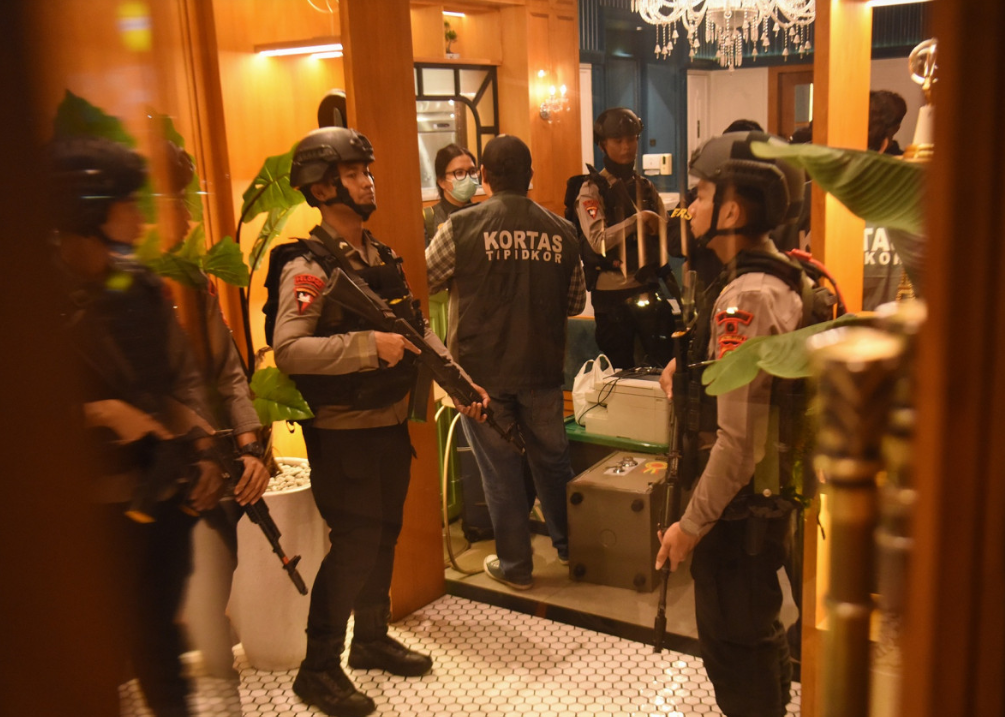
The dramatic nature of the raids became evident when armed officers descended upon de'Clan Signature, a restaurant in Cipete, South Jakarta on the afternoon of July 8. Personnel from Jakarta's police force and the National Police's corruption crime corps, accompanied by Mobile Brigade officers outfitted in tactical gear and wielding long-barrel firearms, discovered a two-metre-high safe concealed behind restaurant cabinetry. The breach revealed documents and cash denominated in multiple currencies totalling millions of dollars, a discovery that immediately signaled the scale of the operation to onlooking diners and staff who witnessed the heavily armed contingent.
The seizures did not end at the restaurant. Officers proceeded directly to Koin Money Changer located in the adjacent property, where they opened another safe to retrieve hundreds of thousands of dollars in rupiah-denominated banknotes. These initial discoveries, while substantial, represented merely the opening phase of an overnight operation that would extend through numerous locations across the capital and into the early morning hours of Thursday. The widening scope of the investigation—spanning at least a dozen locations—suggested authorities were targeting a sophisticated network potentially stretching across multiple business entities and residential properties.
The operation's most dramatic finding emerged from a high-end residence situated in the Sentul hills, approximately one hour's drive south of Jakarta's city centre. Officers recovered seven suitcases containing 74 kilograms of gold bars alongside additional cash reserves held in various foreign denominations. This single location accounted for the preponderance of the overall haul's estimated value. The sheer physicality of the discovery—rows of gleaming gold bars and neatly stacked currency photographed by media and subsequently displayed by authorities—provided images that immediately captured public imagination and crystallized the scope of alleged misconduct in popular consciousness.
Febrie Adriansyah, who had occupied the deputy attorney general position for more than four years, resigned from his post over the weekend following the raids. Although authorities subsequently designated him as a suspect in both corruption and money-laundering investigations, he has not been detained. Febrie has acknowledged ownership of the Sentul residence but maintained that the seized assets do not belong to him, indicating that their origin and rightful ownership would emerge through legal proceedings. This assertion of innocence, delivered amid photographic evidence of extraordinary wealth, has done little to quell speculation regarding potential impropriety.
The investigation's scope extended beyond Febrie's properties. Officers conducted searches at the Pacific Place apartment towers, a premium residential complex situated near Jakarta's stock exchange, as well as numerous corporate offices distributed throughout the city. Additional raids targeted residences in the Gandaria neighbourhood of South Jakarta linked to Don Ritto, an attorney who has likewise been named a suspect in the investigation. According to local reporting, Ritto has been detained in connection with the matter. Corporate records reviewed by Indonesian media outlets indicate that Ritto maintains business interests in entities connected to both the raided restaurant and money changer, suggesting potential coordination across multiple commercial fronts.
The discovery has ignited significant debate within Jakarta's political and legal circles regarding both the substance of the allegations and the procedural mechanisms governing the investigation itself. Observers remain divided on whether the raids represent evidence that Indonesia's anti-corruption infrastructure functions as intended, catching high-ranking officials engaged in criminal activity, or whether the recurrence of such scandals signals deepening institutional rot that extends into the uppermost echelons of law enforcement and prosecutorial authority. The symbolic power of the seized gold and currency has made this case particularly resonant with the Indonesian public, transforming abstract questions of corruption into tangible, photographable evidence.
Constitutional law scholar and former chief justice Mahfud MD has publicly raised substantive legal concerns regarding the handling of Febrie's case. In a statement delivered via his YouTube channel, Mahfud questioned the legality of transferring investigative authority from the police to the Attorney General's Office, asserting that such a transfer lacks foundation within Indonesia's criminal procedure code. This procedural irregularity, according to Mahfud, could render the entire case vulnerable to pre-trial challenge and jeopardy the eventual prosecution. Notably, Mahfud—dressed in a white, blue and black Batik blazer—specifically called for the Corruption Eradication Commission, an independent state institution, to assume control of the investigation to ensure procedural integrity and institutional independence.
The involvement of prominent legal figures in critiquing the investigation's conduct underscores a critical tension at the heart of Indonesia's anti-corruption efforts. While successful raids and seizures demonstrate capacity for enforcement action, questions about prosecutorial independence and adherence to established legal procedure threaten to undermine the credibility of such operations. The transfer of responsibility between agencies, if conducted improperly, could provide defensive grounds for challenging the entire evidentiary foundation upon which charges might eventually rest. For Malaysian and Southeast Asian observers, the case illustrates how even high-profile anti-corruption operations can stumble on questions of institutional process and jurisdictional authority.
The investigation's progression in coming weeks will prove determinative not merely for Febrie Adriansyah's personal legal fate but for broader perceptions of institutional integrity within Indonesia's law enforcement apparatus. Should the Corruption Eradication Commission assume investigative control as Mahfud advocates, observers may view such a shift as corrective action ensuring independence. Conversely, if the Attorney General's Office continues directing proceedings, critics will likely interpret this as evidence of insufficient institutional separation and potential institutional self-protection. The immense quantities of gold and currency recovered provide undeniable evidence that accumulation of extraordinary wealth occurred; establishing the mechanisms, participants, and criminality underlying such accumulation remains the substantially more complex undertaking ahead.

