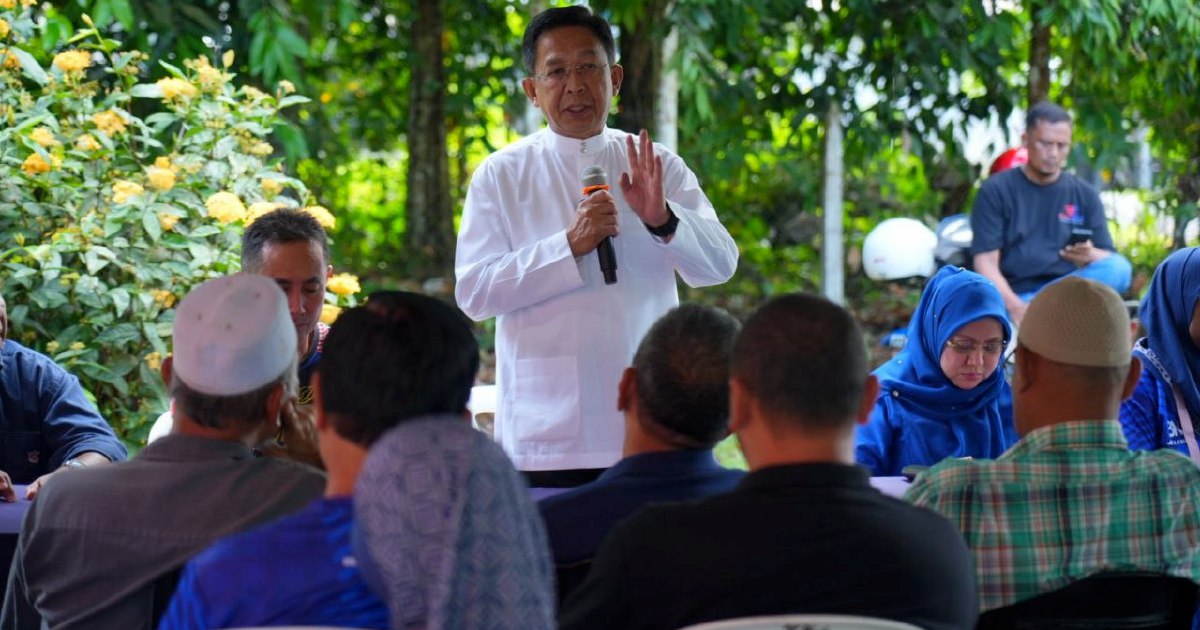
Perikatan Nasional has positioned Negri Sembilan Umno chairman Datuk Seri Jalaluddin Alias as among its primary choices for the menteri besar role should the coalition secure victory in the state election scheduled for August 1. The announcement signals the opposition alliance's confidence in fielding experienced leadership for the central Malaysian state, where political dynamics have shifted markedly over recent electoral cycles.
The identification of Jalaluddin follows strategic deliberations between PN and its coalition partner Barisan Nasional over prospective candidates. The dual-coalition arrangement represents a significant realignment in Negri Sembilan politics, where control has fluctuated between competing blocs. By publicly naming potential menteri besar contenders ahead of polling day, the alliance aims to project stability and organizational readiness to voters concerned about post-election governance clarity.
Jalaluddin's profile as Umno's state chairman carries considerable weight within party structures and among Umno-aligned constituencies. His positioning reflects PN's recognition of the need to leverage established figures with deep roots in state politics and community networks. Negri Sembilan, with its significant Malay-Muslim majority and substantial federal civil service presence, remains highly sensitive to leadership credentials and political credibility within traditional Umno strongholds.
The coalition's approach contrasts with earlier uncertainty about leadership succession in the state, which had troubled stakeholders and created governance questions. By floating candidates now, PN and BN attempt to address voter concerns about the post-election landscape and demonstrate coherent succession planning. This transparency on potential leadership could influence voter calculations, particularly among undecided segments weighing administrative competence and continuity.
For Malaysian readers tracking Negri Sembilan's trajectory, the leadership question carries ramifications extending beyond the state. The state sits strategically within the broader Federal Territory ecosystem and hosts significant administrative functions. Leadership stability and effective governance directly affect residents' access to state services, development priorities, and investment climate in this relatively compact but economically important region.
The coalition announcement also illuminates internal PN-BN negotiations over seat allocations and government formation. Consensus on a menteri besar candidate suggests advanced agreement on power-sharing arrangements, reducing the likelihood of post-election stalemates that have paralyzed other state governments nationally. Such clarity strengthens the coalition's electoral message that it offers functional, predictable governance rather than the political brinkmanship witnessed elsewhere.
Jalaluddin's inclusion among potential candidates reflects broader calculations about representation and factional balance within Umno and the larger coalition. Negri Sembilan Umno comprises various sub-factions and interest groups, each seeking recognition in state governance. Elevating the state chairman acknowledges both his organizational role and the factional alignments he embodies, serving as a unifying symbol across Umno segments that might otherwise remain fractious.
The August 1 election carries significance for national coalition architecture beyond Negri Sembilan itself. A PN-BN victory would underscore the durability of this partnership at state level while reinforcing their combined narrative of stability compared to competing coalitions. Conversely, a defeat could trigger soul-searching within both parties about their electoral viability and force recalibration of candidate selection strategies for subsequent contests.
For regional observers, Negri Sembilan's election represents a microcosm of Malaysian electoral competition. The state encompasses diverse demographic segments, urban-rural contrasts, and competing economic interests. Leadership candidates must address traditional concerns around religious administration, Malay-Muslim welfare, and development spending alongside modernization demands and pluralistic governance expectations. Jalaluddin's potential elevation to the top executive role will test whether he can reconcile these sometimes-competing priorities.
The coalition's willingness to name candidates before polling suggests confidence in their campaign momentum and internal polling data. However, the qualifier that Jalaluddin remains among multiple potential picks also preserves tactical flexibility should circumstances shift. Electoral mathematics in Negri Sembilan require winning sufficient seats to form government, and the precise coalition composition will ultimately determine the menteri besar appointment.
Looking forward, the naming of potential leadership provides a framework for voter evaluation of the competing visions for Negri Sembilan. Residents can now assess not merely which coalition to support but what governance style and priorities the favored menteri besar candidate would bring. This explicit positioning of candidates serves the democratic process by enabling more informed electoral choices, moving beyond abstract coalition promises toward tangible personality-based and platform-based distinctions.
The August 1 election will ultimately reveal whether Negri Sembilan voters endorse the PN-BN partnership and, by extension, the Jalaluddin-led administration they are championing. The outcome will reverberate through Malaysian politics by either validating this coalition model or prompting reconsideration of electoral strategies and candidate selection approaches that will influence contests in other states and the federal arena.

