Jalan Burma stands as one of George Town's most compelling routes for visitors seeking to experience Penang beyond the postcard image of its UNESCO heritage zone. Stretching nearly five kilometres from the edges of the historic district into the upscale Pulau Tikus neighbourhood, this arterial road encapsulates the city's layered past and its contemporary evolution as a destination that balances architectural preservation with thriving food culture. Walking its length reveals how a single street can serve as a palimpsest of Penang's transformative history, from colonial administration through waves of migration to its current status as a regional food tourism hub.
The heritage landscape of George Town is typically anchored around several key thoroughfares within the UNESCO Historic Site—Beach Street, Armenian Street, Lebuh Carnavon, Lebuh Chulia and Pengkalan Weld. Within this concentrated zone, tourists encounter a predictable itinerary: restored shophouses, souvenir merchants, vintage dealers and art suppliers. Yet this approach to George Town navigation, while effective, can obscure the richer complexity that extends along secondary streets like Jalan Burma. The road itself functions less as a heritage monument and more as a living corridor where different eras and purposes coexist without hierarchy—a hotel built in 1926 sits steps from street food stalls that have earned Michelin recognition, while cultural landmarks tell stories of 19th-century migration patterns.
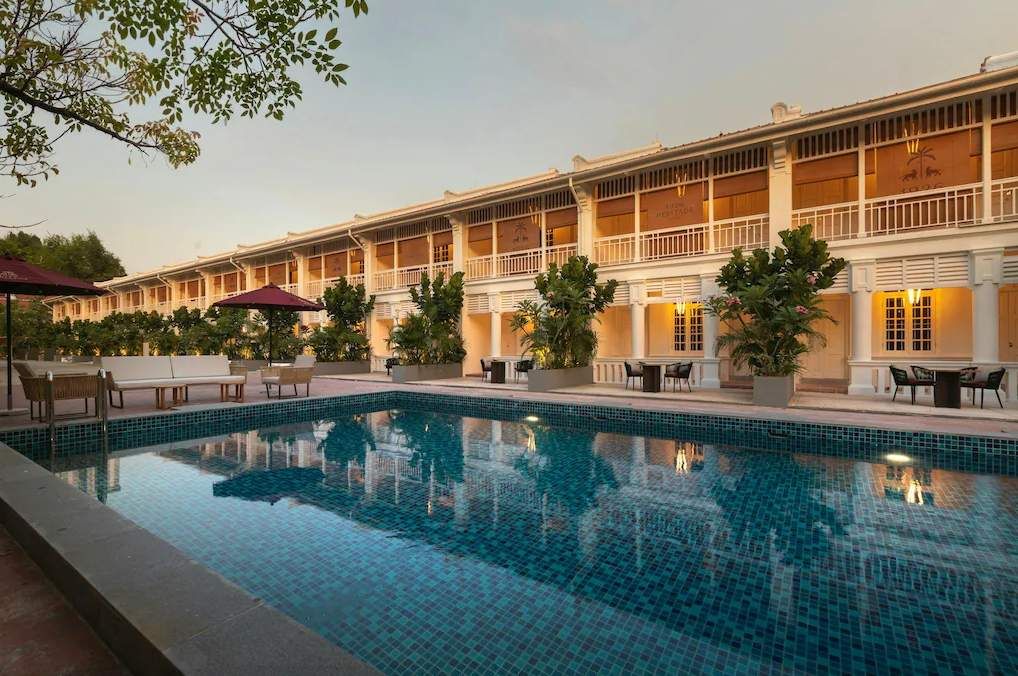
At the heart of Jalan Burma's contemporary appeal lies the newly opened heritage hotel, housed in a restored colonial structure dating to 1926 and now celebrating its centennial year. The building originally functioned as residential quarters for British colonial administrators and local government officials, embodying the Anglo-Malay architectural vocabulary characteristic of early 20th-century Penang. When the Penang Development Corporation converted the property into a hotel in 1999, the original 24 interconnected link houses were preserved structurally while being reconfigured internally. The hotel now operates 78 rooms and suites distributed across six categories, including Heritage Rooms designed for solo travellers and the larger Straits Suite. This adaptive reuse model—common among boutique hotels in Southeast Asian heritage cities—maintains historical authenticity while meeting modern hospitality expectations, complete with high-tech conveniences such as WiFi-enabled water filtration systems in guest rooms.
Immediate surroundings of the hotel exemplify how Penang's food recognition extends beyond formal dining establishments into humble street-level operations. Duck Blood Curry Mee operates just a few doors away, offering a traditional Hokkien comfort dish that represents the type of everyday eating experience that defines the city's culinary character. More significantly, Restoran Old Green House—located adjacent to the hotel—houses Green House Prawn Mee & Loh Mee, a stall that has earned Bib Gourmand status under the Michelin Guide framework. The Bib Gourmand designation, distinct from star ratings, recognises exceptional food at moderate prices, making these venues particularly relevant for travellers prioritising authentic experience over fine dining prestige. Penang currently boasts 74 Michelin-recognised establishments: two with one-star awards, 33 listed under Bib Gourmand, and 39 as Michelin Selected venues, with significant concentration in George Town itself.
The tension between multiple Green House locations—the original at Restoran Old Green House and a subsequent branch at Green House Prawn Mee/Law Mee Corner further along Jalan Burma toward Komtar—reveals how Penang's food reputation creates its own gravitational effects and complications. Locals consistently direct visitors to the original venue, though both operations maintain the same fundamental menu and approach. This phenomenon reflects broader patterns in Penang's culinary tourism, where reputation and perceived authenticity often overshadow objective quality differentials. For visitors navigating the city, such distinctions matter less than understanding that Jalan Burma itself functions as a secondary food corridor, distinct from the densely packed Lebuh Chulia hawker zones but equally worthy of exploration.
Jalan Burma's contemporary name and identity obscure its polyglot history. Originally designated Burmah Road on colonial-era signboards and maps, the thoroughfare carried multiple designations across different linguistic communities. In Malay, it was known as Jalan Tarek Ayer or Water Cart Road, translations that preserved functional descriptions from an earlier era when bullock carts transported water through the settlement. Hokkien and Cantonese communities used their own nomenclature—Gui Chia Chui in Hokkien and its Cantonese equivalent—similarly referencing the water transport function. An information board beneath the Komtar Octopus Pedestrian Bridge documents this nomenclatural history, offering visitors a compressed narrative of how infrastructure and migration shaped place names. The naming transition from water-related terminology to Burmah Road reflected the establishment of a Burmese settlement in the Pulau Tikus area during the 19th century, a demographic shift that eventually prompted the renaming of the main arterial road to reflect its new cultural association.
That Burmese presence remains architecturally and spiritually significant along Jalan Burma and its tributary lanes. The Dhammikarama Burmese Temple, established two centuries ago, continues to function as a religious and cultural centre, anchoring the Burmese identity that the road's name perpetuates. Complementing this primary landmark are secondary indicators of Burmese influence embedded in the street nomenclature of the surrounding neighbourhood: Rangoon Road, Mandalay Road and Moulmein Close all reference major Burmese cities, creating a miniature geography of displacement and memory. For visitors unfamiliar with Penang's demographic history, these names signal nothing unusual; for those aware of the city's migration patterns, they constitute an informal map of where communities established themselves and how their presence shaped spatial identity. This layering of history—where contemporary street names carry traces of 19th-century settlement patterns—distinguishes Jalan Burma from the more carefully curated heritage zone.
The practicalities of walking Jalan Burma merit consideration for visitors planning their itinerary. At nearly five kilometres, the road qualifies as a substantial pedestrian undertaking, particularly in Penang's equatorial heat. The walk from the hotel district toward Lebuh Campbell, Lebuh Kimberley and Beach Street—the heart of the heritage shopping district—requires approximately four kilometres of round-trip walking. Most sections feature adequate pedestrian pathways, though one or two segments lack proper sidewalks, requiring momentary navigation alongside vehicle traffic. Visitors should prepare accordingly: borrowed umbrellas from hotels, small towels for perspiration management, and refilled water bottles are practical necessities rather than luxuries. The walk itself, however, offers consistent rewards—the street maintains a sense of safety and liveliness without the overwhelming congestion of main commercial thoroughfares.
The food experience along Jalan Burma operates differently from the heritage zone's concentrated restaurant clusters. Where Beach Street and Lebuh Chulia concentrate dining options with clear geographic boundaries, Jalan Burma distributes its culinary attractions across its length, creating a more dispersed exploration pattern. This distribution reflects the road's character as a functioning neighbourhood arterial rather than a designed tourism corridor. Visitors cannot simply walk three blocks and encounter a dozen dining options; instead, they navigate between discrete establishments, each requiring individual discovery or prior research. This less-curated approach appeals to travellers seeking authentic eating experiences over optimised tourism experiences. The presence of Bib Gourmand-listed operations in modest coffeeshops and food courts—rather than solely in dedicated restaurants—reinforces this sensibility. There is particular appeal in watching food preparation in open-air stall settings, where the combined aromas of multiple simultaneous cooking operations create a multisensory experience absent from formal dining establishments.
The hotel's own dining operation, Root House by Gen, introduces a contrasting culinary proposition within the heritage building itself. This modern Chinese restaurant represents a different category of gastronomic experience—chef-driven, contemporary interpretation rather than preservation of traditional techniques. For visitors based at the hotel, this proximity eliminates the need for extended evening excursions and allows flexible scheduling between casual street food exploration and more structured dining experiences. The ability to walk Jalan Burma during daylight hours, sample multiple street food options, return to the hotel for rest and preparation, then dine formally in the evening creates a complete daily rhythm that integrates heritage tourism, food exploration and contemporary hospitality.
Beyond Jalan Burma proper, the surrounding George Town landscape includes destination attractions that anchor visitor itineraries. The Hin Bus Depot, operating as a marketplace on weekends, functions as a curated alternative to the heritage zone's permanent retail establishments. Local vendors offer curios, artworks, homemade clothing items and personalised services such as caricature drawing, alongside homemade food and beverages. The inclusion of live music performances during meal times creates a social atmosphere absent from individual street food stalls. For visitors spending extended time in George Town, weekend visits to Hin Bus Depot provide relief from the heritage zone's density while maintaining engagement with local creative communities.
Jalan Burma ultimately represents a more complex model of heritage tourism than the consolidated UNESCO zone. Rather than presenting history as a curated museum experience, the street integrates historical architecture, contemporary hospitality, working food culture and ethnic heritage into a lived landscape. The heritage hotel's presence anchors one end of this spectrum, legitimising heritage tourism while maintaining commercial viability through contemporary standards. The abundance of Michelin-recognised food operations—from formal restaurants to humble stalls—demonstrates how international culinary recognition intersects with local practice without fundamentally altering it. The Burmese cultural presence, marked by temple and place names, persists without performing itself exclusively for tourists. Walking Jalan Burma requires more effort than navigating the compact heritage zone, but this investment yields encounters with Penang that feel less mediated by tourism infrastructure, even as tourism increasingly structures how the city presents itself to visitors. For those willing to extend their explorations beyond the predictable itineraries, the street rewards curiosity with discoveries that the postcard version of George Town typically obscures.

