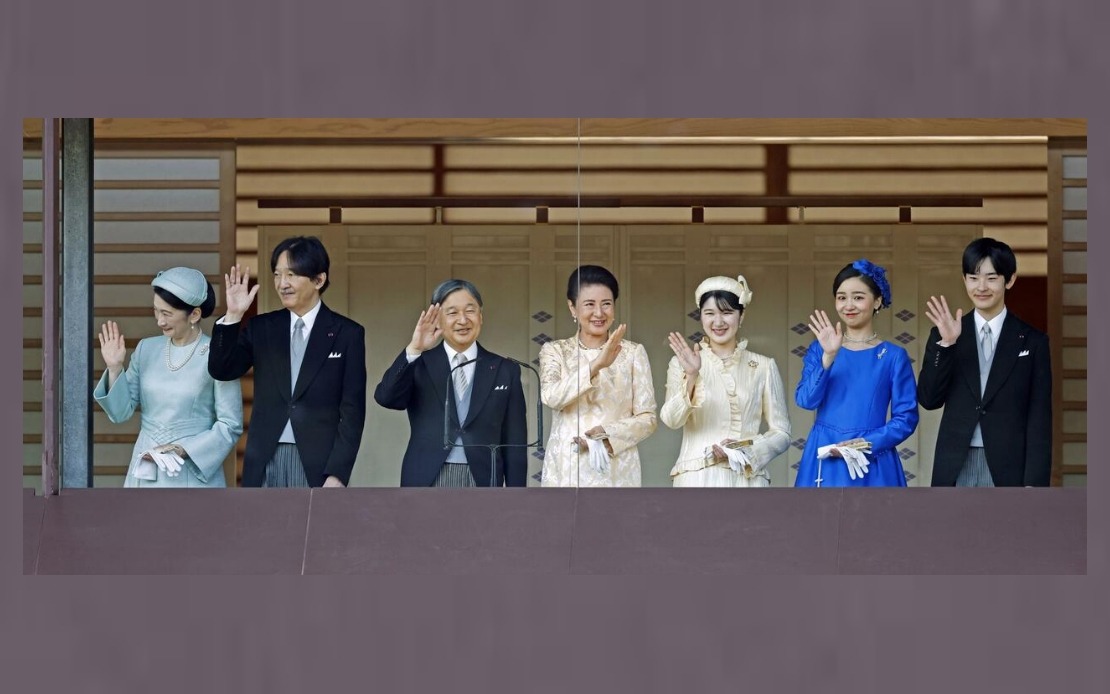
Japan's parliament has passed a significant overhaul of the Imperial House Law on Friday, marking the first substantive changes to the 1947 legislation that has governed the imperial succession for over seven decades. The revised framework seeks to stabilise the hereditary monarchy, the world's oldest continuous institution of its kind, by introducing measures designed to replenish a shrinking pool of eligible heirs. Yet despite these reforms, Prime Minister Sanae Takaichi's coalition government has resisted the fundamental restructuring that public opinion appears to favour, maintaining the centuries-old principle that only males descended through paternal lines may occupy the Chrysanthemum Throne.
The legislative package contains two primary modifications intended to address the monarchy's vulnerability. The law now permits the adoption of unmarried males aged 15 and older from the eleven former imperial branch families that were stripped of their status following Japan's defeat in World War II. In 1947, when the postwar Constitution was implemented under American occupation, fifty-one members across these cadet branches were removed from the imperial register, fundamentally altering the dynasty's demographic composition. The new provision creates a pathway for descendants of these historical families to rejoin the imperial institution, potentially expanding the pool of future successors. Additionally, the revised law grants female imperial members the right to maintain their royal status and privileges even after marrying ordinary citizens, a significant cultural shift in a nation where imperial women have traditionally forfeited their titles upon marriage to commoners.
These reforms arrived in response to an increasingly urgent succession crisis. Emperor Naruhito currently has only three male heirs positioned to potentially ascend the throne: his son Crown Prince Fumihito and two grandsons. This concentration of male heirs represents a critical vulnerability for institutional continuity, particularly given Japan's ageing demographics and the time required to nurture new generations. Previous sessions of parliament had grappled with this dilemma for months, culminating in a cross-party consensus that drew input from thirteen parliamentary parties and groups. However, this consultative process deliberately sidestepped the most contentious question: whether females should be permitted to reign in their own right.
Takaichi, who became Japan's first female prime minister, has prioritised this legislative agenda despite considerable debate within her Liberal Democratic Party and its coalition partner, the Japan Innovation Party. Opposition lawmakers have argued that the deliberation period was inadequate for such a consequential constitutional matter, and have challenged the ruling coalition's apparent commitment to preserving male-line succession at all costs. Critics contend that the government has chosen political expediency over genuine institutional reform, protecting tradition rather than ensuring the monarchy's long-term viability. The government maintains that the adoption mechanism provides sufficient flexibility to maintain succession without formally endorsing female emperors, a position that strikes many observers as a temporary solution rather than a permanent fix.
The tension between parliamentary conservatism and public sentiment has become increasingly stark. A Kyodo News poll conducted in May revealed that eighty-three percent of respondents supported permitting female emperors, whilst only thirteen percent expressed opposition. This substantial popular mandate reflects generational shifts in Japanese attitudes toward gender roles and institutional modernisation. For many Japanese citizens, particularly younger voters, the insistence on male-only succession appears anachronistic and unnecessarily risky given demographic realities. Yet the ruling coalition has chosen to interpret the parliamentary consensus as sufficient to validate the adoption framework whilst declining to address female succession directly.
The historical context of the 1947 Imperial House Law remains significant. Drafted during postwar occupation and reflecting both American influence and Japanese negotiation, the legislation enshrined the principle that "the throne shall be succeeded to by a male offspring in the male line belonging to the Imperial Lineage." This language remained unaltered through decades of legal amendments and constitutional reinterpretation. The current revision preserves this core principle whilst working around its constraints through the adoption mechanism. The government's strategy essentially acknowledges the succession problem without formally dismantling the male-preference framework, a compromise that satisfies neither progressive reformers nor committed traditionalists.
For Southeast Asian observers, Japan's constitutional deliberation processes offer instructive lessons in institutional inertia. While democracies throughout the region continue evolving their governance frameworks to address contemporary challenges, Japan's experience demonstrates how deeply entrenched traditions can constrain reform even when public opinion clearly demands change. The phenomenon also reflects broader questions about how hereditary institutions navigate modernisation without surrendering their foundational identities. Japan's choice to preserve symbolically significant succession rules whilst introducing practical workarounds represents a characteristically Japanese approach to institutional adaptation: superficial continuity masking substantive innovation.
The adopted male relatives pathway creates interesting practical complications. Government officials acknowledge that the process was previously deemed impossible to implement, yet legal changes have rendered it feasible. Male descendants of the eleven former branches who were removed from imperial status in the 1947 purge now possess a mechanism to return to the royal register. However, the absence of clear procedures, criteria, or timelines for such adoptions leaves significant uncertainty. Questions persist regarding how many eligible males might seek to rejoin the imperial family, how the government would select among candidates, and how the public would receive the elevation of distant relatives to prominent positions. These procedural ambiguities suggest that further legislation may ultimately prove necessary.
The gender dynamics of the revised law warrant particular attention given Takaichi's historic position as Japan's first female premier. Her government has paradoxically enshrined women's right to maintain imperial status after marriage whilst explicitly declining to extend them succession rights. This asymmetry highlights the limited nature of the reforms and suggests that questions about female imperial authority will inevitably resurface. When Japan eventually experiences a succession crisis that the adoption mechanism cannot adequately address—a scenario demographers view as increasingly probable—political pressure for genuine female succession will likely intensify beyond resistance that appears solid today.
The parliamentary approval represents a compromise that satisfied neither reformers nor strict traditionalists, yet succeeded in navigating political consensus around the most divisive contemporary issues facing the imperial institution. The legislation addresses the immediate succession concern through adoption provisions whilst explicitly refusing to alter the male-preference principle that underpins the imperial system. This approach allows the government to claim both institutional modernisation and preservation of tradition, though observers increasingly recognise that such dual positioning cannot indefinitely postpone deeper structural questions about the monarchy's future relevance and legitimacy in an evolving Japanese society.

