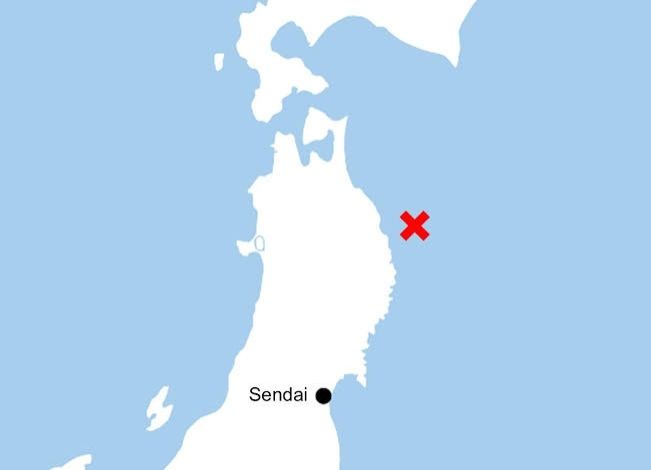
A powerful 7.2-magnitude earthquake rumbled beneath the waters off Iwate prefecture in northern Japan on Thursday morning, sending tremors across a vast swathe of the country including Tokyo, hundreds of kilometers away. The seismic event, which struck at 7:30 am local time at a depth of 44 kilometres according to the Japan Meteorological Agency, resulted in only minor damage and no reported casualties—a testament to Japan's stringent building codes and early warning systems, though not without some disruptions to daily life and infrastructure.
The JMA initially recorded the tremor at 6.9 magnitude before revising the measurement upward to 7.2, reflecting the significant energy released by the submarine earthquake centred in the sea off Honshu's northern tip. Notably, the offshore location of the epicentre prevented the generation of a tsunami, sparing coastal communities from the additional threat that undersea earthquakes typically pose. The intensity of shaking registered at the upper end of Japan's seven-level Shindo scale in Aomori prefecture, where residents experienced conditions severe enough to knock people off their feet had they been standing unsupported.
Across the affected region, the quake's effects manifested in ways both mundane and concerning. Kitchen cabinets disgorged their contents in homes and commercial establishments, with saucepans and other kitchenware scattering across floors, while store shelves similarly emptied their goods. Security cameras swung violently on their mountings, and picture frames tumbled from walls. Mutsumi Shimohata, a 61-year-old food processing company employee in Aomori, described the experience as startling but ultimately harmless in her home, though her workplace suffered more substantially with automatic doors ceasing to function and portions of the office ceiling collapsing—a reminder that even Japan's resilient infrastructure faces challenges under extreme seismic stress.
Transport networks experienced disruptions as operators prioritised safety over continuity. Several shinkansen bullet train services were suspended in the immediate aftermath whilst authorities conducted inspections to ensure track integrity and system functionality. A primary school in Hashikami closed temporarily as a precautionary measure following the quake, and emergency services fielded multiple calls reporting people trapped in lifts and buildings with jammed doors. A tanker truck overturned during the initial shaking, though detailed casualty reports remained minimal, suggesting the tremor's violence was more theatrical than destructive.
Government spokesman Minoru Kihara issued a cautious statement emphasising that no human deaths had been confirmed at the time of reporting, with officials pledging continued monitoring of damage assessments. Prime Minister Sanae Takaichi issued a formal statement urging residents in heavily shaken areas to maintain vigilance against potential aftershocks of comparable intensity, a precaution grounded in seismological reality. The Nuclear Regulation Authority swiftly confirmed that nuclear power stations throughout the region showed no abnormalities, a critical concern given Japan's complex relationship with atomic energy following past disasters.
For Malaysian and regional observers, the earthquake underscores the profound geological differences between Southeast Asia and East Asia. Japan's position atop four converging tectonic plates along the Pacific Ring of Fire makes it one of Earth's most seismically restless nations, experiencing hundreds of tremors annually and accounting for approximately 18 percent of global earthquake activity. This geological reality has fundamentally shaped Japanese engineering, urban planning, and public consciousness about disaster preparedness in ways that extend far beyond what most Southeast Asian nations regularly confront.
The broader context of Japan's seismic vulnerability carries historical weight that continues to influence policy and public perception. The catastrophic 2011 Tōhoku earthquake measuring 9.0 magnitude triggered a tsunami that claimed approximately 18,500 lives and destroyed the Fukushima nuclear facility, an event that reshaped Japan's energy policy and remains a touchstone for discussions about earthquake preparedness. More recently, an April earthquake registering 7.7 magnitude injured at least ten people and prompted authorities to issue special warnings of elevated risk for magnitude 8.0 or stronger quakes, advisories that were subsequently withdrawn after about a week.
Thursday's earthquake, whilst powerful by most international standards, represents the kind of frequent moderate-to-strong seismic activity that Japan has learned to manage through investment in early warning systems, building codes, and public education. The comparative lack of damage despite the 7.2 magnitude suggests these measures function effectively, with automated systems providing crucial seconds of warning before strong shaking arrives. Smartphone alerts alerted residents to danger virtually instantaneously, allowing people moments to seek protective positions or take protective measures.
For policymakers and infrastructure planners across Southeast Asia, Japan's response offers instructive lessons about the importance of preparedness, even in regions where extreme earthquakes are less frequent. While Malaysia and most of Southeast Asia occupy tectonically quieter zones compared to Japan, the region remains vulnerable to significant seismic events, particularly in areas proximate to subduction zones and fault lines. The 2004 Indian Ocean earthquake and tsunami that devastated Aceh and surrounding regions demonstrated that catastrophic seismic events, though rare in Southeast Asia, can strike with devastating consequences when they do occur.
The absence of major damage from Thursday's powerful Japanese earthquake reflects the cumulative effect of decades of engineering advancement and regulatory rigour. Japan's building codes require structures to withstand lateral forces far exceeding typical standards in many other nations, and continuous monitoring of bridge integrity, tunnel stability, and infrastructure resilience has become institutionalised. Emergency response protocols activate automatically, with rail networks shutting down to prevent accidents and communication systems providing immediate public guidance.
Looking forward, the earthquake serves as a reminder of the planet's dynamic nature and the ongoing challenge posed by tectonic activity. While Japan has developed sophisticated mechanisms to minimise loss of life and property damage, the underlying geological forces remain uncontrollable. The experience also illustrates how wealth and technological sophistication, coupled with rigorous regulatory frameworks and public preparedness, can substantially mitigate the consequences of natural disasters that would prove far more destructive in less-prepared nations. For a region like Southeast Asia, where economic development and urbanisation continue rapidly, such lessons carry particular relevance as nations weigh investment in disaster resilience against competing development priorities.

