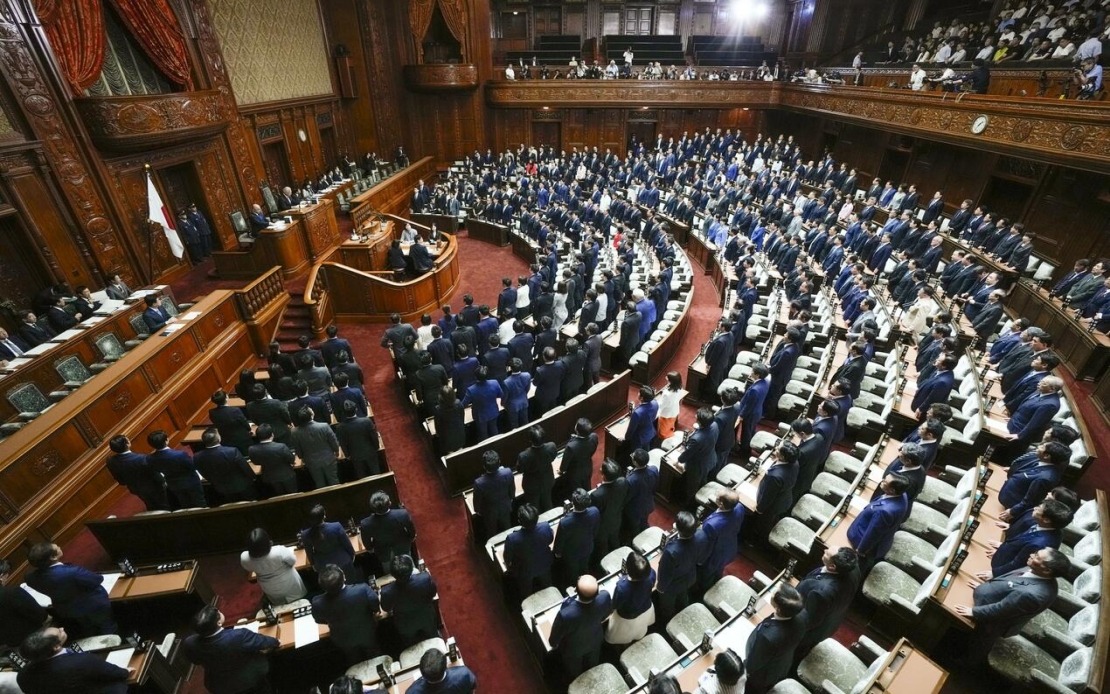
Japan has taken a decisive step toward modernizing its approach to the imperial succession by passing sweeping revisions to the Imperial House Law, the foundational legislation governing the world's oldest monarchy. The House of Representatives approved the bill on Friday following expedited deliberations that began the same day, marking a significant constitutional moment for a nation grappling with the gradual shrinkage of its imperial family. Prime Minister Sanae Takaichi's government hopes to shepherd the legislation through the House of Councillors before the parliamentary session concludes on July 17, leveraging the ruling coalition's commanding two-thirds majority in the lower chamber.
The reform tackles two interconnected challenges that have preoccupied Japanese policymakers for decades: the thinning ranks of individuals eligible to assume the Chrysanthemum Throne and the corresponding decline in total imperial family members. Under prevailing rules that have remained largely unchanged since the post-World War II constitution, only males descended from emperors through unbroken male lineage can inherit the throne, while female royals automatically lose their status upon marrying ordinary citizens. This restrictive framework has created a succession pipeline of alarming fragility, with only a handful of viable heirs currently in the line of succession.
The legislation introduces two principal mechanisms to address this structural vulnerability. First, it permits the imperial family to formally adopt males aged fifteen and above who descend from emperors through their male ancestors in the eleven dissolved branch families that were severed from the main imperial house during the American occupation. Second, it grants female members the extraordinary right to retain their imperial status after marriage to commoners, fundamentally breaking with centuries of tradition. Notably, the bill stops short of permitting female members or those descended through the maternal line to themselves become empress, an option that opinion surveys suggest commands substantial public backing but remains contentious among traditionalists.
The adopted provision itself contains a carefully calibrated compromise. While the legislation bars adopted members from directly ascending to the throne, it creates a revolutionary pathway: the male descendants of these adoptees would become eligible succession candidates. This clever construction attempts to satisfy multiple constituencies—those concerned about preserving the direct bloodline principle and those advocating for practical expansion of the succession pool. The compromise essentially distributes the imperial role across a broader network while nominally preserving succession through the male line.
The rapid passage through Japan's lower chamber masks the profound political turbulence that preceded it. The Takaichi government had submitted the bill in late June, but parliamentary dysfunction rooted in opposition resistance to other controversial legislation had frozen all proceedings. For nearly three weeks, the Diet remained locked in standoff over two additional government bills: one proposing the reduction of lower house seats and another establishing a "second capital" to function as a backup administrative center to Tokyo. Opposition parties demanded intensive accountability sessions with Prime Minister Takaichi, citing media allegations that her political organization produced online videos containing defamatory content targeting rival politicians.
The parliamentary impasse reflected deeper anxieties about Prime Minister Takaichi's governing style and her coalition partner, the Japan Innovation Party. Many opposition politicians characterized the ruling bloc's approach to legislative business as high-handed and dismissive of deliberative processes. Only when the government capitulated to key opposition demands—including abandonment of plans to force the seat-reduction bill through during the current session—did negotiations resume. The agreement to hold one-on-one debate sessions between Takaichi and opposition leaders, scheduled for Wednesday afternoon, provided sufficient political cover for opposition figures to allow the imperial law revision to proceed.
The imperial law overhaul emerged as a priority for the Takaichi government partly through necessity and partly through coalition politics. Updating the Imperial House Law formed part of the October agreement that established the ruling coalition between the Liberal Democratic Party and the Japan Innovation Party, with that coalition arrangement instrumental in Takaichi's election as Japan's first female prime minister. The legislation therefore carries symbolic weight beyond its technical content, representing a vindication of the coalition partnership and Takaichi's early legislative agenda.
The bill's structure, however, reveals important compromises and omissions that may frustrate reform advocates. The legislation incorporated provisions that extended beyond the bipartisan proposal developed by the lower and upper house speakers following consultations with all thirteen parliamentary parties and groups. Most contentiously, the decision to allow male descendants of adoptees to become emperor went beyond the original proposal's narrower focus on securing adequate imperial family numbers. This expansion has drawn criticism from opposition parties who view it as overstating the reforms and creating unnecessary complications.
The deliberate exclusion of any pathway for female succession or maternal-line succession represents the bill's most significant limitation from a modernization perspective. Public opinion surveys have consistently demonstrated that roughly six in ten Japanese citizens support allowing female members to ascend the throne, making the government's rejection of this option a notable capitulation to traditionalist sentiment. This restriction means the underlying demographic challenge may persist: as the current male heirs age and the pool of eligible males from the branch families diminishes over generations, future parliaments may need to revisit succession rules yet again.
For regional observers, particularly those in Southeast Asia monitoring Japan's constitutional and institutional developments, the Imperial House Law revision illuminates broader patterns in Japanese governance. Despite operating within a democratic framework, Japan's political system often channels fundamental decisions through elite consensus-building among parliamentary parties rather than through public deliberation or referenda. The imperial succession question, touching on national identity and tradition, exemplifies how even consequential constitutional matters proceed through insider negotiation and strategic compromise among establishment actors.
The legislation also reflects Japan's persistent challenge in reconciling modernization with tradition. Unlike nations that have straightforwardly expanded female succession rights or abolished hereditary monarchy altogether, Japan's approach involves intricate technical solutions that nominally preserve core principles while functionally broadening eligibility. This incremental reformism may prove durable, or it may represent merely a temporary resolution to deeper tensions between changing social expectations and institutional continuity.
The immediate pathway forward remains uncertain despite the lower house approval. While the ruling coalition's two-thirds majority technically permits override of upper house resistance, the government remains politically weakened by earlier parliamentary conflict. Opposition parties retain leverage through threatened obstruction, and the imperial law revision, despite its technical nature, has become entangled in broader questions about Prime Minister Takaichi's leadership and the coalition's democratic credentials. Whether the upper house passes the legislation before July 17 remains contingent on continued political negotiation and the maintenance of fragile parliamentary consensus established this week.

