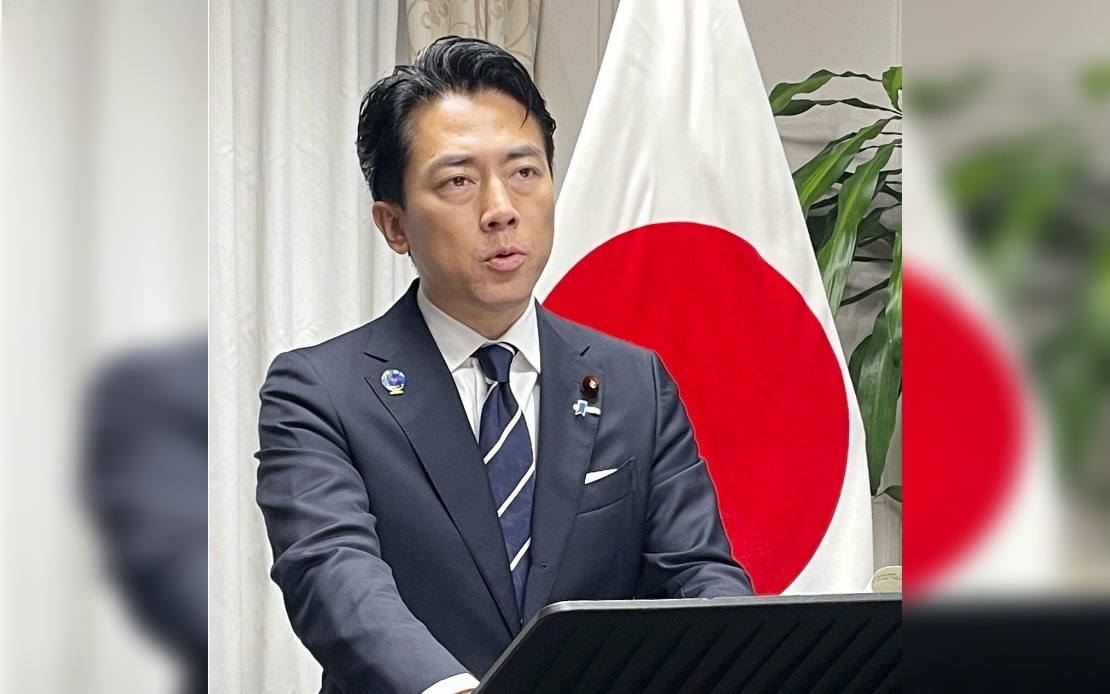
Japan's Defence Minister Shinjiro Koizumi has broken diplomatic silence by proposing that his country must engage in serious dialogue about nuclear weapons capability. Speaking through an online programme released on Friday, Koizumi suggested that Japan "cannot avoid touching" this traditionally taboo subject, signalling a potential shift in how Tokyo approaches defence strategy as it grapples with mounting security pressures in the Indo-Pacific region.
The minister's remarks carry particular weight given they appear timed with the government's planned overhaul of three crucial national security documents scheduled for completion by year's end. Under Prime Minister Sanae Takaichi's administration, defence and security reviews have taken on added urgency, driven by concerns over China's military expansion and regional tensions. Koizumi's intervention suggests the government is willing to test public and political appetite for reconsidering Japan's traditional non-nuclear stance.
Koizumi pointed to shifting European priorities as evidence that Japan cannot remain isolated from global nuclear strategy discussions. He specifically highlighted France and Finland as nations openly pursuing enhanced nuclear deterrence. France, under President Emmanuel Macron, announced in March its intention to expand its nuclear warhead arsenal, signalling renewed reliance on atomic weapons for continental security. Finland's parliamentary approval in June of legislation permitting nuclear weapons deployment represents a dramatic policy reversal for a country that shares a lengthy border with Russia.
These European developments carry symbolic importance beyond their immediate geopolitical context. For decades, Japan has positioned itself as the world's moral counterweight to nuclear proliferation, grounded in its tragic historical experience. However, the calculus of national security has shifted markedly as traditional deterrence frameworks face unprecedented strains. The resurgence of great-power competition and the apparent limits of conventional military capabilities have prompted even historically pacifist-leaning nations to reconsider their nuclear stance.
Japan currently shelters under America's extended nuclear umbrella, a cornerstone of the bilateral security alliance forged in the Cold War's aftermath. This arrangement has allowed Tokyo to maintain its constitutionally enshrined non-nuclear principles while still enjoying strategic protection. However, recent shifts in US strategic focus, including greater emphasis on the Indo-Pacific and concerns about American commitment reliability, have prompted Japanese strategists to contemplate alternative security arrangements. The question of whether the US nuclear guarantee remains credible under all circumstances has become increasingly pressing.
Japan's three core non-nuclear principles—not manufacturing, possessing, or permitting nuclear weapons on its soil—have formed the ethical and legal foundation of its post-war identity. These principles enjoy deep public support rooted in memories of Hiroshima and Nagasaki. Breaking with this tradition would represent not merely a policy adjustment but a fundamental recalibration of Japan's strategic identity and its relationship with regional and global nuclear governance frameworks.
Koizumi's push for open debate reflects frustration within security establishment circles that certain topics remain politically forbidden. He argues that Japan's deteriorating security environment demands intellectual flexibility and willingness to examine options previously considered unthinkable. This position echoes arguments made by former Defence Minister Itsunori Onodera, who similarly advocated late last year for serious examination of Japan's non-nuclear principles in light of evolving threats.
Previous attempts to broach this subject have triggered significant political backlash. In December last year, a government official involved in security planning suggested Japan should acquire nuclear weapons, prompting swift condemnation from opposition parties and formal protests from neighbouring countries wary of Japanese militarisation. The intensity of that response illustrated how explosive this issue remains within Japan's domestic political sphere and across Asia.
For Malaysia and Southeast Asia, this Japanese reconsideration carries important implications. A nuclear-armed Japan would fundamentally alter regional power dynamics and force reassessment of existing security architectures. ASEAN members, many pursuing non-aligned foreign policies and committed to regional nuclear-weapon-free zones, would face uncomfortable choices about how to respond to Japanese nuclear capability. The precedent could also embolden other nations to pursue similar weapons programmes, destabilising carefully maintained regional balances.
Koizumi's framing emphasises that debate itself does not constitute policy endorsement, a distinction likely intended to reduce immediate political damage while opening space for serious strategic discussion. However, in Japan's consensus-driven political culture, initiating such discussions often presages shifts in official thinking. If nuclear weapons move from unmentionable to debatable to potentially deployable, it would represent one of the most significant strategic realignments in post-war Asia.
The timing of this conversation, amid broader Japanese efforts to strengthen military capabilities and regional partnerships, suggests nuclear weapons discussion forms part of a comprehensive security recalibration. Japan is simultaneously expanding defence spending, acquiring advanced military systems, and deepening security partnerships with India, Australia, and other Quad members. Viewed within this context, Koizumi's call for nuclear debate appears less as isolated commentary and more as an articulation of strategic thinking already well advanced within defence circles.

