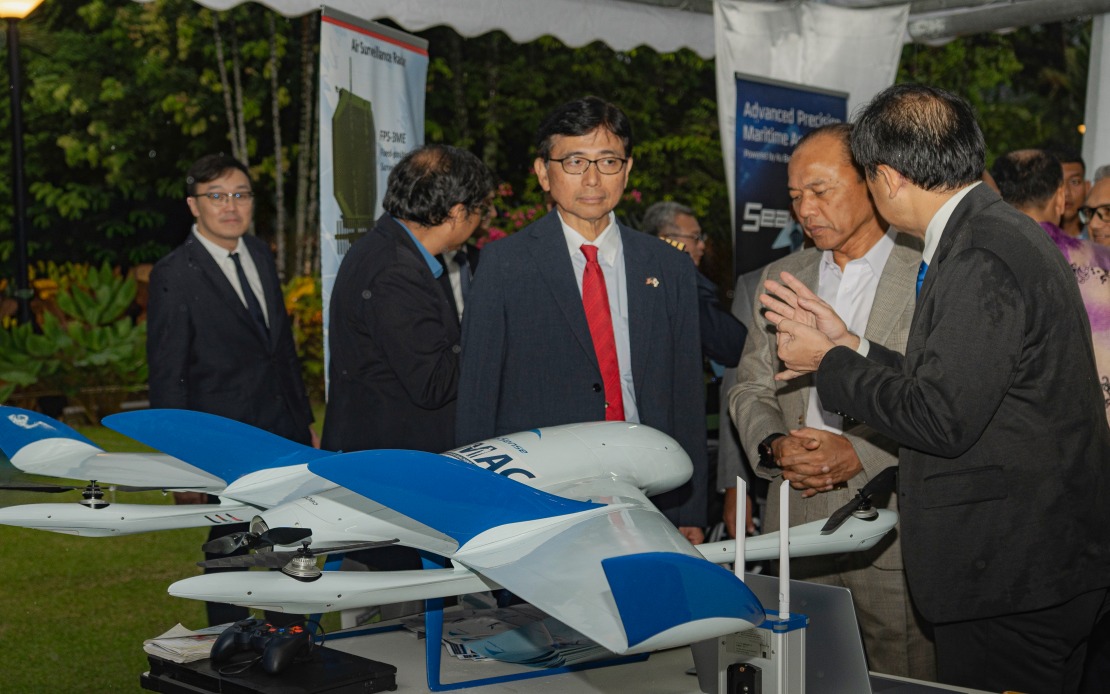
Japan is positioning itself as a committed security partner for Malaysia, with Tokyo signalling a readiness to substantially deepen defence cooperation as regional geopolitical tensions continue to evolve. The commitment was underscored by Japan Ambassador Noriyuki Shikata during remarks at the 72nd Japan Self-Defence Forces Day Reception in Kuala Lumpur, where he emphasised that security partnership sits at the heart of bilateral engagement between the two nations.
The diplomatic emphasis on defence cooperation reflects momentum generated during Prime Minister Datuk Seri Anwar Ibrahim's recent visit to Japan earlier this month, when Japanese counterpart Sanae Takaichi and the Malaysian premier jointly reaffirmed their strategic intentions. Both leaders specifically highlighted the centrality of defence and security cooperation to their broader relationship, signalling that military-to-military ties are no longer peripheral but core to how Tokyo and Kuala Lumpur view their partnership in an uncertain global environment. This elevation of defence matters reflects practical concerns about maritime security, regional stability, and the need for trusted partners in the Indo-Pacific.
The relationship between Japan and Malaysia achieved Comprehensive Strategic Partnership status in 2023, a designation that formalised what had already become substantive engagement across multiple domains. The timing of Anwar's visit to Japan and subsequent public statements from Japanese officials indicate Tokyo views the relationship as strategically significant not only for bilateral purposes but also for Japan's broader vision of regional order. The approaching 70th anniversary of formal diplomatic ties next year presents an opportunity for both governments to institutionalise cooperation frameworks that may extend well beyond current arrangements.
A cornerstone of practical defence cooperation has been the regular MALPAN bilateral exercise, conducted jointly by the Japan Maritime Self-Defence Force and the Royal Malaysian Navy across the South China Sea and Strait of Malacca. These exercises carry particular significance given the strategic importance of these waterways to global commerce and regional security architecture. The expansion of MALPAN in April to include the Royal Malaysian Air Force represents a deliberate broadening of cooperation into the air domain, acknowledging that contemporary maritime security challenges increasingly demand integrated responses across multiple operational theatres. Such exercises serve multiple purposes: they build institutional trust between armed forces, enhance operational interoperability, and demonstrate to regional actors a commitment to maintaining freedom of navigation and upholding international law.
Japan's Official Security Assistance programme, launched in 2023 with Malaysia among its inaugural recipients, demonstrates Tokyo's willingness to provide concrete military capabilities to trusted partners. The provision of unmanned aerial vehicles and rescue boats in the previous year, followed by ceasefire monitoring equipment for ASEAN Observer Teams and a planned diving support vessel for the Royal Malaysian Navy, illustrates a strategic approach to burden-sharing. These transfers are calibrated to enhance Malaysian capacities in domains where Tokyo can add value—surveillance, maritime safety, and humanitarian assistance—rather than in areas that might trigger regional anxiety. The diving support vessel, in particular, suggests Japan recognises Malaysia's responsibilities in regional peacekeeping and wants to facilitate those contributions.
The alignment between Japan's Free and Open Indo-Pacific vision and ASEAN's own Outlook on the Indo-Pacific provides an intellectual framework for deeper cooperation. Both emphasise principles of international law, freedom of navigation, and inclusive regional architecture that accommodates multiple powers without domination by any single actor. For Malaysia, engaging with Japan's vision offers an opportunity to shape regional order through partnership with a mature democracy and advanced economy that lacks historical territorial claims in Southeast Asia, distinguishing Japan from other regional powers. This positioning allows Malaysia to deepen security ties without appearing to align exclusively with any particular camp in broader regional competitions.
Defence industry cooperation has emerged as an increasingly important dimension of the relationship. The participation of ten Japanese companies at Defence Services Asia 2026 in Kuala Lumpur and the signing of a Terms of Reference to establish a bilateral defence industry dialogue suggest Tokyo sees commercial opportunities in Malaysia's defence modernisation while also deepening institutional links between industry stakeholders. Such arrangements typically facilitate technology transfer, personnel exchanges, and long-term commercial relationships that generate their own momentum independent of political fluctuations. Malaysian defence planners gain access to advanced Japanese technologies, while Japanese companies secure markets in a strategically important nation.
The emphasis on keeping sea lanes open and secure, referenced repeatedly in Shikata's remarks, reflects the shared stakes both nations hold in unimpeded maritime commerce. Japan's economic model depends critically on freedom of navigation through the South China Sea and Strait of Malacca, as does Malaysia's position as a maritime trading hub. When Japanese officials speak of supporting de-escalation and international law, they are articulating interests that align closely with Malaysian concerns about maintaining rules-based regional order. This convergence of interests provides a durable foundation for security cooperation that transcends personality-driven diplomacy.
For Malaysian observers, the deepening partnership with Japan offers several strategic benefits. Japan provides defence capabilities and expertise without the baggage of historical colonial relationships or contemporary territorial disputes with Southeast Asian nations. Japanese military cooperation emphasises interoperability and capacity-building rather than base rights or strategic dependence. Additionally, Japan's status as a G7 member and US alliance partner gives it substantial diplomatic and economic influence globally, which Malaysian leaders can leverage to amplify regional concerns in international forums. The security partnership thus becomes a vehicle for Malaysia to signal its strategic weight and capacity to attract engagement from major powers.
The significance of these developments extends beyond bilateral Japan-Malaysia dynamics. As regional powers compete for influence in the Indo-Pacific and as traditional security challenges multiply—from piracy to maritime disputes to humanitarian crises—Southeast Asian nations increasingly must build partnerships with multiple powers rather than relying on single security guarantors. Malaysia's deepening ties with Japan exemplify this pluralistic approach, allowing Kuala Lumpur to strengthen defence capabilities, access advanced technologies, and participate in exercises that sharpen military professionalism, all within a framework that respects Malaysian strategic autonomy and does not demand exclusive alignment.
Looking forward, the trajectory of Japan-Malaysia security cooperation suggests institutional evolution rather than dramatic shifts. Both nations are building mechanisms—regular exercises, defence dialogue, equipment transfers, industry partnerships—that create constituencies for continued cooperation within both governments and militaries. As the 70th anniversary of diplomatic relations approaches, these foundations position Japan-Malaysia security ties to expand into new domains, potentially including cybersecurity, space, and counter-terrorism cooperation. The challenge for Malaysian policymakers will be ensuring that this partnership enhances rather than constrains Malaysia's strategic flexibility in an increasingly complex regional environment.

