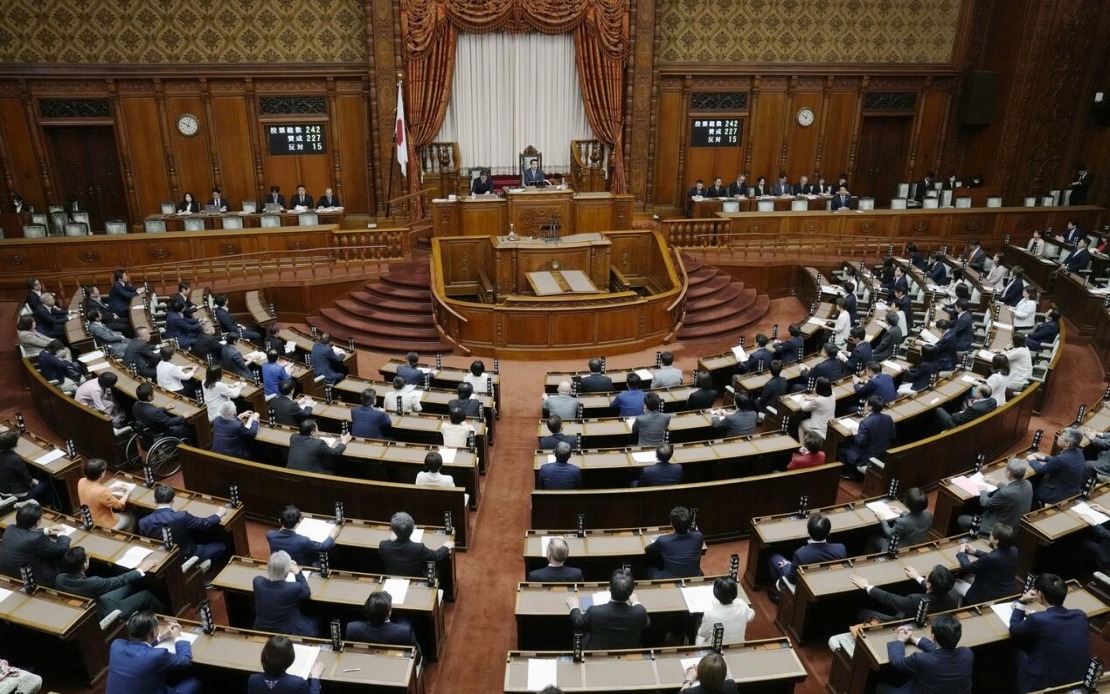
Japan's parliament has enacted comprehensive legislation to restructure its Air Self-Defence Force, formally incorporating space operations into the military establishment during a period of intensifying strategic competition in the Asia-Pacific region. The legislative approval marks a significant shift in how Tokyo conceptualises modern defence, recognising that orbital and space-based systems have become central to contemporary military and civilian infrastructure. The newly configured air force will launch during the fiscal year ending March 2027, fundamentally altering how Japan organises its defence capabilities across multiple domains.
The centrepiece of this reorganisation involves establishing a dedicated space operations group commanded by a lieutenant general, designed to sharpen Japan's ability to monitor activities across the space domain and enhance satellite surveillance reach. This institutional restructuring reflects Tokyo's assessment that space has evolved from a peripheral defence consideration into a critical battleground where nations compete for strategic advantage. By creating a specialised command structure, Japan aims to develop coherent doctrine, training standards, and operational procedures specifically tailored to space threats—a capability that previously existed in fragmented form across different branches.
Defence Minister Shinjiro Koizumi emphasised during his announcement that space infrastructure permeates virtually every facet of contemporary life, extending far beyond military applications. Satellite navigation systems, smartphone mapping services, and weather prediction capabilities all depend on functioning orbital infrastructure that Japan must now prepare to defend. This framing demonstrates Tokyo's understanding that space security represents a civilisational vulnerability rather than merely a military concern, justifying the significant institutional investment required to build protective capacity.
The legislation simultaneously addresses persistent recruitment and retention challenges plaguing Japan's Self-Defence Forces by enhancing post-retirement benefits for personnel. These conditions represent a critical obstacle to maintaining force readiness, as earlier mandatory retirement ages compared to civilian government roles have consistently prompted talented individuals to seek employment elsewhere. By improving financial incentives for service members, the government hopes to stabilise recruitment flows and reduce attrition rates that have threatened operational capability across all service branches.
Parliament also authorised appointment of a second senior vice defence minister, a structural change with practical implications for crisis management and diplomatic engagement. Having additional senior-level defence leadership provides greater capacity to manage simultaneous contingencies—whether military emergencies or natural disasters—while enabling more extensive high-level defence negotiations with the United States and regional security partners. This administrative expansion reflects recognition that Japan's security environment has grown more complex, requiring enhanced coordination capacity at the apex of defence decision-making.
The southwestern regional dimension of these reforms carries particular strategic significance for Southeast Asia and the broader Indo-Pacific. Japan's decision to upgrade the Ground Self-Defence Force's 15th Brigade in Naha, Okinawa Prefecture, from brigade to full divisional status directly addresses regional anxieties about China's maritime activities and assertiveness in disputed waters. This upgrade concentrates additional ground combat capability in the southern islands chain, signalling Tokyo's determination to strengthen its position in strategically vital waters where competing territorial claims and freedom of navigation concerns intersect.
For Malaysian observers, Japan's defence reorganisation carries notable implications. Tokyo's focus on space operations reflects a security perspective increasingly shared across Southeast Asia, where nations recognise their dependence on functioning satellite infrastructure while facing potential threats to that infrastructure. The restructuring also demonstrates Japan's continued strategic commitment to the broader Indo-Pacific region, particularly the waters surrounding ASEAN member states through which critical shipping lanes and resource flows transit. Japan's willingness to invest substantially in military modernisation signals its intention to remain an influential security actor, shaping the regional balance that affects Malaysian interests.
The legislative package represents a coherent response to what Japanese strategic planners perceive as a fundamentally transformed security landscape. Rather than incremental adjustments to existing structures, Tokyo has chosen comprehensive institutional redesign—renaming forces, establishing new command structures, and expanding senior leadership capacity. This comprehensive approach suggests Japanese policymakers believe the existing defence architecture no longer adequately addresses emerging threats across multiple domains simultaneously.
The timeline for implementation matters considerably. Deferring the space operations group's launch until fiscal 2027 provides a multi-year transition period during which Japan can develop necessary doctrine, train personnel, and acquire specialised equipment. However, this timeline also reflects the reality that organisational change in military establishments proceeds deliberately, requiring careful coordination across existing structures to avoid operational disruption. The planned appointment of the additional senior vice defence minister as early as summer 2024 indicates that certain structural changes can proceed more expeditiously.
Chinese military modernisation and space capabilities have clearly influenced Japanese strategic thinking, though Tokyo's stated rationale emphasises the civilian benefits of space infrastructure. This dual-use framing—emphasising both military and civilian space security—reflects Japan's preference for presenting defence expansion as reasonable, proportionate responses to genuine vulnerabilities rather than provocative military buildups. The approach mirrors patterns elsewhere in the Indo-Pacific where nations frame defence investments in protective rather than aggressive terms.
For regional stability, Japan's reforms present a mixed picture. Enhanced Japanese space capabilities and improved island defence arrangements contribute to a more militarised regional environment, potentially triggering reciprocal Chinese investments in space weapons and maritime capability. Simultaneously, stronger Japanese institutional capacity for crisis management and enhanced US-Japan defence coordination could improve regional stability by reducing miscalculation risks. The outcome depends significantly on how other regional actors interpret and respond to Japan's structural changes over the coming years.

