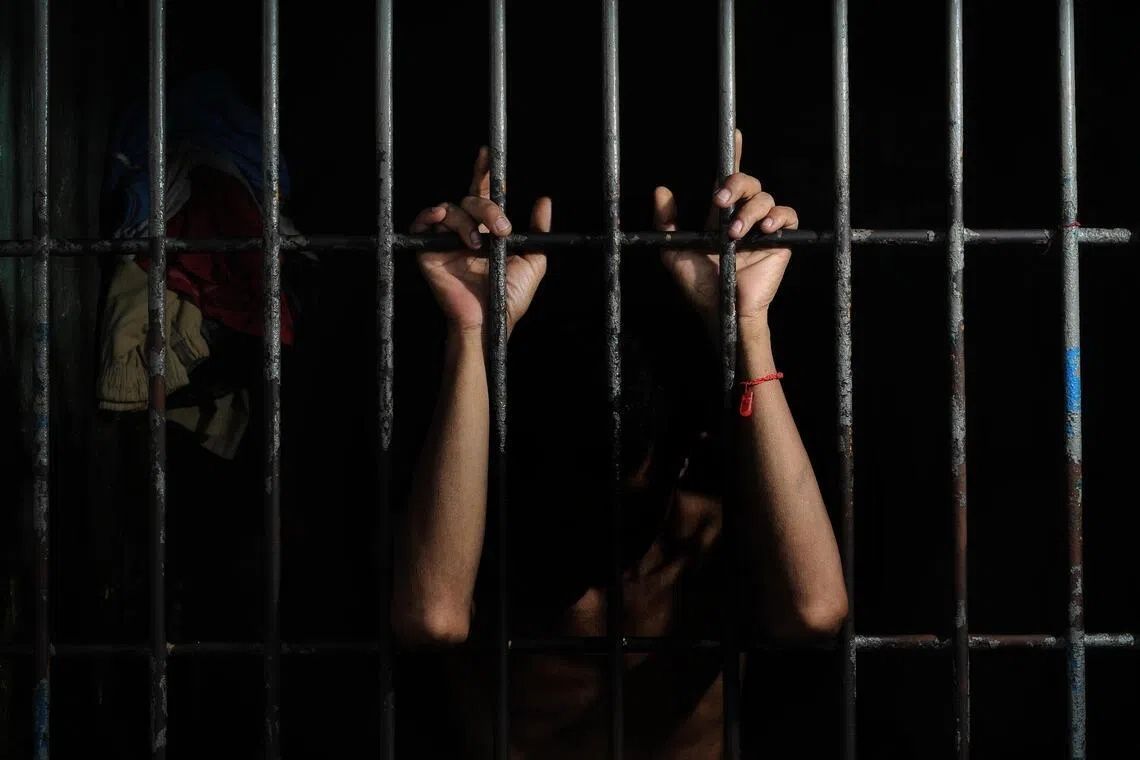
A mother in western Japan has launched a legal battle against the state, seeking 100 million yen in compensation following the death of her teenage daughter, whose demise stemmed from complications arising during and after a controversial detention period. The lawsuit, filed in Kobe district court, represents another flashpoint in Japan's ongoing reckoning with practices critics describe as "hostage justice" — a system in which prolonged pre-trial detention and coercive interrogation tactics are employed to extract confessions from suspects. The case brings into sharp focus the vulnerabilities embedded within Japan's criminal justice framework, particularly the treatment of young detainees who lack the resources and experience to navigate institutional pressure.
The girl, referred to as Runa in court documents, was arrested in June of the previous year while working at a care facility for people with disabilities in Hyogo prefecture. The charges centred on an alleged assault during a Valentine's Day celebration, though Runa consistently maintained her innocence, claiming she had merely attempted to prevent another patient from biting by gently pressing her hand against the individual's chin. Despite the apparent triviality of the alleged incident and the girl's complete absence of prior delinquency, authorities detained her for eighteen consecutive days while building their case. The prolonged confinement subjected her to repeated interrogations, family separation, and psychological pressure designed to elicit a confession — tactics that left deep psychological scars.
During her detention, Runa experienced systematic isolation that compounded her distress. While permitted contact with her legal representatives, she was denied access to her family members, a separation that intensified her vulnerability and anxiety. The interrogations themselves were marked by explicit threats and emotional manipulation. Investigators repeatedly told her she would be sent to a reformatory and would never see her mother again unless she confessed to the charges. Her lawyers have documented instances where police officers directly suggested guilt, saying "You did it, didn't you? Just tell the truth" — pressure tactics that Runa recorded in a journal she kept during her detention.
The psychological toll of this ordeal manifested rapidly and severely. Medical professionals later diagnosed Runa with acute stress disorder, eating disorder, and post-traumatic stress disorder, conditions that would plague her for the remainder of her life. Five months after her release, when charges were eventually dropped without prosecution, she had withered to just twenty kilograms — a skeletal frame that horrified her mother. The girl's condition continued deteriorating until her death in December, a tragedy the family attributes directly to the trauma and maltreatment she endured at state hands.
The lawsuit raises fundamental questions about the proportionality of Japan's detention practices, particularly regarding minors. Masahiro Sasaki, the lawyer representing Runa's mother, has questioned whether the alleged assault — characterized as "extremely trifling" in nature — justified detaining a minor at all. Under Japanese law, detention of juveniles should occur only when "absolutely necessary," a standard the lawyer argues was not met in this case. A teenager with no criminal history, living with parental supervision, posed no meaningful flight risk or threat to evidence. Yet prosecutors sought extensions of her detention on two occasions, and the girl remained locked away until after she collapsed and vomited, requiring emergency medical attention at a hospital outside the detention facility.
The concept of "hostage justice" that defines this case reflects deeper structural problems within Japan's criminal justice system. The system operates on the premise that confessions carry disproportionate weight in determining guilt or innocence, creating perverse incentives for both authorities and suspects. Suspects who maintain their innocence or exercise their right to silence frequently find themselves subjected to extended detention, effectively using incarceration as leverage to coerce statements. This dynamic inverts the presumption of innocence that characterizes modern legal systems. International human rights organisations have repeatedly condemned these practices, noting that confessions extracted under such duress lack reliability and can lead to miscarriages of justice.
The case of Iwao Hakamada provides a sobering precedent for the consequences of Japan's interrogation culture. Hakamada spent decades on death row — the world's longest-serving death-row inmate — before his convictions were quashed in 2024. The Supreme Court determined that confessions underlying his guilt determination were obtained through "inhumane" interrogations, a judicial acknowledgment that the system had produced a manifest injustice. This reversal underscores how deeply the problem of coercive interrogation is embedded within Japan's prosecutorial machinery, affecting not merely individual cases but the fundamental fairness of capital proceedings.
Runa's case exemplifies how vulnerable populations, particularly young people, bear the brunt of these systemic failures. Her mother's statement at the news conference — "My daughter was unrecognisable when she died" — captures the human devastation that results when procedural safeguards fail to protect the weak from institutional power. The mother's stated objectives extend beyond financial compensation; she seeks public acknowledgment of what happened to her daughter and why authorities detained, interrogated, and released her, only to watch her decline into death. This pursuit of answers reflects a broader societal need for accountability and reform.
The Kobe District Public Prosecutors Office has declined to comment, stating they have not yet formally received the complaint, a bureaucratic response that itself may frustrate hopes for swift resolution. Nevertheless, the lawsuit will likely attract attention from civil society organisations tracking Japan's criminal justice system. As Southeast Asia's most developed economy and a significant regional influence on legal practices, Japan's approach to criminal procedure carries weight beyond its borders. The case raises uncomfortable questions about whether efficiency in prosecution should override the protection of individual rights, particularly when suspects are minors without power or resources.
The compensation figure of 100 million yen sought by Runa's mother serves not merely as restitution but as a statement of accountability. It represents an attempt to quantify the value of a life lost to systemic abuse, though no amount of money can restore what was taken from Runa and her family. The lawsuit also functions as a pressure point for reform advocates pushing for meaningful changes to interrogation practices, detention standards for minors, and the evidentiary weight accorded to confessions in Japanese courts. Whether the court system will respond adequately to these challenges remains an open question, but the case will undoubtedly influence ongoing debates about criminal justice reform in Japan and potentially throughout East Asia.