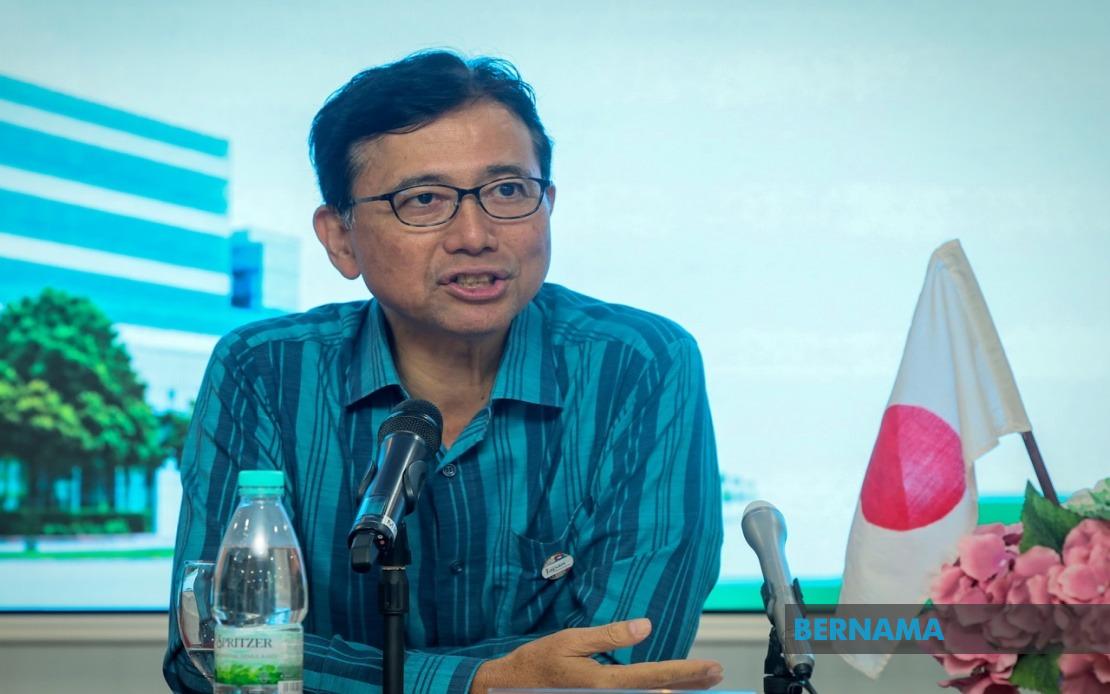
Japan's updated Free and Open Indo-Pacific (FOIP) strategy positions itself as a natural complement to Malaysia's expanding ambitions as a premier technology and digital hub in Southeast Asia, according to Japanese Ambassador to Malaysia Noriyuki Shikata. The refined framework, unveiled by Japanese Prime Minister Sanae Takaichi in May, represents a substantial evolution from the original FOIP concept introduced by former Prime Minister Shinzo Abe in 2016, shifting emphasis from broad stability objectives towards concrete economic security measures and industrial transformation tailored to the needs of developing nations.
At its core, the updated FOIP framework prioritises collaborative advancement in strategic technology domains that directly correspond with Malaysia's economic diversification efforts. Artificial intelligence, secure cross-border data movement, undersea cable infrastructure and satellite communications capabilities have emerged as focal points, reflecting recognition that digital connectivity and computational power form the foundation of 21st-century competitiveness. This technological emphasis resonates strongly with Malaysian policymakers who view digital transformation as essential to maintaining economic relevance amid shifting regional dynamics.
Shinkata characterised the updated FOIP as pragmatic in its approach, deliberately shifting from abstract principles towards measurable outcomes and tangible partnerships. Significantly, the framework demonstrates strong alignment with ASEAN's own Indo-Pacific Outlook (AOIP), suggesting that rather than pursuing competing visions, Japan and Southeast Asia are converging around shared prosperity objectives. This convergence matters greatly for Malaysian stakeholders, as it signals that regional infrastructure investments and technology partnerships will increasingly flow through ASEAN-compatible channels rather than bypass them.
The financial backbone of this commitment manifests through the POWERR Asia initiative, which mobilises US$10 billion in dedicated funding. This mechanism extends beyond Japan's traditional development aid framework to support ASEAN nations in achieving energy security through diversified fuel sourcing, building strategic reserves and securing access to critical materials essential for manufacturing and technology sectors. For Malaysia specifically, this represents an opportunity to strengthen supply chain resilience in semiconductors, rare earth elements and renewable energy infrastructure—sectors where the country maintains significant regional influence.
Japanese business interests view this framework as creating substantially improved conditions for long-term investment. Ambassador Shikata noted that the initiative provides Japanese enterprises with greater confidence in operational stability while encouraging capital reallocation away from conventional manufacturing towards higher-margin technology partnerships. This represents a strategic shift that mirrors Malaysian government policy priorities, which similarly emphasise upgrading from labour-intensive assembly operations towards innovation-driven activities that generate greater value addition and employment quality.
Malaysia's established position as a semiconductor manufacturing centre features prominently in Japan's recalibrated regional strategy. Japanese corporations already maintain significant presence in advanced packaging and semiconductor testing facilities within Malaysia, and the updated FOIP framework explicitly encourages deepening these commitments through expansion into emerging technological domains. Advanced packaging techniques, artificial intelligence infrastructure deployment and enterprise cloud computing solutions represent the next frontier where Malaysian facilities could secure substantial competitive advantages, particularly given existing technical expertise and ecosystem maturity.
The bilateral relationship between Japan and Malaysia has undergone notable recalibration, particularly following the establishment of the Comprehensive Strategic Partnership in December 2023. This arrangement transcends the historical Look East Policy framework that characterised earlier Malaysia-Japan ties, replacing transactional knowledge transfer with genuine co-creation arrangements. Prime Minister Datuk Seri Anwar Ibrahim's recent engagement with major Japanese industrial corporations—including Mitsubishi Corporation, ENEOS, DENSO, IBM and Marubeni—reflects this evolving partnership model, with discussions reportedly focusing on specific technology collaboration opportunities rather than conventional manufacturing contracts.
The convergence of Japanese technological capabilities with Malaysia's expanding digital ecosystem creates potential for significant innovation outcomes. Shikata anticipated near-term collaborative initiatives addressing artificial intelligence advancement and quantum computing development, areas where Malaysia possesses emerging technical talent pools and infrastructure investments but requires partnership with more established players. Simultaneously, joint efforts targeting critical infrastructure protection and supply chain resilience assume heightened importance as geopolitical tensions continue generating uncertainties for multinational enterprises.
For Malaysian stakeholders across government, private sector and academic institutions, this framework carries several practical implications. First, the alignment between Japanese investment priorities and Malaysian developmental objectives suggests sustained capital inflows into priority technology sectors over coming years. Second, the emphasis on secure data flows and digital sovereignty creates regulatory opportunities for Malaysia to establish itself as a trusted regional hub for data processing and management. Third, the partnership structure creates pathways for Malaysian companies to access Japanese technical expertise and capital at potentially more favourable terms than purely commercial arrangements might offer.
The timing of this strategic realignment proves particularly significant given broader regional competition for technology investment and talent. Regional rivals including Vietnam, Thailand and Indonesia have similarly positioned themselves as alternative manufacturing and technology hubs, prompting Malaysia to differentiate through quality and innovation rather than cost competition alone. Japan's explicit commitment to Malaysia—articulated through substantial financial mechanisms and high-level political engagement—provides ballast against this competitive pressure.
Beyond bilateral considerations, the updated FOIP framework reflects Japan's broader strategic recalibration in response to rising great power competition in the Indo-Pacific region. By deepening technological and economic integration with Southeast Asian partners, Japan aims to strengthen regional resilience and preserve influence over critical infrastructure. Malaysia benefits from this positioning, gaining access to Japanese security relationships and technological standards while maintaining strategic autonomy within ASEAN structures.
Moving forward, successful realisation of these partnership objectives requires sustained institutional coordination between Malaysian and Japanese actors. Government-to-business connections established during recent high-level visits must translate into concrete investment proposals and technology development initiatives. The coming months will reveal whether the diplomatic enthusiasm evident in current statements translates into substantial capital deployment and sustained technical collaboration across priority sectors.

