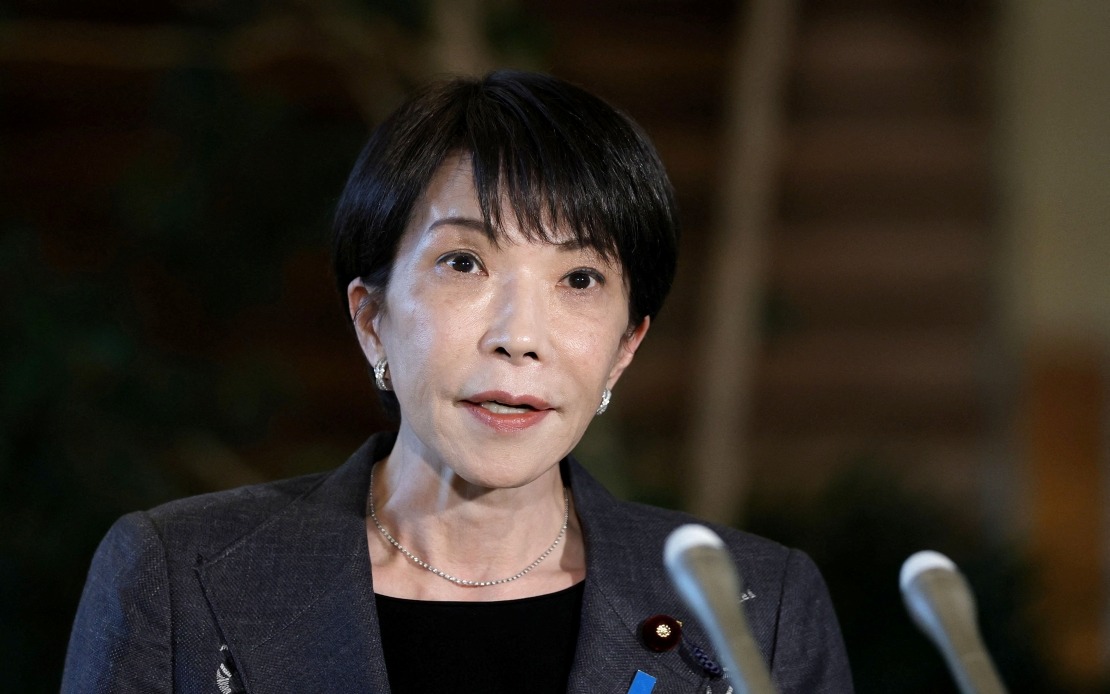
Prime Minister Sanae Takaichi has made an explicit commitment to reverse a planned temporary reduction in Japan's consumption tax on food products after two years, signalling her government's determination to balance immediate relief for struggling households against the nation's deteriorating fiscal position. Speaking during parliamentary deliberations on Monday, Takaichi provided clear assurance that any tax rate cuts would be temporary measures, addressing concerns that politically popular reductions often become permanent features of tax systems once implemented.
The government's position reflects a significant compromise from campaign promises made during February's general election campaign, when the ruling Liberal Democratic Party pledged to eliminate the consumption tax on food entirely rather than merely reducing it. That bolder commitment resonated with voters grappling with persistent inflation, yet fiscal realities and technical considerations have forced a recalibration of ambitions. The revised approach proposes cutting the tax rate to just 1 per cent beginning in April 2027, maintaining a modest revenue stream rather than forgoing taxation altogether on essential food items.
Takaichi's assurance that the restoration to 8 per cent would occur automatically two years into the policy represents an attempt to overcome a fundamental political challenge identified by opposition lawmakers. Ken Tanaka from the Democratic Party for the People pointedly noted that reversing any tax cut would inevitably be characterised as a tax increase by the public, potentially triggering significant backlash and complicating efforts to phase out the temporary support. By framing the restoration as predetermined and non-negotiable, the government hopes to establish credibility and distinguish temporary relief from permanent policy shifts.
The reasoning behind the 1 per cent rate rather than zero per cent reveals the practical complexities underlying tax administration in modern retail environments. Retailers across Japan would require substantial time and investment to reconfigure cash register systems and point-of-sale infrastructure to handle zero-rated food transactions, creating implementation delays that conflict with the government's stated desire to introduce the policy as soon as possible. The marginally higher rate avoids these technical hurdles whilst still delivering meaningful relief to consumers.
To ensure the policy achieves its intended anti-inflationary impact despite retaining a minimal tax rate, the LDP has proposed compensating measures through direct cash transfers. The government would distribute approximately 600 billion yen annually, equivalent to the tax revenue foregone from the 1 per cent rate on food products. This alternative approach to relief mechanisms, rather than pure tax elimination, effectively achieves zero-rate outcomes for consumers whilst maintaining some fiscal revenue, a pragmatic solution to competing pressures.
The proposal emerged from cross-party discussions within a national taxation and social security council established to address mounting economic pressures on Japanese households. Multiple political parties, including the government's coalition partner Japan Innovation Party, had committed to supporting food tax reductions or elimination during recent electoral campaigns. The interim report expected later this month will formalise these discussions into concrete policy recommendations, though Takaichi has already indicated her preference for swift implementation once that framework is finalised.
Japan's fiscal circumstances lend particular urgency to Takaichi's insistence on temporary measures. The nation carries the heaviest debt burden among developed Group of Seven economies, with government bonds yielding levels not seen in decades as investors assess the sustainability of current spending trajectories. A weakened yen further complicates matters, making imports costlier and potentially undermining efforts to control inflation that such tax cuts are designed to combat. Policymakers face a difficult calculus between providing immediate household relief and avoiding further deterioration of long-term fiscal stability.
The timing of this initiative coincides with Takaichi's recent elevation to the prime minister's office, a leadership transition that carries expectations for decisive action on the cost-of-living crisis affecting ordinary Japanese households. Persistently high inflation has eroded purchasing power, particularly among lower-income families for whom food represents a substantial expenditure category. Any measure reducing food costs consequently holds considerable political significance and popular appeal.
For regional observers including Malaysia, the Japanese government's dilemma between short-term relief and fiscal sustainability presents instructive parallels to challenges facing other economies. As inflation pressures persist across Asia-Pacific nations and governments weigh temporary support measures against long-term budget obligations, Japan's experience demonstrates both the political attractiveness and administrative complications of targeted tax reductions. The explicit commitment to restoration after a fixed period may offer one template for other policymakers considering temporary fiscal interventions.
The credibility of Takaichi's restoration pledge will ultimately depend on political circumstances prevailing in 2029. Governments frequently find temporary measures become permanent when public opinion strongly opposes reversal, regardless of prior commitments. However, the government's emphasis on advance planning and transparent timeline-setting suggests recognition of this risk. By anchoring the policy's termination to a specific date and maintaining parliamentary discussion of the eventual restoration, Japanese policymakers are attempting to manage expectations and preempt the political backlash that Tanaka warned could undermine such efforts.
The broader policy framework also reflects shifting preferences among Japanese voters concerning the balance between taxation and direct government spending. Rather than relying solely on tax cuts to stimulate household demand, the inclusion of substantial cash transfers alongside modest rate reductions acknowledges that visible government payments sometimes prove more politically sustainable and economically efficient than invisible tax breaks. This mixed approach may influence how other governments structure similar anti-inflationary interventions.

