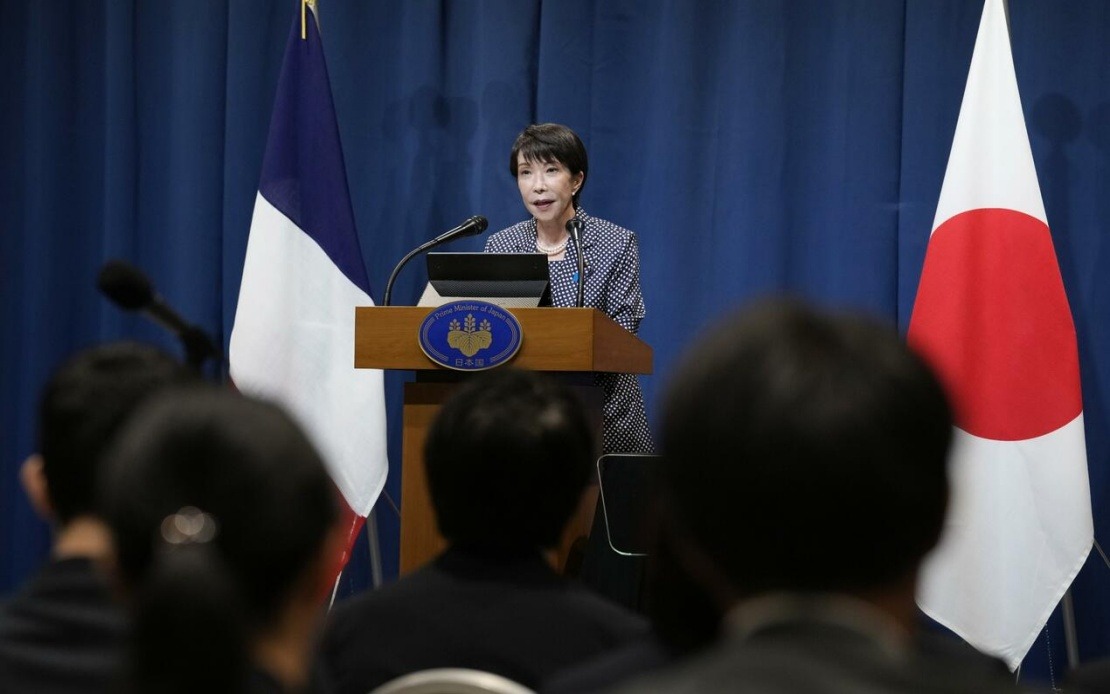
Prime Minister Sanae Takaichi's administration faces its steepest credibility challenge yet, with cabinet approval slumping to 55.8 per cent according to a Kyodo News poll conducted over the weekend. This marks a significant decline from her appointment last October and underscores growing public dissatisfaction with her government's handling of Japan's economic predicament. The finding reflects broader anxieties among Japanese citizens regarding the trajectory of their cost of living and the nation's strategic positioning amid volatile geopolitical developments.
Japan's economic resilience remains under strain from sustained inflationary pressures affecting household budgets nationwide. The persistent elevation in prices—particularly for essential goods and services—has become a touchstone of public discontent, translating directly into diminished confidence in the government's economic stewardship. For Malaysian observers, Japan's struggle offers a cautionary note about the political costs of unchecked inflation, a phenomenon that has tested governments across Southeast Asia as well. When citizens perceive their purchasing power eroding, political capital dissipates rapidly, regardless of other policy achievements.
The timing of the poll carries particular significance given recent diplomatic developments in West Asia. A preliminary peace accord between the United States and Iran, which includes provisions for Tehran to reopen the Strait of Hormuz for commercial shipping, arrived just before the survey was conducted. This development momentarily eased tensions surrounding one of the world's most critical maritime chokepoints, though it appears insufficient to substantially restore public confidence in Takaichi's administration. The preliminary nature of the agreement suggests underlying volatility could resurface, keeping Japanese policymakers and citizens in a state of perpetual uncertainty about future resource security.
Regional maritime security represents a persistent concern for Japan, a nation heavily dependent on stable supply lines for raw materials and energy. When respondents were asked about deploying the Japan Self-Defence Forces to safeguard commercial shipping lanes, 54.7 per cent rejected the notion as unnecessary, whilst 36.6 per cent endorsed such military involvement. This split reflects genuine debate within Japanese society about the appropriate balance between economic pragmatism and strategic independence. For resource-constrained nations like Japan and Malaysia, questions about which conflicts warrant military engagement versus diplomatic solutions carry substantial weight and reveal underlying public philosophy about national priorities.
The consumption tax debate dominates Japanese domestic political discourse and clearly preoccupies voters. The latest polling demonstrates that 43.9 per cent of respondents find acceptable the ruling coalition's proposal to reduce the consumption tax on food and beverages from the existing 8.0 per cent rate to 1.0 per cent, provided implementation accelerates. A further 22.6 per cent favour complete elimination of tax on these essentials, aligning with commitments already made by ruling parties. Together, these figures indicate that roughly two-thirds of the surveyed public favour meaningful tax reductions on food, illustrating the political salience of household affordability. This contrasts sharply with previous policy positions and suggests the government recognises the electoral necessity of tangible relief measures.
Japan's ruling coalition faces a delicate calibration between satisfying popular demands for tax relief and maintaining fiscal sustainability. Any consumption tax reduction requires offsetting revenue or spending adjustments, forcing policymakers to navigate between competing budgetary priorities. The depth of public support for lower food taxation suggests that failure to deliver meaningful relief could further erode cabinet approval ratings. Malaysian policymakers implementing their own tax policies might observe how Japanese voters prioritise immediate relief on essential items, potentially signalling a broader preference for targeted relief over across-the-board reductions that might include luxuries.
The appointment of Sanae Takaichi last October represented a significant moment in Japanese politics, marking the ascension of a prominent conservative figure to the nation's highest executive office. Yet within eight months, her administration has encountered the headwinds that typically challenge any government overseeing an economy beset by stubborn price pressures. The erosion from presumably stronger initial approval ratings to 55.8 per cent follows a predictable pattern observed across developed democracies, where economic hardship transforms into electoral vulnerability. The psychological threshold of maintaining approval above 50 per cent remains crucial for governing legitimacy, and approaching 55 per cent suggests limited margin for further deterioration.
Regional geopolitical turbulence amplifies domestic economic anxieties for Japan in ways that directly resonate across Southeast Asia. The West Asia conflict threatens energy prices and supply chain stability, concerns that affect every major economy in the region. Japan's particular vulnerability as an import-dependent nation without significant natural resources makes it especially sensitive to disruptions in crucial sea lanes and energy markets. This mutual vulnerability creates potential common ground between Japan and ASEAN nations in advocating for maritime security and freedom of navigation principles that benefit all regional traders.
Looking forward, the Takaichi administration must navigate multiple intersecting crises: stubborn domestic inflation, public scepticism about military deployments, and pressure to deliver concrete tax relief. The cabinet's approval trajectory will likely depend substantially on whether concrete measures to reduce food taxation materialise and whether regional security anxieties diminish. The 55.8 per cent approval figure functions as both a warning signal and a reminder that even recently-appointed leaders operating with substantial parliamentary majorities cannot ignore sustained public dissatisfaction regarding household economics. For regional governments watching these developments, Japan's experience reinforces that economic management remains the primary currency of political legitimacy.

