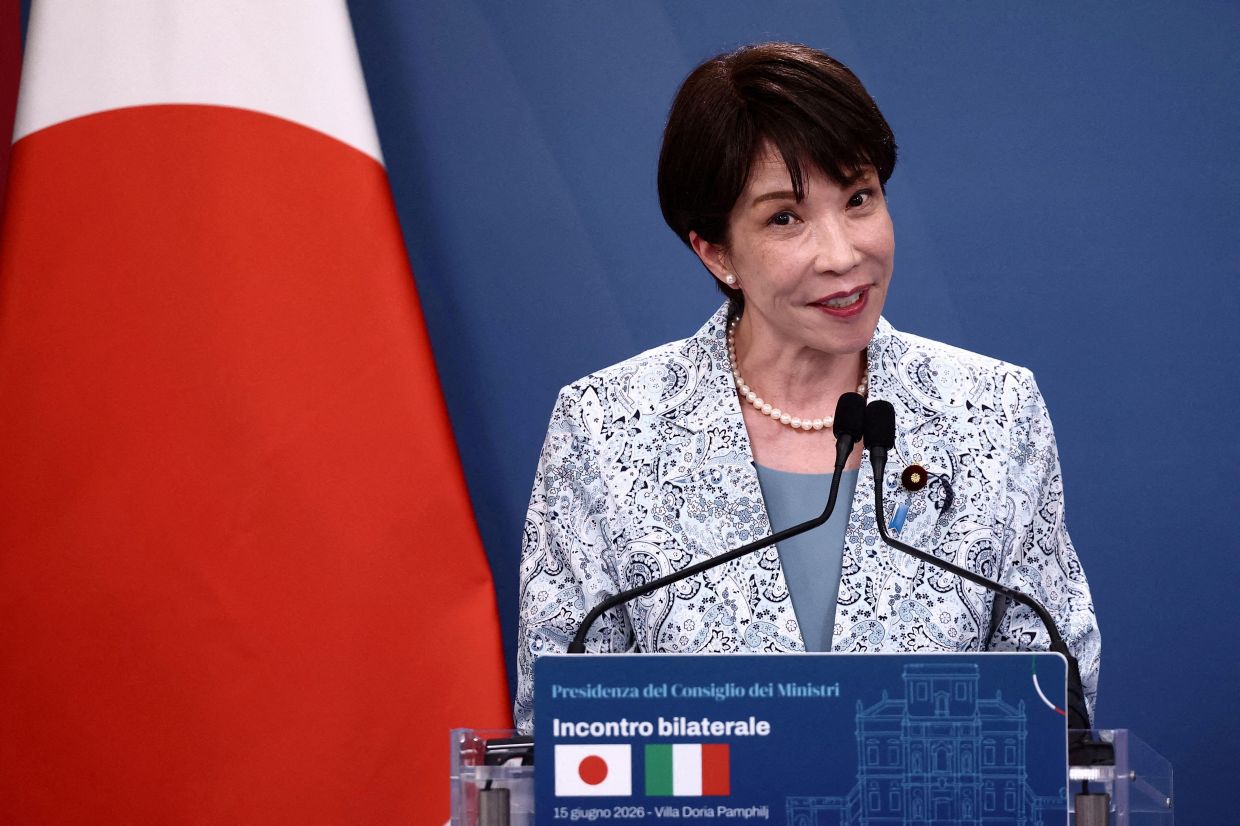
Japanese Prime Minister Sanae Takaichi's governing coalition has experienced a significant dip in public confidence, with her cabinet's approval rating dropping below the 50 per cent threshold for the first time since she assumed office in October. The latest survey conducted by Jiji Press, released Thursday, recorded support at 49 per cent, marking a notable turning point for Japan's first female premier as she navigates mounting domestic and international pressures that threaten to undermine the political capital she accumulated during her early months in power.
The erosion of support has been particularly pronounced among older demographics, a traditionally influential voting bloc in Japanese politics. Support among voters in their 60s plummeted from 63.7 per cent last month to 39.9 per cent in the latest poll, representing a dramatic 24-point swing that suggests significant discontent within this age group. The scale of this decline indicates more than marginal dissatisfaction; it reflects a fundamental shift in how an important voter cohort perceives Takaichi's leadership and policy direction. This generational split reveals fractures in what had appeared to be a relatively cohesive coalition of support when Takaichi first took office.
Among those who continue to back the Takaichi administration, approval remains anchored to personal attributes rather than policy achievements. Supporters frequently cite her leadership qualities and trustworthiness as reasons for their continued backing, suggesting that much of her remaining support is personality-driven. However, this personalisation of political support carries inherent vulnerability—it can evaporate rapidly when external circumstances shift or when public perception of her character changes. The government's reliance on these subjective assessments rather than concrete policy victories underscores a potentially fragile political foundation.
Conversely, critics of the Takaichi government articulate more substantive concerns about governance and direction. Those expressing disapproval frequently invoke a sense of hopelessness about her administration's capacity to deliver meaningful improvements, coupling this with specific critiques of her policy agenda. The phrase "cannot hope for much" encapsulates a broader public anxiety about whether the prime minister can effectively address Japan's pressing challenges. Combined with accusations of "poor policies," these criticisms suggest that voters are increasingly focused on the concrete effects of her government's decisions rather than her symbolic importance as Japan's first female leader.
Takaichi's political trajectory has shifted remarkably since her triumphant performance in February's lower house snap elections. At that time, her cabinet rode considerable momentum into a decisive victory, bolstered by strong support among younger voters who appeared drawn to her diplomatic acumen, personal accessibility, and the regenerative symbolism she embodied. The younger demographic's embrace of Takaichi represented a potential realignment in Japanese electoral politics, suggesting that her appeals to change and modernity might reshape traditional voting patterns. However, the subsequent months have witnessed a troubling reversal as some of that early enthusiasm has dissipated.
A major source of erosion in Takaichi's political standing stems from her controversial statements regarding Taiwan. In November, the prime minister suggested that Japan might consider military intervention should self-ruled Taiwan face attack, remarks that reverberated through East Asian diplomatic channels and provoked substantial friction with China, which regards Taiwan as an integral part of its territory. While such statements may resonate with certain segments of the Japanese electorate concerned about regional security, they have complicated Japan's delicate balancing act with Beijing and created diplomatic tensions that have manifested in public disapproval. For many Japanese voters, particularly those focused on economic concerns rather than geopolitical confrontation, such provocative rhetoric may seem to prioritise confrontation over pragmatic engagement.
Domestically, Takaichi has faced intellectual and academic resistance to her legislative agenda, most visibly manifested in a petition submitted earlier this month. Nearly 150 Japanese academics formally protested to lawmakers against her government's proposed legislation that would criminalise the desecration of Japan's national flag. This effort represents a broader concern among Japan's intellectual class that such measures could infringe upon freedom of expression and assembly—values that resonate strongly within Japan's post-war democratic consensus. The fact that significant portions of Japan's academic community felt compelled to take formal action suggests that Takaichi's agenda has crossed important lines in the minds of influential cultural gatekeepers and opinion shapers.
One notable area where Takaichi's government has achieved tangible success involves inflation management. After months of sharp price increases that significantly damaged public confidence and contributed directly to the political downfall of her two immediate predecessors in rapid succession, inflation has begun moderating in recent months. This development has provided the government with at least one legitimate policy achievement to highlight and offers potential relief to households stretched by prior cost-of-living pressures. However, this progress has proven insufficient to counteract the accumulated weight of other concerns, suggesting that inflation relief alone cannot restore broader public confidence in her administration.
The collapse of her two predecessors was substantially attributable to public anger over inflation and cost-of-living challenges, making inflation control an existential political priority for Takaichi. While the recent deceleration in price increases offers some vindication of her economic approach, the timing may prove insufficient to reverse the momentum of recent disapproval. Japanese voters, having experienced economic instability, appear to want greater assurances that long-term stability has been established rather than merely current moderation of previously acute problems.
The implications of Takaichi's slipping approval ratings extend beyond Japan's domestic political calculations. As a regional power with significant influence in Southeast Asia through trade, investment, and security partnerships, Japan's internal political stability and policy direction matter considerably to neighbouring countries. Takaichi's Taiwan statements and her approach to China relations have regional ramifications that Malaysian policymakers and regional observers must monitor. The shift in her domestic political fortunes may eventually influence the assertiveness with which she pursues particular foreign policy initiatives.
Moving forward, Takaichi faces the challenge of revitalising public confidence by demonstrating that her government can deliver substantive policy results addressing voter concerns beyond symbolic gestures or geopolitical posturing. Her government's capacity to stabilise inflation further, deliver tangible economic benefits, and navigate regional tensions diplomatically will likely determine whether this current dip in approval ratings represents a temporary fluctuation or the beginning of a broader erosion of her political mandate. The coming months will be crucial in determining whether Japan's first female prime minister can arrest the decline and reconstruct the political coalition that brought her to power.

