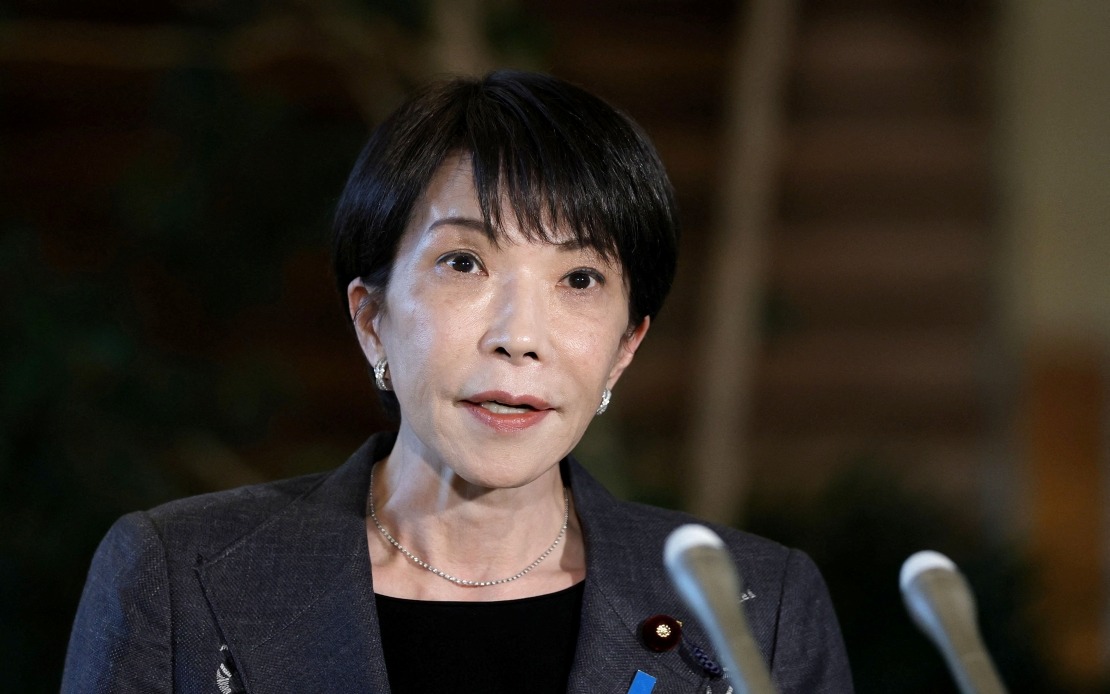
Japanese Prime Minister Sanae Takaichi made a symbolic gesture toward the contentious Yasukuni shrine in Tokyo on Saturday by dispatching a ritual offering, even as she personally avoided the site during the nation's commemorations of the 81st anniversary of the war's conclusion. The move reflects the delicate political calculation facing Japan's conservative leadership, which seeks to honour Japan's wartime legacy whilst managing international sensibilities about one of Asia's most inflammatory historical flashpoints.
Defence Minister Shinjiro Koizumi became the first sitting defence official to visit Yasukuni on the August 15 war anniversary since Minoru Kihara made the journey in 2024. Kihara now serves as chief Cabinet secretary within Takaichi's administration, a position that underscores how closely Japan's current leadership remains aligned with those willing to participate in shrine observances. Several other senior cabinet figures joined the commemoration, including State Minister Hitoshi Kikawada, who oversees issues connected to the Northern Territories—the disputed islands off Hokkaido's coast that Japan claims Russia unlawfully occupied after the war's conclusion.
Takaichi, leading the ruling Liberal Democratic Party, funded her personal offering through private means rather than official party channels, according to senior party officials. This distinction carries procedural weight within Japan's political establishment, as it technically allows her to maintain a degree of separation from state involvement in the shrine visit while still signalling her ideological alignment with those who venerate the site. Yet the nuance rings somewhat hollow for observers tracking how Japan's premier navigates the fraught symbolism surrounding Yasukuni, particularly given her previous pattern of visiting the shrine during seasonal festivals and on war anniversaries prior to assuming the prime ministership last October.
The Yasukuni shrine occupies an outsized place in East Asian geopolitics because it enshrines fourteen wartime Japanese leaders as religious deities, a 1978 enshrinement that included prominent Class-A war criminals. Among them stands General Hideki Tojo, Japan's wartime prime minister who faced execution in 1948 for crimes against peace. The inclusion of these figures transforms what might otherwise appear as a domestic religious observance into a sensitive international incident, particularly for nations that experienced Japanese military aggression during the conflict.
China and South Korea, both of which endured extensive Japanese occupation and warfare, have historically responded with diplomatic protests whenever Tokyo's leaders—whether prime ministers, defence ministers, or other senior lawmakers—venerate at the shrine. China occupied vast swaths of territory by the war's end, while South Korea's peninsula remained under Japanese colonial administration from 1910 until 1945. For these neighbours, visits to Yasukuni represent symbolic rehabilitation of Japan's wartime conduct rather than innocent patriotic remembrance, and they view such observances as incompatible with genuine historical reckoning.
Takaichi's decision to refrain from personally attending the shrine, despite her conservative credentials and historical practice of doing so, suggests an awareness that Japan's prime ministerial office carries different expectations than ordinary political positions. This restraint likely reflects broader concerns about managing Japan's international relationships during a period when Tokyo faces mounting security challenges and seeks to strengthen regional alliances. Her dispatch of a monetary offering represents a compromise position—one that maintains symbolic solidarity with the shrine's purpose whilst avoiding the diplomatic firestorm of a personal appearance.
Several other prominent Liberal Democratic Party figures participated in the ceremony, including Secretary General Shunichi Suzuki, Haruko Arimura heading the party's General Council, and Yasutoshi Nishimura overseeing election strategy. Their presence reinforced the party's continuing embrace of Japan's wartime remembrance, even as the party's top figure observed discretion about her own involvement. This bifurcated approach mirrors broader tensions within Japan's contemporary politics between those seeking to move beyond postwar pacifism and those concerned about historical reconciliation with neighbouring states.
Japan's postwar trajectory has theoretically centred on constitutional pacifism and commitment to peace following the devastation of the Second World War. Yet recent years have witnessed substantial reorientation toward military strengthening, with Tokyo substantially expanding defence spending and capabilities in response to what it characterises as a deteriorating regional security environment. This apparent contradiction—between honouring wartime leaders at a shrine while simultaneously embracing pacifist constitutionalism and peaceful development—reflects ongoing contestation within Japanese society about how the nation should interpret and relate to its wartime history.
For Southeast Asian observers, the Yasukuni shrine controversy carries particular resonance, as numerous nations throughout the region experienced Japanese occupation and military operations during the war. Malaysia, along with Singapore, Thailand, and Indonesia, all bear historical scars from that period. The recurring pattern of Japanese leaders' visits to Yasukuni therefore extends beyond bilateral China-Japan or South Korea-Japan dynamics, encompassing broader questions about whether contemporary Japan has genuinely reckoned with the regional devastation its wartime aggression inflicted. The August 15 observances each year become, in effect, a moment when the region collectively reassesses Japan's relationship with its own history and whether that relationship has evolved toward greater acknowledgment and accountability.
Takaichi's calculated approach—sending offerings whilst avoiding personal attendance—may ultimately satisfy neither camp. Those seeking unrestricted commemoration of Japan's wartime figures view any restraint as excessive, whilst those concerned about historical reconciliation note that private offerings carry the same symbolic weight as public visits, merely with reduced visibility. The distinction between sending a ritual offering and attending in person ultimately proves largely cosmetic, particularly given that both actions demonstrate solidarity with a shrine that Japan's neighbours view as fundamentally problematic.

