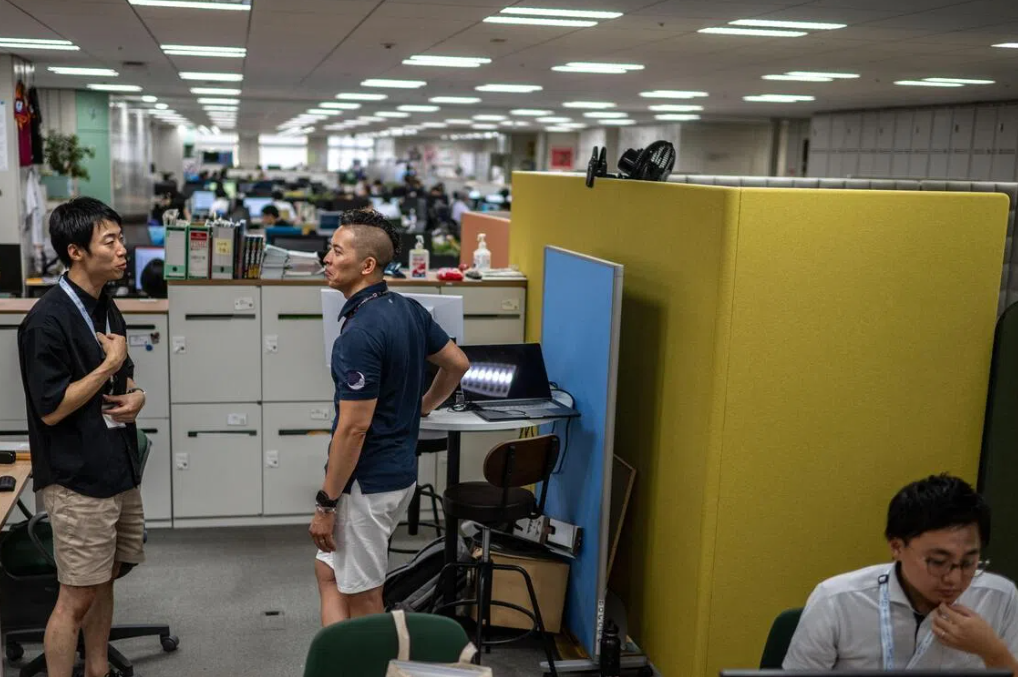
Japan's latest attempt to help office workers endure oppressive summer temperatures has collided with an unexpected cultural flashpoint: the acceptability of male leg hair in professional settings. Tokyo's metropolitan government expanded its Cool Biz initiative in April to permit workers to replace traditional business suits with casual alternatives including shorts, T-shirts and trainers. However, this seemingly straightforward effort to provide relief during Japan's brutally hot and humid summers has exposed deeper anxieties about workplace norms and body presentation, sparking an online discussion around what Japanese commentators have termed "sunehara", or "leg hair harassment".
The friction reveals how even practical measures designed to address genuine health concerns can become ensnared in cultural expectations around propriety and appearance. While the Tokyo metropolitan government positioned the expanded policy as an effort to grant workers greater flexibility without prescribing specific dress codes, the public reception suggests that many Japanese citizens continue to regard certain forms of casual presentation as transgressive in professional contexts. Environmental official Noboru Watanabe acknowledged the tension when speaking to international media, noting that the government's intention was simply to expand options during severe weather rather than enforce particular clothing choices. Yet his assertion that there should be "no issue" provided such attire is "not offensive to anyone" inadvertently highlighted the core problem: determining what constitutes offensive presentation in a workplace setting where conventions around formality remain deeply ingrained.
A survey conducted in June by Gorilla Clinic, a cosmetic treatment chain specializing in men's grooming, provided quantitative evidence of the public's reservations. The data showed a nearly even split: 53.5 percent of respondents opposed wearing shorts to work while 46.5 percent supported the practice. Significantly, concerns about physical appearance dominated the reasons cited by those opposing shorts, with anxieties about body shape and visible body hair prominently mentioned. The demographic composition of survey respondents proved particularly telling, with women substantially outnumbering men among those expressing skepticism. This gender imbalance suggests that female workers may harbor particular discomfort with the prospect of observing ungroomed male colleagues in close office quarters, whether beside photocopiers or during routine meetings.
The survey findings have produced tangible consequences for workplace behavior and consumer demand. Akifumi Funatsu, a director at Gorilla Clinic, reported that the clinic has witnessed a notable uptick in male clients seeking laser hair removal treatments. Notably, these men are not pursuing such procedures primarily for personal aesthetic reasons, but rather because they perceive visible leg hair as potentially offensive to colleagues in an increasingly casual work environment. This transformation of body hair management from a personal preference into a matter of perceived social obligation demonstrates how workplace dress policies can reshape bodily expectations and create new forms of conformity pressure. The phenomenon reflects a broader anxiety about being perceived as inconsiderate or unprofessional, even as formal dress codes ostensibly loosen.
Japan's multi-decade journey toward more relaxed workplace dress standards provides essential context for understanding current tensions. The original Cool Biz campaign originated in 2005 when Yuriko Koike, then serving as environment minister, introduced the initiative to encourage short-sleeved shirts while eliminating jackets and ties. The campaign gained significant visibility and legitimacy when then Prime Minister Junichiro Koizumi publicly appeared without a tie or jacket, effectively using his position to normalize more casual business attire. This top-down endorsement from political leadership proved crucial in shifting workplace culture, demonstrating that casual clothing could be compatible with authority and responsibility.
The campaign gained renewed momentum following Japan's 2011 earthquake and tsunami, which devastated the nation's power infrastructure. As the government grappled with energy shortages and implemented rolling blackouts, the expanded "Super Cool Biz" initiative further relaxed workplace dress restrictions. This policy shift gradually became embedded in corporate culture, particularly at technology companies and startups where casual dress norms had already taken root. Over the subsequent decade, informal office attire became increasingly mainstream across multiple sectors, yet the latest expansion to explicitly permit shorts appears to have encountered deeper cultural resistance than previous iterations of the campaign.
The practical driver behind these repeated efforts to promote casual summer clothing cannot be overstated. Japan faces extreme temperatures and high humidity during summer months that substantially impair the human body's natural cooling mechanisms, creating genuine public health risks. Official statistics underscore the severity: between July 6 and July 12 alone, seven people died from heatstroke while approximately 4,580 others required hospital treatment. Such figures reflect the cumulative toll of inadequate cooling and insufficient adaptation to extreme conditions. Public health authorities have responded by urging residents to maintain hydration, utilize air-conditioning systems and gradually acclimate themselves to elevated temperatures. Beyond these standard recommendations, Japanese consumers have demonstrated considerable ingenuity in developing personal cooling strategies, ranging from clothing with integrated cooling fans to heat-reflective umbrellas and portable hand fans.
The Cool Biz shorts controversy illuminates how practical policy solutions often encounter resistance rooted not in logic but in ingrained social conditioning. Japan's workplace culture has historically emphasized conformity, formality and the suppression of individual bodily distinctiveness. The reluctance expressed by survey respondents toward visible leg hair in professional contexts reflects this deeper cultural inheritance, where unadorned displays of the body can still trigger discomfort or be interpreted as a form of carelessness. The fact that men have begun pursuing expensive cosmetic treatments to ensure their legs meet implicit workplace standards demonstrates how policy changes can inadvertently create new sources of pressure and self-consciousness rather than purely liberating workers from restrictive dress codes.
For Southeast Asian observers, the Japanese experience offers instructive lessons about the relationship between climate, workplace culture and social expectations. Many countries throughout the region grapple with similarly extreme heat and humidity, yet regional professional cultures often maintain equally rigid dress conventions. The political and cultural resistance encountered by Japan's Cool Biz expansion suggests that relaxing formal dress requirements, even when driven by legitimate public health concerns, requires sustained effort to reshape underlying attitudes about professionalism and propriety. What appears as a simple practical measure can become ensnared in complex negotiations about what constitutes acceptable body presentation in professional space.
The ongoing debate surrounding Cool Biz shorts ultimately reflects broader questions about how rapidly workplace cultures can genuinely shift when official policy changes. While Tokyo's metropolitan government has formally expanded acceptable summer attire, the public's ambivalent reception indicates that cultural norms lag behind official policy. The emergence of "sunehara" as an online term for discomfort with male leg hair suggests that Japanese society continues to process anxieties about bodily exposure and workplace propriety. Whether this resistance will gradually dissipate as younger generations establish new professional norms, or whether shorts will remain a contested boundary in Japanese office culture, remains an open question. For now, the initiative has revealed unexpected complexities beneath what seemed like a straightforward health and comfort measure.

