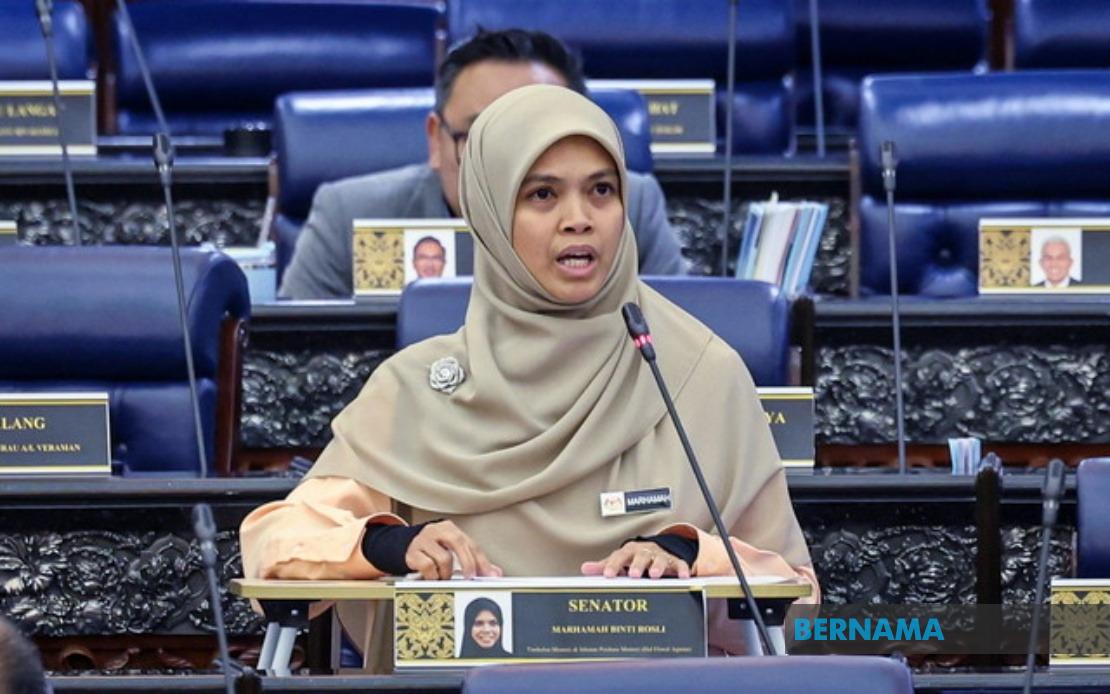
Malaysia is moving forward with an ambitious waqf development agenda, with the government's religious affairs machinery advancing nineteen substantial projects valued at RM321 million across the nation. Deputy Minister in the Prime Minister's Department (Religious Affairs) Senator Marhamah Rosli disclosed the scale of this initiative in Parliament on July 29, underscoring the government's commitment to maximising the potential of Islamic endowment assets for community benefit.
Waqf management and development has emerged as a priority area for policymakers seeking to unlock dormant Islamic charitable resources and channel them toward socioeconomic development. The nineteen projects represent a diverse portfolio designed to generate tangible impact across multiple sectors, reflecting a strategic shift toward treating waqf not merely as a religious obligation but as a dynamic development tool. This approach aligns with growing recognition across Southeast Asia that proper waqf administration can address social welfare gaps and support grassroots economic initiatives.
Marhamah's statement came in response to parliamentary questions from Senator Baharuddin Ahmad regarding the achievements and operational track record of JAWHAR—the government body responsible for coordinating waqf-related matters nationally. The deputy minister emphasised that the pipeline of projects demonstrates institutional capacity and strategic planning capability within Malaysia's religious affairs apparatus. For Malaysian readers, this signals that waqf modernisation has moved beyond theoretical discussion into concrete implementation phases.
The broader context involves reforming how Islamic states manage waqf portfolios, many of which have accumulated significant real estate and financial assets over centuries. Traditional management approaches often left such resources underutilised or poorly documented. The nineteen-project initiative suggests officials are adopting more professional standards and performance metrics to assess outcomes and ensure funds reach intended beneficiaries efficiently.
Separately, Marhamah confirmed that Yayasan Waqaf Malaysia (YWM), a key implementing agency, has already distributed RM4.38 million across ninety-two completed initiatives. These programmes have touched the lives of more than 53,748 individuals from approximately 8,232 households, indicating that waqf-funded interventions are already generating measurable social reach. Such figures provide a baseline against which future performance can be measured and suggest that scaling these efforts through the larger RM321 million portfolio could substantially amplify community impact.
Crucially, the government is pursuing formal institutionalisation of waqf development strategy through the National Waqf Master Plan (PIWN) for 2025–2030. Although not yet officially launched, this blueprint has already been circulated to all State Islamic Religious Councils nationwide, and Marhamah reported that every council has reviewed the document and signalled support. This consensual approach matters significantly because waqf administration in Malaysia is largely a state-level responsibility, making coordination and buy-in from all thirteen states essential for coherent national implementation.
The PIWN 2025–2030 is scheduled to be formally presented to both the National Council for Islamic Religious Affairs Malaysia (MKI) and the Cabinet for final approval and notification this year. Cabinet endorsement would provide legal and political backing for the framework, potentially enabling mechanisms like dedicated funding allocations, regulatory reforms, or institutional restructuring that align with the master plan's objectives. For investors and civil society organisations interested in waqf-based development, such formal adoption would signal policy stability and long-term commitment.
The timing of this initiative reflects broader regional trends in Islamic finance and governance. Other Southeast Asian nations, including Indonesia and Singapore, have similarly invested in waqf modernisation programmes. Malaysia's structured approach—combining immediate project implementation with longer-term strategic planning—positions it as a regional leader in translating Islamic principles into development outcomes. The RM321 million commitment represents a meaningful investment that could influence how waqf is perceived and utilised across the wider Muslim world.
For Malaysian stakeholders, particularly those in community development, social welfare, and Islamic philanthropy, the emerging waqf ecosystem offers new channels for funding and partnership. The nineteen projects will likely span education, healthcare, housing, and economic empowerment—sectors where waqf traditionally concentrates but where modern professional management can amplify effectiveness. Understanding these developments is important for NGOs, entrepreneurs, and local authorities seeking to collaborate with or benefit from waqf resources.
The emphasis on state coordination and formal master planning also suggests that bureaucratic fragmentation—a historical challenge in waqf administration—is being systematically addressed. By establishing a nationally endorsed framework and securing state-level commitment upfront, Malaysian authorities are attempting to create conditions for sustainable, scaled impact rather than ad-hoc or isolated initiatives. This institutional strengthening is as important as the financial commitment itself.
Looking ahead, the success of these nineteen projects and the implementation of the PIWN 2025–2030 will likely become benchmarks for evaluating Malaysia's waqf modernisation trajectory. International observers and peer nations will monitor whether the initiatives deliver on their promised social and economic outcomes, and whether the formal master plan framework enables genuine coordination and resource optimisation across states. For Malaysians, the next phase involves translating policy commitments into field-level results that demonstrably improve livelihoods and strengthen community resilience.

