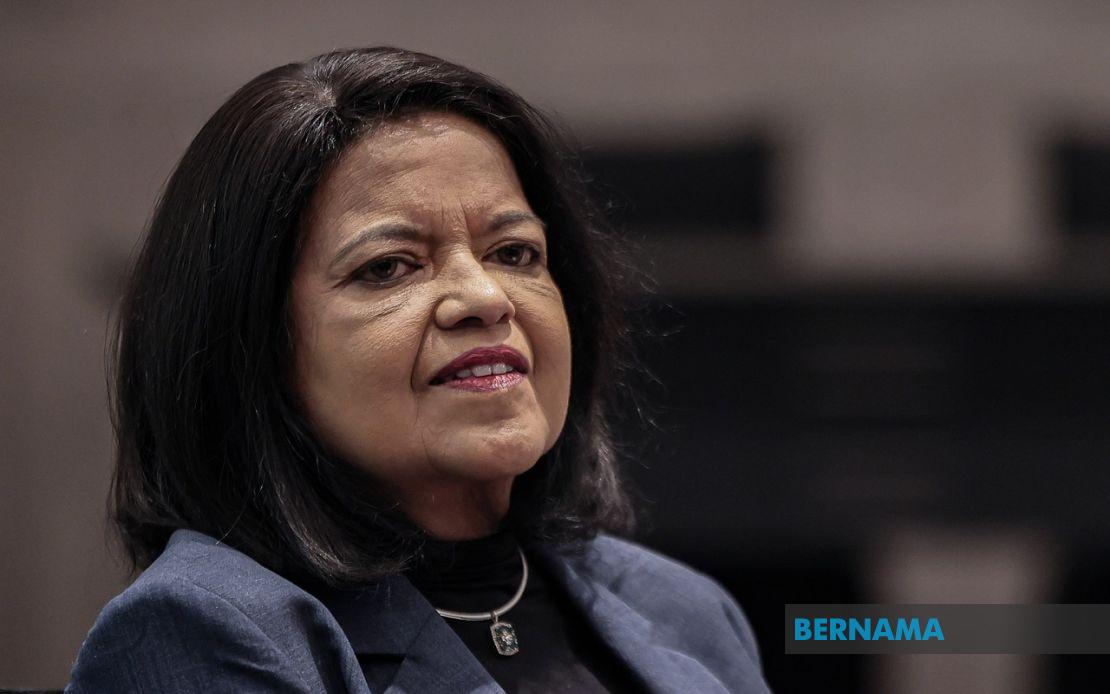
Malaysia's upcoming state elections in Johor and Negeri Sembilan will serve as the testing ground for an ambitious new system designed to combat the spread of false information and synthetic media during campaign periods. The Malaysian Media Council announced the pilot programme during a media dialogue in Butterworth, framing the two contests—scheduled for July 11 and August 1 respectively—as an ideal opportunity to evaluate and refine its newly launched Rapid Response Election Initiative before potential deployment in other electoral contests.
Chairperson Tan Sri Nallini Pathmanathan highlighted the strategic advantage of holding two major state elections in quick succession. The proximity of the two polls allows the council to apply lessons learned from Johor directly to the Negeri Sembilan campaign, creating a real-time laboratory for testing the effectiveness of the misinformation-fighting mechanism. This approach reflects a pragmatic understanding of election cycles and the evolving nature of digital threats facing Malaysian democracy.
The initiative addresses a specific category of false content: fabricated material falsely attributed to legitimate media organisations. This includes doctored news graphics bearing genuine media logos, manipulated screenshots of news articles, and counterfeit reports designed to appear as though they originated from established news outlets. The council's decision to focus narrowly on verifying the authenticity of content rather than assessing the accuracy of political claims represents a deliberate boundary designed to insulate the mechanism from accusations of political bias.
The operational framework distributes responsibilities across multiple institutions, each playing a distinct role. The MMC functions as the primary coordinator, while individual media organisations retain authority to verify whether disputed content actually emanated from their platforms. The Election Commission serves as the reference body for election-related queries, enabling rapid clarification of procedural matters or electoral regulations that may become subjects of false claims. Bernama, Malaysia's national news agency, will amplify verified information to broader audiences, ensuring that accurate corrections reach the public quickly.
Several additional partners strengthen the network's capacity. Content Forum Malaysia provides expertise on digital platforms and media literacy initiatives. The Department of Community Communications and National Information Dissemination Centres will facilitate the distribution of verified information to communities at the grassroots level. The Malaysian Communications and Multimedia Commission remains available for technical assistance and regulatory intervention when necessary, though the council emphasised that the mechanism is designed to function primarily through voluntary cooperation rather than enforcement.
Nallini provided a concrete illustration of how the system would operate in practice. Consider a viral image bearing a major news organisation's logo claiming that a particular candidate has withdrawn from the race. Under the initiative, that organisation could verify the claim within minutes and issue a public correction before the false narrative achieves significant viral reach. Similarly, unsubstantiated claims about electoral procedures could be immediately referred to the Election Commission for authoritative clarification, allowing officials to debunk misinformation before it influences voter behaviour.
The timing of this initiative reflects growing Malaysian anxiety about the sophistication of disinformation campaigns. The council explicitly identified synthetic and artificially generated content as an emerging threat, noting that such material can be produced with unprecedented speed and disseminated across multiple platforms during the compressed timeframe of election campaigns. Traditional fact-checking mechanisms, which may require hours or days to verify claims, risk lagging behind the velocity of viral falsehoods in the digital era.
Beyond the institutional architecture, the council launched a parallel public awareness campaign centred on the question "Who Said It? What's The Source?" This messaging strategy encourages voters to adopt a more critical posture toward information they encounter, promoting verification habits before sharing or accepting claims as true. The campaign explicitly rejects any suggestion that citizens should remain silent during elections; rather, it invites Malaysians to engage more thoughtfully with the information landscape.
Nallini emphasised that the initiative deliberately avoids the contentious terrain of political manifestos or campaign promises. The council recognises that assessing the truthfulness of electoral pledges or policy claims inevitably invokes accusations of interference in the democratic process. By restricting the mechanism to verifying the authenticity of media-attributed content, the MMC sidesteps this minefield while still addressing a genuine vulnerability in information security during elections.
The bilingual messaging—incorporating both English and Malay versions of the verification principle—reflects the council's understanding that effective public communication requires accessibility across Malaysia's linguistic communities. The Malay phrase "Siapa kata? Sos mana?" distils the central concept into an easily memorable form that resonates culturally with Malaysian audiences.
For Southeast Asian observers, Malaysia's experiment carries broader implications. As digital literacy remains uneven across the region and election cycles continue to accelerate, other nations face comparable challenges in defending democratic processes against coordinated misinformation campaigns. The MMC's approach of distributing verification authority across multiple trusted institutions rather than concentrating it in government hands offers a potential model for other democracies wrestling with similar problems.
The announcement also signals the Malaysian government's acknowledgment that misinformation represents a genuine threat to electoral integrity. The presence of Communications Minister Datuk Fahmi Fadzil at the dialogue session, alongside senior officials from the ministry, indicated official endorsement of the initiative. This political backing provides the council with both legitimacy and institutional support as it attempts to navigate the politically sensitive terrain of election-related fact-checking.
As Malaysia prepares for these two state elections, the practical effectiveness of this mechanism will offer important evidence about whether coordinated, multi-stakeholder approaches can meaningfully reduce the amplification of false content during electoral campaigns. The results will likely inform not only future Malaysian elections but also broader regional discussions about sustaining democratic integrity in an era of sophisticated digital manipulation.

