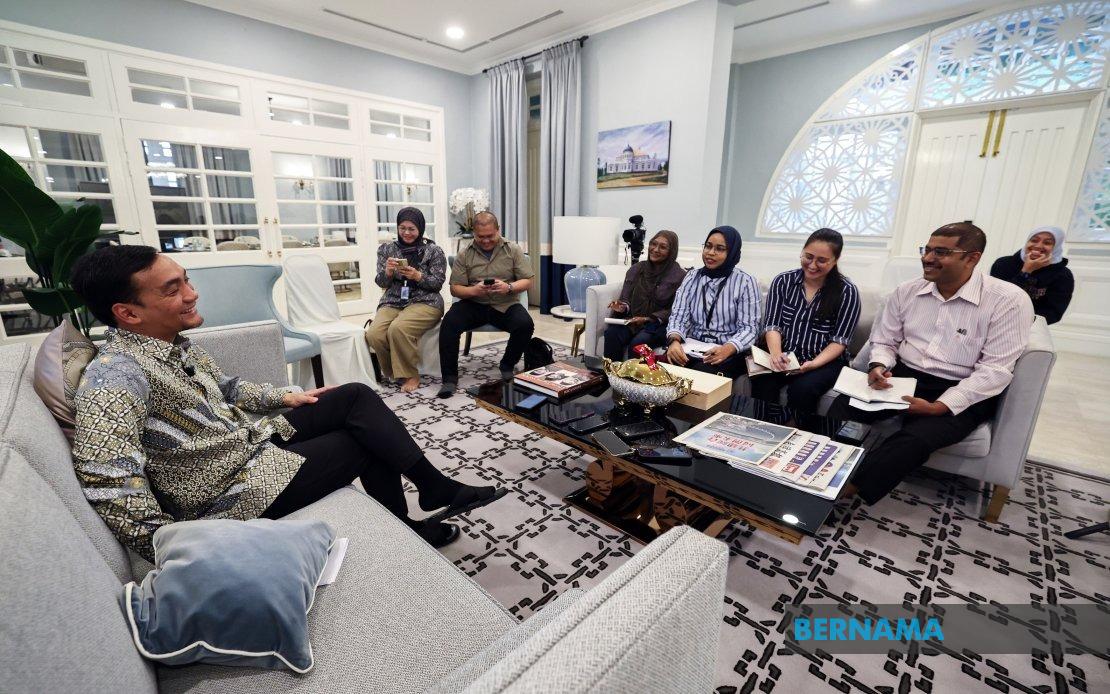
Johor Barisan Nasional chief Datuk Onn Hafiz Ghazi has extended a message of encouragement to party members who have not secured nomination as candidates for the state election scheduled for July 11, urging them to sustain their dedication to the broader coalition effort. The Johor Menteri Besar made these remarks during an interview at his official residence in Saujana, addressing concerns that are likely common among activists disappointed by the selection outcome.
The candidate vetting process represents a perennial challenge for ruling coalitions across Malaysia, where limited seats and high expectations create inevitable frustration among the party faithful. Onn Hafiz's intervention seeks to reframe rejection as merely a redirection rather than a conclusive setback. His assurance that alternative pathways exist—whether through federal parliamentary representation, party administrative roles, or grassroots mobilisation—reflects an attempt to retain organisational cohesion during a crucial electoral period. The messaging underscores that electoral contests require unity extending beyond candidates themselves, encompassing party machinery and community engagement at multiple levels.
Significantly, Onn Hafiz disclosed that the selection procedure remains approximately 80 per cent complete, with finality arriving only upon issuance of appointment letters. This revelation carries practical implications: positions could shift as deliberations conclude, and previously issued credentials have been rescinded in past cycles. The fluid nature of the process suggests that some disappointed members might yet receive nominations, though such prospects remain uncertain. This incomplete state also indicates that intense negotiations among senior leadership continue, with final determinations requiring sign-off from BN chairman and UMNO president Datuk Seri Dr Ahmad Zahid Hamidi alongside other top echelon figures.
The selection criteria adopted by Johor BN reflect broader modernisation trends within the coalition. Candidates are evaluated across diverse professional domains without age-based restrictions, though local credentials and community familiarity remain paramount. The framework references the "WALI" principle—winnable, acceptable, and likeable—previously articulated by BN leadership, emphasising that electability transcends demographic categories. Onn Hafiz's specific assertion that youth matters less than competence suggests a pragmatic approach prioritising effective governance capacity over generational positioning, though this stance may face scepticism from younger activists seeking greater representation.
Young voters present a demographic wildcard in Johor's electoral calculus. Individuals below 40 represent between 20 and 40 per cent of the state's population, yet remain substantially underrepresented within the current elected representative cohort. This disparity creates vulnerability for the BN if younger voters perceive insufficient opportunity for advancement within party structures. Onn Hafiz's acknowledgment that engagement with this segment has occurred suggests awareness of the risk, though converting contact into electoral support depends on whether young voters perceive tangible policy responsiveness. The appeal to Johoreans employed across the border in Singapore—urging them to participate on July 11—indicates efforts to maximise turnout from a geographically dispersed constituency that might otherwise face participation barriers.
Onn Hafiz framed voter participation as fundamental to legitimate governance, arguing that elevated turnout strengthens democratic representation within Johor. His personal commitment to delivering outcomes for constituents, coupled with his stated readiness to continue governing should the electorate grant another mandate, positions the incumbents as a tested alternative. The reference to "Bangsa Johor"—a regional identity distinct from national narratives—suggests BN's strategy emphasises state-level pride and developmental continuity rather than federal-level partisan alignment, a potentially shrewd positioning given shifting national dynamics.
The election calendar presents compressed timelines for campaigning and organisation. With nomination day scheduled for June 27 and early voting on July 7, party structures must rapidly mobilise despite selection disappointments. Members not selected face decisions about campaign participation levels, financial contributions, and grassroots volunteer efforts—choices that will significantly influence on-ground effectiveness. Onn Hafiz's exhortation aims to minimise defections or disengagement during this critical phase, recognising that internal friction during campaigning typically translates to measurable electoral performance degradation.
The broader context reflects systemic tensions inherent to majoritarian electoral systems where candidate selection appears opaque to broader membership. While BN's centralised approval process ensures ideological consistency and strategic coherence, it simultaneously restricts grassroots input into nomination decisions. Disappointed members may question whether selections prioritise loyalty to leadership over community preference or competence metrics, potentially eroding organisational morale. Onn Hafiz's emphasis on service-orientation and people-centredness attempts to redirect frustration toward constructive rather than destructive channels, though effectiveness depends on whether excluded members perceive genuine alternative opportunities or merely consolatory rhetoric.
The July 11 election occurs within Malaysia's broader political landscape of coalition realignments and generational transition questions. Johor's outcome will provide early indicators regarding BN's capacity to retain dominance in a major state, particularly given demographic shifts and younger voter preferences. The campaign's success depends substantially on party members feeling adequately valued regardless of candidate selection status. Onn Hafiz's carefully calibrated message attempts to navigate this balance—acknowledging disappointment whilst enjoining continued commitment—though its reception among aggrieved members remains uncertain. The coming weeks will reveal whether such messaging proves sufficient to maintain the organisational coherence necessary for electoral competitiveness.