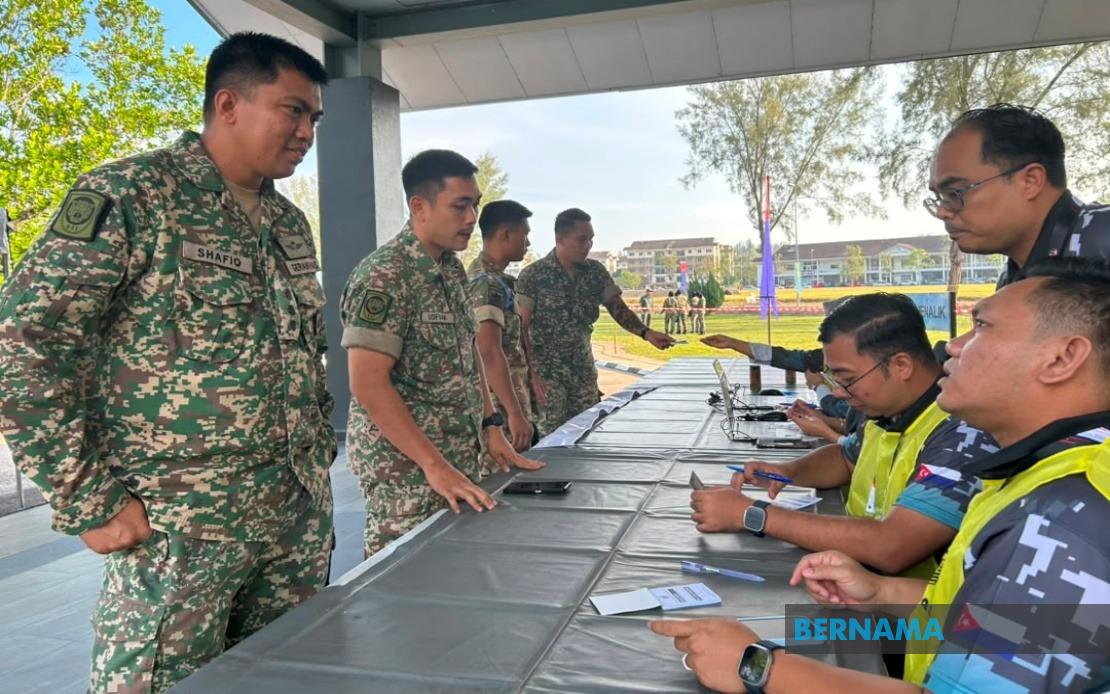
Early voting in Johor's 16th state election progressed at a brisk pace on July 7, with more than half of all registered early voters having already submitted their ballots by mid-morning. The Election Commission announced that 56.32 per cent of the early voting cohort—representing 11,605 individuals out of 20,607 eligible early voters—had participated in the polls by 11 am, signalling strong engagement among security and military personnel permitted to vote ahead of the main election day.
The brisk turnout reflected the composition of early voting, which is reserved exclusively for security and armed forces personnel alongside their spouses. These groups, essential to maintaining order and stability during the election period, are granted the privilege of voting earlier to accommodate their operational duties. The Royal Malaysia Police and General Operations Force contingent demonstrated particularly solid participation, with 6,852 of the 12,063 registered personnel and spouses casting their votes. Similarly, Malaysian Armed Forces members and their families contributed substantially, with 4,753 out of 8,544 eligible voters from this category having already participated by the 11 am checkpoint.
The logistics of accommodating this voting segment required considerable planning and resources. Across Johor, 64 dedicated polling centres opened their doors at 8 am to facilitate the early voting process, each equipped to handle the concentrated flow of security and military personnel. The phased closure schedule, with centres shuttering progressively between noon and 6 pm depending on local conditions and remaining voter numbers, allowed flexibility to ensure no eligible voter would be turned away before their designated centre closed.
The strong early-morning performance set a positive tone for the broader electoral exercise scheduled for the following Saturday. Johor's 16th state election represents a significant political moment for Malaysia's southern region, with 172 candidates competing intensely for 56 state assembly seats. The scale of this contest is substantial, encompassing a potential electorate of approximately 2.7 million voters who would participate in the main polling day.
This election cycle carries particular significance for Malaysian politics at the state level. Johor has historically wielded considerable influence within the federation, and contests for its assembly seats often reflect broader political currents and sentiment across the peninsula. The participation of security forces and military in early voting underscores the institutional infrastructure supporting democratic processes, while also highlighting how democratic systems accommodate the legitimate scheduling needs of essential personnel.
The 56% early-voting benchmark by mid-morning represented a healthy indicator, though observers would need to monitor final early-voting tallies to assess whether momentum sustained through the afternoon closures. Participation rates among early voters often correlate with broader engagement levels during main polling, offering election analysts preliminary signals about overall voter enthusiasm and the competitive intensity of the contest.
From a regional perspective, Johor elections frequently influence broader Southeast Asian perceptions of Malaysian democracy and governance stability. The smooth administration of early voting, with clear communication from the Election Commission about participation figures and polling arrangements, demonstrated institutional competence in managing a complex electoral process. Such transparency and organizational efficiency contribute to public confidence in democratic institutions.
The involvement of 2.7 million eligible voters across 56 contested seats reflects Johor's demographic weight within Malaysia's political geography. The number of candidates vying for these positions—172 in total—indicates competitive dynamics across the state, with multiple parties and independent candidates seeking representation. This competition across such a large electorate and diverse geographic terrain requires coordinated administrative effort and substantial resources.
For Malaysian election observers and democratic institutions, early-voting participation patterns offer valuable data about engagement among specific demographic and occupational groups. Security and armed forces personnel typically demonstrate higher participation rates than the general population, reflecting both their institutional culture and their direct investment in electoral outcomes that influence national governance and security policy.
As Johor headed toward its main polling day the following Saturday, the strong early-voting performance established momentum. The Election Commission's real-time reporting of participation figures, while preliminary, provided stakeholders and media with concrete benchmarks for assessing engagement levels. Whether the 56% mark achieved by mid-morning among early voters would ultimately translate into similarly robust participation during main polling remained to be seen, but the signs pointed toward an engaged electorate participating actively in this important state-level exercise.

