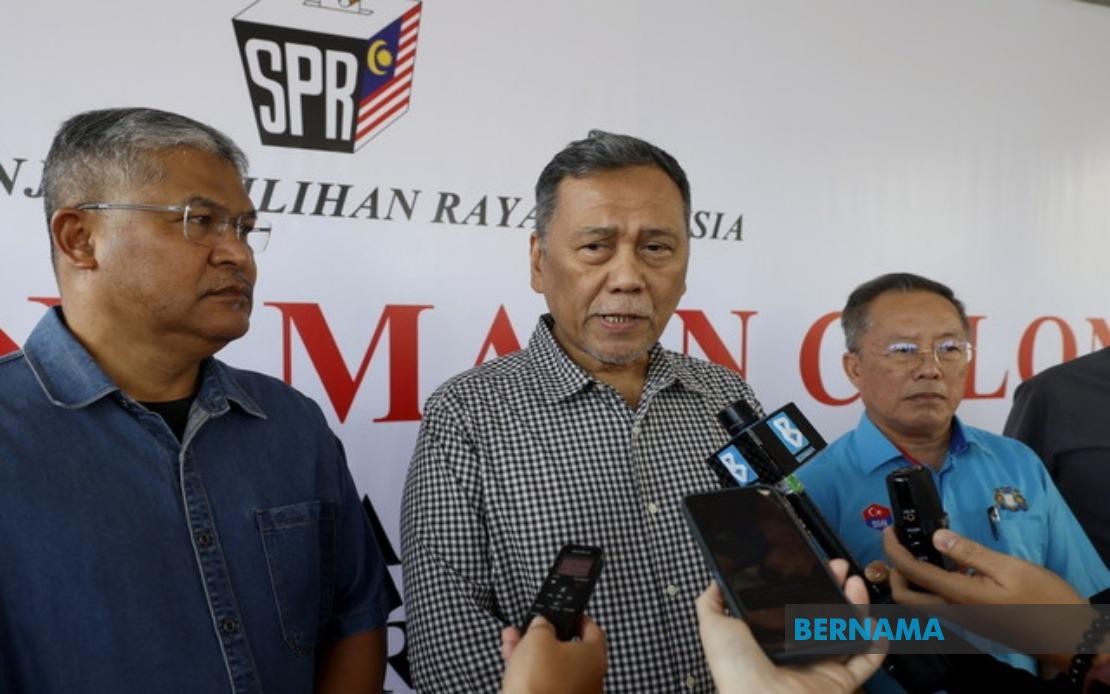
With nomination day for the Johor state election just hours away, the Election Commission has recorded significant momentum in candidate registrations, though the full field remains in flux as the final deadline approaches. As of June 26, a total of 593 nomination forms have been distributed across returning officer offices throughout the state, yet only 133 candidates have taken the decisive step of submitting their deposit payments to officially confirm their candidacy. Election Commission chairman Datuk Seri Ramlan Harun emphasized that these numbers were preliminary, acknowledging that additional candidates would likely complete the necessary paperwork before the nomination process commenced on the morning of June 27.
The distinction between those purchasing nomination forms and those actually confirming their participation reveals the uncertainty inherent in electoral contests at the state level in Malaysia. While nearly 600 individuals or party representatives had picked up the formal documents required to stand as candidates, only a fraction had committed financially by paying the mandatory deposit. This pattern is typical in Malaysian elections, where the formal application process often differs significantly from the field of actual contenders who appear on ballot papers. Ramlan urged remaining prospective candidates to move swiftly through the administrative requirements, indicating that the Commission anticipated smoother processing if submissions arrived before the official start of nomination proceedings.
The Election Commission had invested considerable resources in preparing the electoral machinery for the Johor contest. Across the state, 56 nomination centres had been established and thoroughly tested through two consecutive days of trial runs to ensure they could handle the expected volume of submissions without logistical bottlenecks. This preparation reflected lessons learned from previous state elections and the Commission's commitment to managing what could potentially become a crowded and complex nomination day.
Security concerns featured prominently in the Commission's planning for the nomination process. Ramlan issued a direct appeal to all political parties, their candidates, and supporters to adhere strictly to established regulations and refrain from any actions that might provoke confrontation. The nomination centre at Maharani, examined by Ramlan during his inspection tour in Muar, exemplified the security protocols that would be implemented state-wide. Zainal Eran, the returning officer for Maharani, outlined the controlled access arrangements designed to prevent the kind of volatile situations that can occasionally erupt when rival party supporters gather in close proximity during high-stakes political events.
The nomination centre procedures severely restricted who could enter the submission area itself. Only the candidate, their official proposer, and a single supporter would be permitted to cross into the formal nomination space, creating a constrained environment that minimised opportunities for confrontation. All other party supporters would be relegated to a designated field positioned in front of the centre, where physical barriers would establish clear separation between the different political camps. This arrangement attempted to balance the democratic right of supporters to witness and support their candidates with the overriding imperative to maintain public order and prevent the kind of clashes that can undermine faith in electoral integrity.
The competing coalitions and parties had articulated their respective strategies for contesting the 56 available seats. Pakatan Harapan had committed to fielding a full slate of candidates across all seats, distributing the burden among its three component parties: PKR would contest 20 seats, Amanah 19 seats, and DAP 17 seats. This comprehensive approach reflected the coalition's determination to present voters with a complete alternative vision for state governance. Barisan Nasional adopted an identical strategy of contesting all 56 seats, maintaining traditional seat distributions that allocated 36 nominations to UMNO, 16 to MCA, and four to MIC, perpetuating the long-established partnership structure within the coalition.
Perikatan Nasional's strategy differed markedly, reflecting either a more selective territorial approach or ongoing internal negotiations among coalition members. PAS had been assigned 11 seats, Bersatu 16, the Malaysian Indian People's Party five, and Pejuang one, totalling 33 seats contested by the coalition across the state. This represented a significantly narrower footprint than the two major coalitions, suggesting either insufficient candidate recruitment or a deliberate choice to concentrate resources on winnable constituencies. The Malaysian United Democratic Alliance, a lesser-known political formation, had positioned itself to contest four seats, while Parti Sosialis Malaysia announced a solitary candidacy in one seat. Parti Bersama Malaysia, preparing for its electoral debut at state level, ambitiously committed to fielding 15 candidates, marking an entry into electoral competition that could reshape the political landscape if it demonstrated organisational capacity.
The Johor state election had emerged from the dissolution of the State Legislative Assembly on June 1, initiating a compressed campaign calendar typical of Malaysian electoral practice. The Election Commission had structured the timeline to facilitate orderly progression through the democratic process: nomination day on June 27 would determine the final candidate list, early voting was scheduled for July 7 to accommodate specific categories of voters, and polling day would conclude the exercise on July 11. This compressed timeline, common in Malaysian elections both federal and state, compressed campaigning periods and created intense pressure on parties to mobilise supporters rapidly.
The numbers circulating in the media prior to nomination day provided only a preliminary glimpse of the competitive landscape that would emerge once the official process concluded. The Election Commission's emphasis on preparedness and adherence to regulations signalled its determination to manage what could become a historically significant election, depending on the final candidate configurations and campaign dynamics that would unfold in the coming weeks. The distinction between 593 forms sold and 133 deposits received underscored the reality that many initial expressions of interest would ultimately dissolve, with the actual field of contenders becoming apparent only after nomination day had passed and the formal election machinery shifted into its campaign phase.

