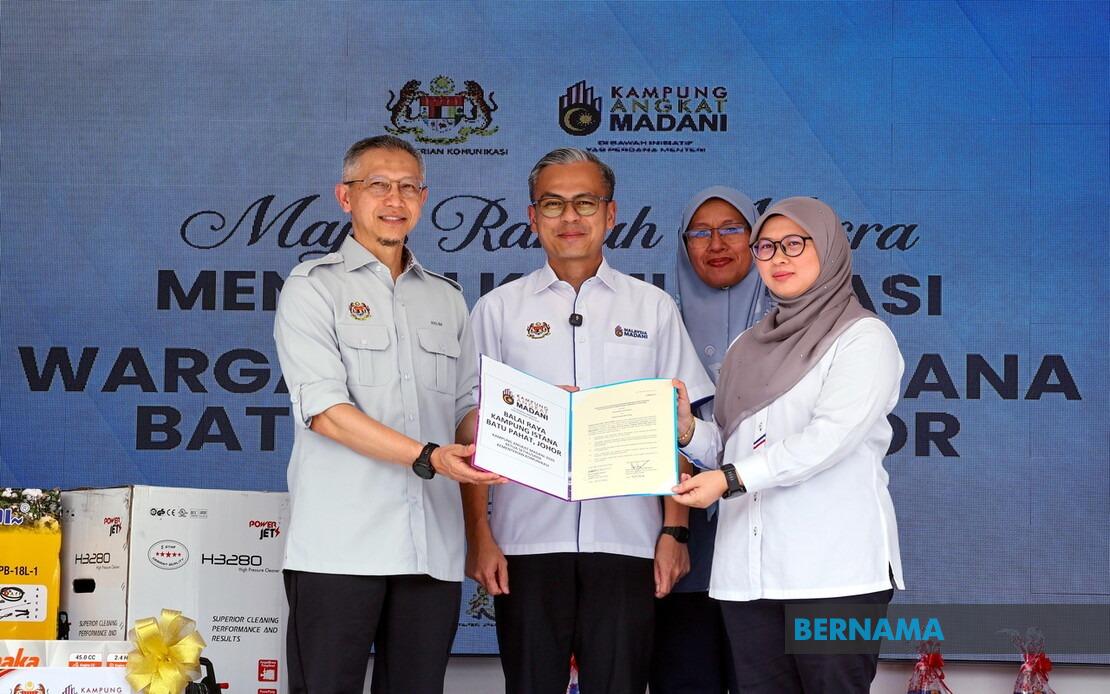
The 16th Johor State Election represents a pivotal moment for voters to select leadership committed to advancing the state's interests and prosperity, not a reflection of support for any single political figure, according to Pakatan Harapan Communications Director Datuk Fahmi Fadzil. Speaking in Batu Pahat on July 4, Fahmi directly addressed recent attempts to tie a potential Barisan Nasional victory to backing for a former prime minister, characterising such framing as a troubling distraction from the real stakes of the electoral contest. His comments underscore a fundamental divide in how different political camps are seeking to shape the narrative surrounding the July 11 polling day, with PH attempting to steer discourse toward governance and state development while critics argue that broader political considerations inevitably influence voter behaviour.
The remarks came in response to statements by Datuk Nazifuddin Mohd Najib, who suggested that a BN victory would demonstrate public endorsement for his father, former Prime Minister Datuk Seri Najib Razak, to receive a presidential pardon. Fahmi expressed surprise at such suggestions, arguing they should serve as a warning sign to the electorate about the true nature of what is being contested. The communications minister, who held his campaigning event alongside Communications Ministry officials and the PH candidate for Penggaram, Felicia Poh Rui Ling, sought to recalibrate the election's meaning in the minds of ordinary voters who might otherwise be swayed by personality-driven politics.
Central to Fahmi's argument is the proposition that electoral contests should pivot on substantive policy differences and leadership capability rather than personal allegiances or historical figures. He emphasised that democratic participation carries weight beyond individual preference, serving as a mechanism through which communities collectively determine their political direction. This framing resonates particularly in Malaysian politics, where voting patterns have historically been shaped by communal identity, economic anxiety, and trust in specific leaders. By attempting to elevate the conversation to institutional and developmental concerns, PH is seeking to mobilise voters who may harbour reservations about particular personalities on either side of the political spectrum but remain engaged with questions of governance quality and economic prosperity.
Fahmi's second key argument addressed the nature of political support itself, rejecting the notion that any demographic group or region constitutes a permanent electoral asset for a single party. He noted that criticism directed at the Democratic Action Party regarding the so-called "fixed deposit" of non-Malay voter support reflects a broader misunderstanding of how public mandate operates in modern democracies. Political parties, Fahmi contended, must continuously earn and reinforce voter confidence through performance and responsive governance rather than assuming that historical voting patterns will persist indefinitely. This observation carries significant implications for Malaysia's two largest coalitions, both of which have traditionally relied on regional strongholds and communal voting blocs to construct winning coalitions at federal and state levels.
The shifting nature of political alignments became apparent through Fahmi's highlighting of defections and cross-party support. He cited former Rengit assemblyman Datuk Dr Mohd Puad Zarkashi's endorsement of the PH candidate as evidence that UMNO's once-dominant hold on Johor can no longer be taken for granted. Such cracks in traditional power structures suggest that economic grievances, governance dissatisfaction, or personality conflicts may be eroding longstanding voter loyalty to Barisan Nasional in the state. For Malaysian political observers, these developments signal that the Johor contest may not follow predictable lines based on historical precedent, with regional variations in sentiment and changing voter demographics creating opportunities for electoral surprises.
Additional evidence of PH's expanding appeal emerged from Fahmi's references to Bersatu members expressing support for opposition candidates in constituencies such as Sri Medan. These endorsements, while not necessarily representing wholesale defections from Bersatu's base, nonetheless indicate that cross-factional cooperation and informal alliances are strengthening PH's position in parts of the state. The cumulative effect of multiple personalities from different political backgrounds publicly backing Pakatan Harapan candidates creates a narrative of momentum and growing confidence in the coalition's capacity to govern effectively. Such visible endorsements carry particular weight in Malaysian campaigning, where personality and individual credibility remain powerful voting factors despite Fahmi's efforts to elevate discourse beyond such considerations.
Fahmi connected PH's apparent growing appeal in Johor to broader confidence in Prime Minister Anwar Ibrahim's economic leadership, arguing that successful management of Malaysia's recovery trajectory strengthens the coalition's electoral position at state level. This linkage between national economic performance and regional voting behaviour reflects a fundamental reality of Malaysian politics: voters frequently use state contests as referenda on federal government performance, regardless of formal campaign messaging. If the national administration is seen as delivering tangible economic improvements, raising living standards, or managing inflation and employment effectively, state-level candidates affiliated with the ruling coalition benefit from such positive sentiment. Conversely, if economic anxieties persist or voter confidence in federal leadership wavers, this translates into vulnerability for government candidates even in traditionally supportive regions.
The Johor contest encompasses 172 candidates competing for 56 seats, with polling scheduled for July 11 and early voting set for July 7. The scale and scope of this election make it one of Malaysia's most significant state-level political contests, with implications extending far beyond Johor's borders. A decisive BN victory would confirm traditional power structures and potentially strengthen the coalition's position heading toward the next federal elections. Conversely, substantial PH gains or a hung assembly would signal shifting voter sentiment and could reshape the political landscape across Southeast Asia's most economically developed Malaysian state. The outcome will provide crucial data about voter priorities, the durability of traditional political alignments, and the effectiveness of competing campaign narratives in mobilising electoral support.
For Malaysian voters and regional observers, the Johor election crystallises fundamental questions about the future direction of the country's politics. The contest between Fahmi's vision of issue-focused, governance-oriented electoral competition and opponents' emphasis on personality, historical accountability, and broader political networks will determine whether Malaysian politics is evolving toward issue-based contest or remaining anchored in personality-driven tribalism. The results on July 11 will offer telling evidence about which campaign approach proves more persuasive to ordinary voters navigating complex economic circumstances and demanding genuine improvements in public services, economic opportunity, and state development. Ultimately, the Johor election represents more than a state-level power contest; it constitutes a referendum on the state of Malaysia's democratic evolution itself.

