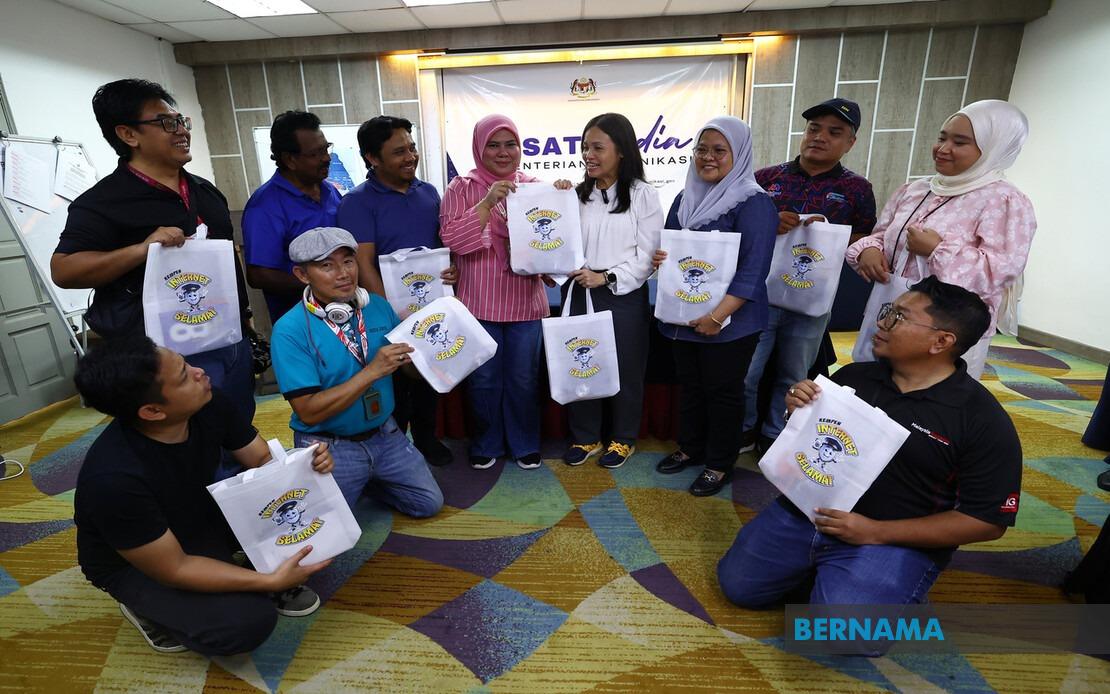
The Malaysian Communications Ministry has mobilized substantial infrastructure across Johor to support media operations during the 16th state election campaign, deploying two main media centres and 100 National Information Dissemination Centres (NADI) to ensure comprehensive coverage of political activities leading up to polling day on July 11. Deputy Communications Minister Teo Nie Ching unveiled the initiative in Johor Bahru on June 28, emphasizing the government's commitment to facilitating unfettered press access to campaign developments across the state.
The two flagship media centres anchor the communications apparatus, with one established at Hotel Seri Malaysia in Johor Bahru and the second at NADI Kampung Sawah Awok in Muar. Both facilities operate extended hours from 9 am to 9 pm throughout the campaign period, commencing from June 26 and continuing until July 11. This operational window provides journalists and content creators with continuous access to workspace, telecommunications infrastructure, and administrative support throughout the critical phase of the election cycle.
Technical specifications for the media centres prioritize reliability and speed, with guaranteed internet connectivity of no less than 100 Mbps ensuring that journalists can transmit video content, photographs, and detailed reports without delays or bandwidth constraints. Teo underscored this capability during her facility tour, addressing practical concerns that regularly emerge during intensive news coverage periods when multiple news organizations simultaneously upload substantial multimedia files. The infrastructure includes desktop computers, laptops, photocopiers, and printers, addressing the complete spectrum of media production and distribution needs.
Beyond the physical infrastructure at designated centres, the government has tasked the Malaysian Communications and Multimedia Commission (MCMC) with actively monitoring telecommunications service providers throughout the campaign period. This regulatory oversight aims to prevent degradation of internet speeds across Johor, ensuring that media organizations operating from diverse locations—not merely the formal media centres—maintain adequate connectivity for their operations. The MCMC's proactive stance reflects recognition that modern election coverage extends far beyond traditional newsrooms into distributed networks of stringers, freelancers, and multimedia journalists working across constituencies.
The MCMC has introduced the Nexus application as a crowd-sourced monitoring mechanism, inviting citizens to report real-time internet signal strength and quality at specific geographic locations. Teo clarified important privacy parameters governing the data collection process, emphasizing that personal identifying information remains protected and only technical metrics regarding location and signal strength are shared with telecommunications companies. This approach leverages public participation in network quality assurance while addressing legitimate privacy concerns that might otherwise discourage participation in the monitoring initiative.
Beyond connectivity infrastructure, the election communications framework incorporates governance guidance emphasizing responsible campaign conduct. Teo reminded political parties and their supporters to maintain campaign standards that avoid contentious issues related to race, religion, and royalty—the so-called "3R" sensitivities that have periodically inflamed political discourse in Malaysia. This messaging reflects institutional acknowledgment that electoral periods occasionally activate divisive rhetoric, necessitating clear reminders regarding acceptable campaign parameters.
The MCMC has coordinated with law enforcement agencies to identify and expedite removal of inflammatory social media content during the election period. This collaborative approach between communications regulators and police reflects a strategy of rapid content moderation targeting material containing elements of "extreme provocation." The mechanics of identifying such content and determining removal decisions remain complex in practice, balancing free expression against preventing genuine threats to public order and social harmony.
Fact-checking emerges as a central element in the government's approach to managing election-period information quality. Teo specifically commended the Malaysian Media Council for establishing a dedicated fact-checking platform, framing verification of claims as a public responsibility rather than solely a journalistic function. The emphasis on cultivating fact-checking as a habitual practice among information consumers addresses the broader challenge of managing misinformation within highly distributed social media ecosystems where false narratives can proliferate rapidly before journalistic verification occurs.
The Johor election infrastructure represents a substantive government commitment to supporting press operations during a significant state-level election. For Malaysian media organizations, the deployment of 100 NADI centres throughout the state signals intentional government effort to ensure journalists from organizations of varying sizes and resources can access basic telecommunications and workspace amenities. This is particularly relevant for smaller outlets or freelancers who might otherwise face barriers accessing election coverage from remote constituencies.
The communications strategy also acknowledges that election-period reporting occurs within a competitive digital media landscape where speed and multimedia capability increasingly determine journalistic impact. By guaranteeing 100 Mbps connectivity and providing multimedia-capable workstations, the government removes technical impediments that might otherwise slow coverage of election-day developments or limit journalists' ability to transmit complex multimedia narratives.
For broader Southeast Asian context, Malaysia's election infrastructure investment reflects increasing recognition that modern political campaigns operate simultaneously across traditional media, digital platforms, and social networks. The technical requirements supporting contemporary election reporting have expanded substantially beyond telephone lines and traditional newsroom facilities, requiring explicit government and regulatory attention to ensure equitable access across varied media organizations.
The early voting scheduled for July 7, preceding general polling on July 11, creates an extended campaign-to-election period during which media centres will experience variable activity levels. The 24-day operational window from June 26 through July 11 ensures journalists can establish working routines and relationships with media centre staff, potentially improving operational efficiency during peak coverage periods immediately preceding polling day.

