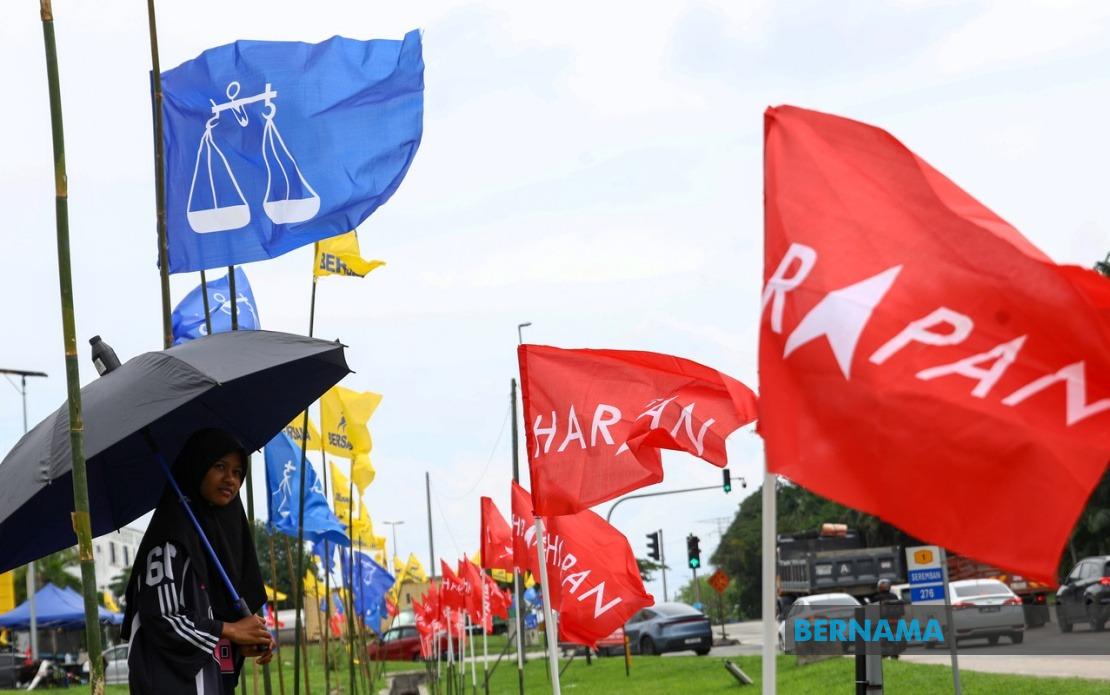
The contest for Johor's 56 state seats has crystallised into two fundamentally different electoral approaches as Pakatan Harapan and Barisan Nasional intensify their ground operations in the second week of campaigning. Each coalition, fielding candidates across all constituencies for the Saturday, July 11 polling day, has adopted a distinctive strategy reflecting its perceived strengths and voter base composition. The divergent tactics underscore broader shifts in Malaysian electoral dynamics and signal how parties are adapting to increasingly sophisticated voter preferences in the peninsula's most economically developed state.
Pakatan Harapan's campaign blueprint centres on translating policy commitments into concrete benefits that directly address the immediate preoccupations of ordinary Johoreans. Rather than emphasising aggregate economic indicators or headline investment figures, the coalition has positioned its manifesto, titled "Johor For All", as a comprehensive response to household-level anxieties. The strategy spotlights integrated approaches to wage enhancement, affordable housing accessibility, quality employment creation and strengthened social welfare provisions. This framing represents a deliberate pivot away from conventional development narratives that prioritise growth metrics, instead foregrounding distributional equity and tangible improvements in living standards that voters can experience directly in their daily lives.
Dr Mohammad Tawfik Yaakub from Universiti Malaya explained that PH's approach represents a calculated attempt to reframe what constitutes successful governance in Johor. The coalition argues that economic expansion divorced from household income gains, housing affordability and employment quality represents an incomplete development model. By constructing a narrative that links state-level investment returns to worker remuneration and family welfare, Pakatan Harapan is attempting to mobilise what might be termed a "prosperity consciousness"—the idea that growth should be measured not by capital inflows or GDP statistics but by whether ordinary families genuinely feel better off. This strategy assumes voters possess sufficient policy literacy to evaluate manifestos critically and that bread-and-butter concerns outweigh other electoral considerations.
Barisan Nasional has adopted a markedly different strategic orientation, capitalising on the high-profile return of two significant political personalities to the Johor campaign trail. The reactivation of Datuk Seri Hishammuddin Tun Hussein, former UMNO vice-president, and Khairy Jamaluddin, ex-UMNO Youth chief, both rejoined through the "Rumah Bangsa" initiative, represents a calculated decision to harness personal political capital and organisational networks. These figures carry substantial historical gravitas within UMNO structures and retain recognisable public profiles, suggesting BN believes personality-driven campaigning remains potent. The coalition's apparent faith in this approach reflects traditional strengths in ground machinery, party infrastructure and the residual loyalty among its demographic base, particularly within older, more socially conservative voter cohorts.
However, contemporary political analysis suggests this reliance on prominent personalities faces headwinds from evolving voter behaviour. Dr Tawfik cautioned that modern electorates, particularly in comparatively urbanised and educated constituencies like much of Johor, have become substantially more discerning consumers of political messaging. Voters no longer treat ceramah attendance or prominent speaker presence as compelling factors in isolation. Instead, contemporary voters conduct more sophisticated evaluations encompassing party credibility, candidate quality, policy coherence and substantive responsiveness to community concerns. The implication is that personality politics, while still relevant, cannot substitute for credible policy offerings or genuine engagement with voter anxieties. This suggests BN's strategy may prove partially effective among traditional supporters yet struggle to persuade swing voters or younger cohorts evaluating parties on performance records and forward-looking commitments.
Associate Professor Dr Mohd Yusry Ibrahim from Ilham Centre outlined a more nuanced assessment of Hishammuddin's potential electoral impact. The former UMNO vice-president retains considerable influence particularly within Johor's political landscape, potentially providing psychological reassurance to UMNO supporters who had previously experienced disillusionment or alienation from the party. Hishammuddin's sustained prominence within UMNO structures and his willingness to actively campaign signals continuity and stability to traditional constituencies concerned about party direction. For voters nursing ambivalence about UMNO's recent trajectory or internal conflicts, his visible engagement could reconvince hesitant supporters that the party remains committed to orthodox political commitments. This psychological dimension—using respected figures to rebuild fractured party-voter bonds—represents a distinct campaign utility beyond mere celebrity appeal.
Khairy Jamaluddin presents a complementary but differentiated electoral proposition, particularly regarding younger voter engagement. As one of Malaysia's few significant political figures who consistently maintains positive resonance among younger demographics, Khairy provides BN a potential bridge to generational cohorts that historically demonstrate weaker party allegiances. The voting patterns of younger Malaysians have become markedly more fluid, characterised by evaluations of specific public figures and policy positions rather than inherited party loyalty. Khairy's established popularity within this demographic—built through social media engagement, perceived policy progressivism and generational affinity—makes him a particularly strategic asset for expanding BN's appeal beyond its traditional heartland. His return could mobilise younger voters' electoral participation and shift some modest proportion toward the coalition, particularly in constituencies where youth demographics assume electoral significance.
Dr Mohd Yusry further emphasised that contemporary younger voters prioritise connection with individual political personalities they recognise and feel authentically represent their values over abstract party loyalty. This represents a fundamental structural shift from previous generations' voting calculus. Younger Johoreans evaluate candidates and visible party representatives through evaluative filters emphasising perceived authenticity, policy alignment and personal appeal. The increasing prominence of the candidate factor in determining voting inclination among younger populations suggests that BN's strategy of deploying Khairy as an active campaigner could generate meaningful returns within specific voter segments, though aggregate impact remains contingent on broader campaign effectiveness and voter reception.
The 16th Johor State Election encompasses 172 candidates contesting across the 56 constituencies, with early voting scheduled for July 7 preceding the main polling day. This electoral configuration reflects consistent expansion in candidate availability relative to available seats, indicating both coalitions' commitment to comprehensive territorial coverage. The two-week campaign period preceding the election provides meaningful opportunity for both ground activation and voter persuasion, with the strategies outlined above suggesting quite different interpretations of what contemporary Johorean voters prioritise in electoral decision-making.
The divergent strategic choices reflect deeper judgments about voter preferences and electoral dynamics within Malaysia's most developed state. Pakatan Harapan's emphasis on policy substance and household-level welfare improvements assumes voters have become sufficiently sophisticated to evaluate party platforms on distributional equity and living standard improvements. Barisan Nasional's reliance on organisational depth, network leverage and prominent personalities reflects more traditional assumptions about party machines and personality-driven politics. These competing approaches will likely generate differentiated outcomes depending on local constituency dynamics, voter demographic composition and the degree to which contemporary Malaysian electoral behaviour has shifted from personality and party-machine politics toward policy-based evaluation. The Johor result will provide instructive insights into whether Malaysian voters have fundamentally reorganised their electoral priorities or whether traditional factors retain enduring potency.

