The integrity of government-funded programmes has come under scrutiny in Johor as the state election campaign intensifies, with opposition politicians questioning whether official events have become platforms for partisan political activity. Johor DAP chairman Teo Nie Ching has demanded clarification from Menteri Besar Datuk Onn Hafiz Ghazi regarding allegations that students attending a Technical and Vocational Education and Training roadshow were subsequently urged to support the Barisan Nasional candidate. The incident, said to have occurred on July 4 at the Inland Revenue Board Hall in Kluang, has raised concerns about the blurring of lines between government administration and election campaigning.
According to Teo, who serves as Deputy Communications Minister, the DAP has received multiple complaints from parents and students alleging they were instructed to attend the Johor MARA TVET Roadshow and warned that non-attendance would be recorded as absenteeism. The compulsory nature of the attendance requirement is significant, as it effectively coerced participation in what was ostensibly a vocational education initiative. The transformation of this government event into a platform for political messaging, Teo argued, represents a misuse of both state resources and the authority inherent in making attendance mandatory for students who have little choice in the matter.
Teo's position reflects a careful distinction between the attendance of government officials at public events and the weaponisation of such events for electoral purposes. She stated that the DAP takes no issue with Menteri Besar Onn Hafiz participating in government programmes, which is an expected part of his administrative role. The crux of the complaint centres on the allegation that he used the platform to directly encourage students to vote for the BN candidate by openly naming the candidate's number. This crosses a line that democratic practice typically seeks to maintain, particularly when the audience comprises young people subject to institutional authority who feel obligated to attend.
The distinction between a legitimate government programme and political campaigning becomes muddied when one organisation's facilities are used for partisan purposes. Teo pressed this point by noting that if the event was genuinely a government programme, it should not have been repurposed for campaigning. Conversely, if it was actually a party political event, then serious questions arise about whether facilities belonging to government agencies can be appropriated for such use. This concern extends beyond the immediate election cycle and touches on broader principles of institutional neutrality and the proper use of public resources.
The DAP has compiled documentary evidence regarding the allegations, including the event's programme itinerary, a letter instructing compulsory attendance, and video recordings that purportedly capture campaign-related remarks. The existence of written directives concerning mandatory attendance is particularly troubling, as it suggests the requirement was formalised and deliberate rather than incidental. Teo's mention of possessing these materials indicates the opposition is prepared to substantiate its claims if necessary, lending weight to the seriousness with which the party views the matter.
Teo articulated her objection to the incident not merely as a political operative but as a parent concerned about the values conveyed to young citizens. Her point resonates beyond party politics: compelling students to attend a programme that subsequently becomes an arena for political persuasion sends a message that institutional authority can be leveraged for partisan gain. For young voters still forming their political consciousness, experiencing such pressure in an educational setting undercuts the principle that electoral choices should be made freely and independently of institutional coercion.
Regarding next steps, Teo indicated that Pakatan Harapan candidates would evaluate appropriate responses, which could include lodging formal complaints with the Election Commission. This measured approach suggests the opposition is not rushing to escalate the matter but wants a transparent explanation first. The Election Commission's role in overseeing campaign conduct becomes relevant here, as allegations of misusing government events for campaigning fall squarely within its purview to investigate.
Beyond the TVET incident, Teo also addressed broader governance disputes between the state and federal administrations. She countered Menteri Besar Onn Hafiz's recent criticisms of federal policies, arguing that such attacks conveniently attribute unpopular policies to the federal government while claiming credit for popular ones at the state level. Teo emphasized that all major policies require Cabinet approval, meaning responsibility cannot be neatly compartmentalised between state and federal governments. This pattern of blame-shifting, she suggested, reflects tactical political manoeuvring rather than substantive policy disagreement.
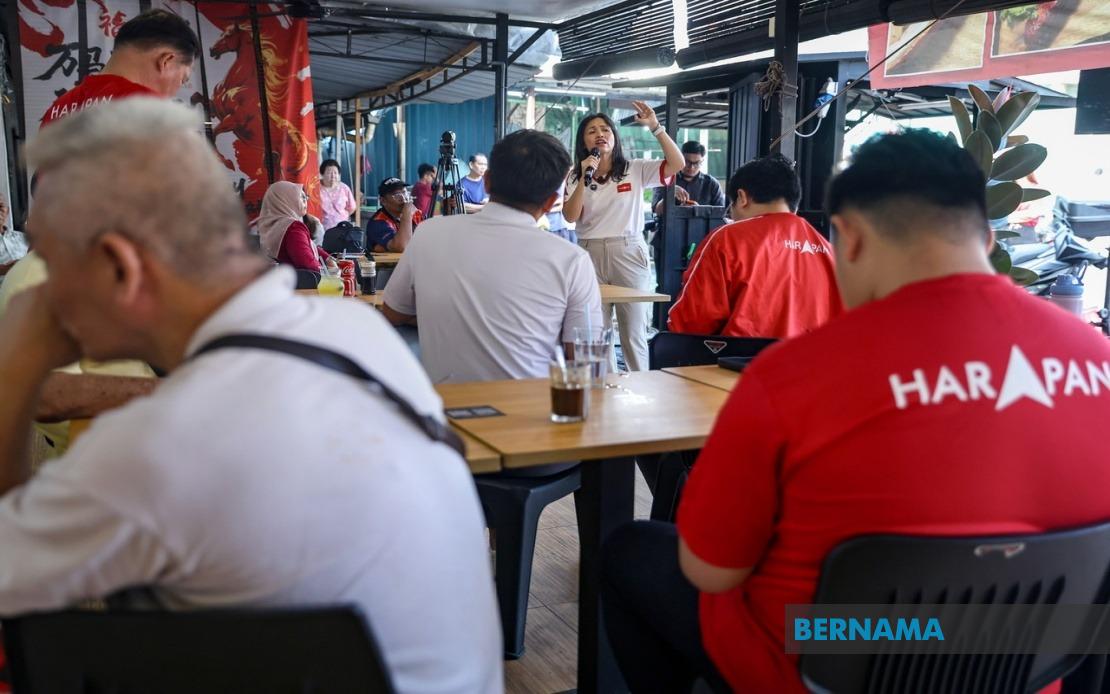
Lim Kit Siang, the veteran DAP leader present at the event, called for Johor voters to reject divisive racial politics and instead unite behind a broader vision he termed the "Malaysian Dream". This concept, as articulated by Lim, rests on foundations of equality, freedom, prosperity, and human rights protections. He cautioned that building a genuinely united Malaysia requires sustained effort and urged voters not to fragment their support through tactical voting but instead to consolidate backing for a coherent political vision. His remarks place the TVET incident within a larger conversation about the kind of political culture Johor voters wish to encourage.
The timing of these allegations carries significance as the Johor state election approaches its conclusion. With 172 candidates competing for 56 state seats, early voting has commenced and polling is scheduled for July 11. The allegations emerge during a period of intense campaigning when the temptation to mobilise government machinery for electoral advantage is likely highest. How the Election Commission responds to any formal complaints and whether voters perceive the incident as indicative of broader governance problems could influence electoral outcomes in marginal seats where institutional trust is a deciding factor.
The broader implications of the TVET controversy extend to questions about institutional independence in Malaysia's electoral system. When government facilities and programmes become instruments of political campaigning, and when students face pressure to participate in such activities, the distinction between the administrative state and the party in power becomes dangerously blurred. For Malaysian voters, particularly those in Johor, the incident raises important questions about the proper boundaries between governance and politics and whether these boundaries are being adequately maintained during election campaigns.

