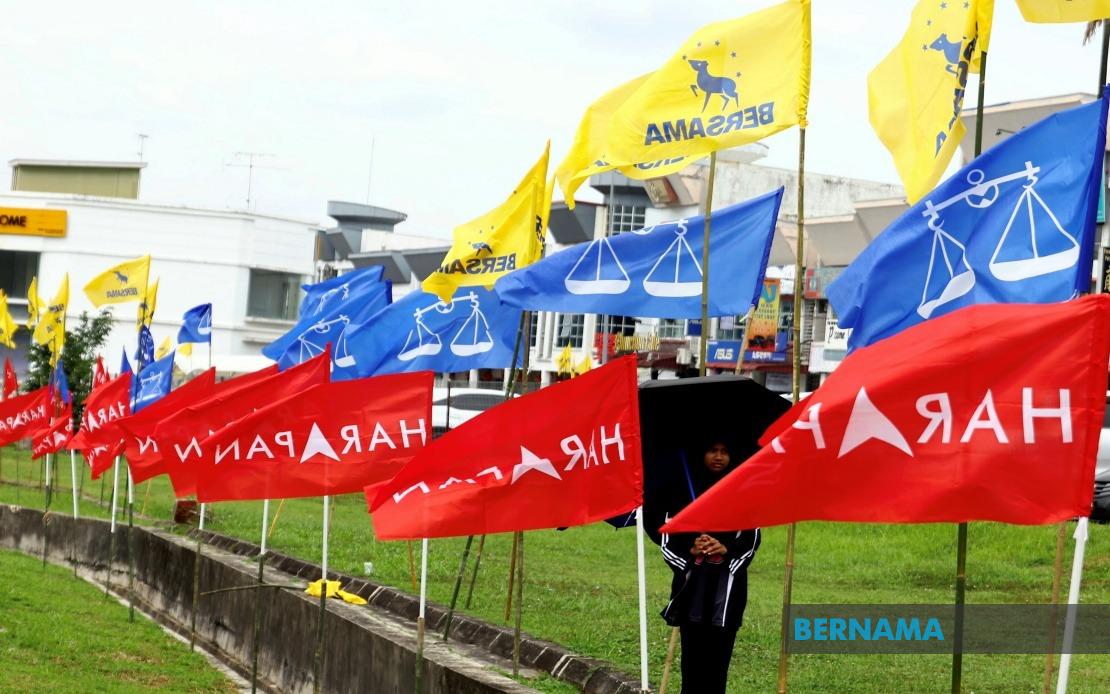
The intensive campaign for Johor's 16th state election will draw to a close tonight at 11.59 pm, ending two weeks of political mobilisation by competing coalitions and parties vying for control of Malaysia's southern economic powerhouse. Starting at 8 am tomorrow, voting will take place at 1,076 polling centres statewide, where approximately 2.7 million registered voters will determine which parties will lead Johor for the next five years. The Election Commission anticipates that comprehensive results will be available by 10 pm, allowing for swift clarity on the election's outcome.
Fewer candidates are contesting this time around compared to previous elections. A total of 172 candidates seek the 56 available state assembly seats, a notable reduction from the 239 candidates who contested in Johor's last state election. This smaller field reflects evolving political dynamics and coalition consolidation, with Barisan Nasional and Pakatan Harapan each fielding 56 candidates, followed by Perikatan Nasional with 33, Parti Bersama Malaysia with 15, MUDA with four, and other smaller parties and independent hopefuls making up the remainder. The composition of candidates highlights how the electoral landscape has shifted since the previous contest.
The campaign period, which commenced on June 27, has subjected voters to an intensive presentation of competing visions, policy pledges, and administrative records. Throughout this fortnight, political parties have prominently featured economic issues in their messaging—specifically targeting voter concerns about the rising cost of living, employment opportunities, and social welfare provisions. These issues have dominated the conversation because they resonate directly with households experiencing financial pressures. The heavy focus on bread-and-butter concerns reflects parties' recognition that voters are prioritising immediate economic relief over broader ideological distinctions.
Early voting occurred last Tuesday, involving 20,607 members of the Malaysian Armed Forces, Royal Malaysia Police, General Operations Force, and their families. This advance ballot process is crucial for allowing security personnel to participate without leaving their posts unguarded on election day. Such provisions ensure that uniformed services can exercise their democratic rights while maintaining operational readiness. The completion of early voting removed a significant segment from tomorrow's polling numbers, allowing for better crowd management at regular polling stations.
Political momentum accelerated dramatically during the campaign's closing days, with appearances by senior national leadership figures underscoring the stakes involved. Prime Minister Datuk Seri Anwar Ibrahim, who chairs Pakatan Harapan, and Deputy Prime Minister Datuk Seri Dr Ahmad Zahid Hamidi, chairman of Barisan Nasional, both made high-profile campaign appearances. Their involvement signals that federal-level political figures and coalitions view the Johor outcome as consequential for national politics, particularly as it affects the stability and composition of the Unity Government arrangement currently governing Malaysia.
Dr Nazreena Mohammed Yasin, a political analyst from Universiti Tun Hussein Onn Malaysia, emphasises that voter turnout will serve as a critical barometer for translating campaign support into actual electoral performance. She notes, however, that turnout effects are not uniform across the state. Some constituencies may see high turnout benefiting particular parties whilst other areas experience minimal impact from participation rates. This geographic variation reflects how different communities respond to political messaging and how competitive individual races truly are. The 2022 Johor election recorded a 54.92 per cent voter turnout, providing a benchmark for comparison, though analysts expect potential variation this time depending on weather conditions, local events, and voter enthusiasm.
Particular attention will focus on marginal seats where narrow victory margins from previous contests suggest tight races. Party machinery efficiency in mobilising supporters and managing polling operations becomes critical in such constituencies. Additionally, the so-called fence-sitters—voters who remain genuinely undecided until the final moment—could prove decisive. These uncommitted voters' last-minute choices may determine outcomes in closely contested contests where the difference between victory and defeat is minimal. Analysts therefore watch with interest how firmly committed voters are to their choices versus how many remain genuinely persuadable.
Mazlan Ali, an associate professor at Universiti Teknologi Malaysia, observes that both major coalitions have centred their campaign narratives on political stability and competent governance. Barisan Nasional and Pakatan Harapan have emphasised their respective performances at federal and state levels, leveraging their participation in the federal Unity Government as evidence of their capacity to govern responsibly. This emphasis reflects a strategic calculation that voters increasingly judge parties based on demonstrated track records rather than abstract campaign promises. The ability to point to completed projects, maintained services, and fulfilled pledges carries greater weight than manifesto pledges alone.
He further suggests that voter interest in this election appears heightened compared to recent contests, potentially driving turnout above previous levels. When voter engagement increases, electoral margins typically become tighter because even small shifts in voter preference produce noticeable changes in seat distribution. This heightened engagement means that the election genuinely remains competitive in multiple constituencies rather than being predetermined by established voting patterns. Each individual vote therefore carries greater significance in determining which coalition will command the state.
The composition of the assembly before dissolution provides crucial context for understanding tomorrow's results. Before the state legislature was dissolved on June 1, Barisan Nasional held 40 of the 56 seats, substantially outpacing Pakatan Harapan's 12 seats, with Perikatan Nasional occupying three seats and MUDA holding one. These numbers indicate that Barisan Nasional enters tomorrow's contest as the incumbent governing coalition. Determining whether Barisan Nasional expands its majority, retains it, or loses control to Pakatan Harapan will significantly influence not only Johor's governance trajectory but also the broader coalition dynamics operating at the federal level under the Unity Government framework.

