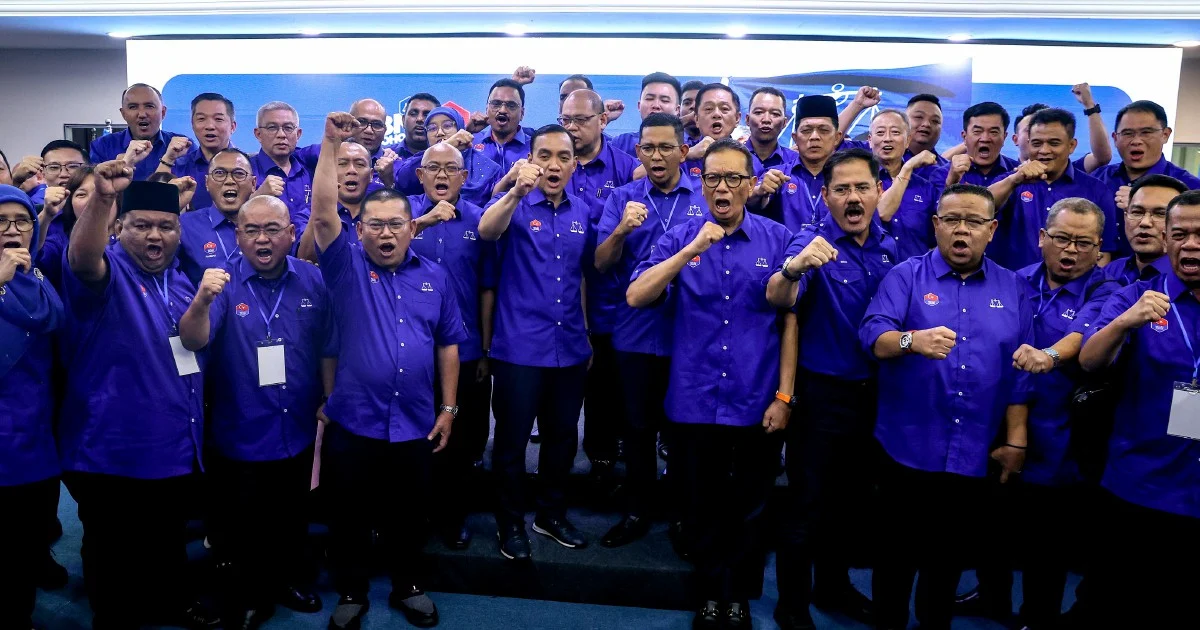
Speculation over a potential three-cornered political alliance in the Johor state election has effectively ended following Barisan Nasional's formal announcement of its candidate roster. The coalition released its full lineup of contenders, and notably absent from the list were any representatives or prominent figures from Parti Wawasan Negara, a small but strategically significant political player that had been rumoured to be negotiating entry into the electoral pact. The move clarifies BN's direction ahead of the polls and suggests the coalition leadership has opted to proceed with its established membership structure rather than expand to include additional parties.
The dissolution of these coalition rumours reflects the complex and fluid nature of Malaysian political arrangements, particularly in state-level contests where smaller parties often seek advantageous positioning. Wawasan, despite its modest parliamentary presence, had generated considerable discussion in political circles regarding its potential role in reshaping Johor's electoral landscape. The party had been viewed by some analysts as a potential bridge between competing interests, given its positioning outside the traditional BN-opposition dichotomy that has defined Malaysian politics for decades. However, BN's decision to move forward without formalising any cooperation signals confidence in its own machinery and possibly indicates that the gains from absorbing Wawasan were deemed insufficient to justify the complications of managing a larger coalition.
The Johor election itself carries substantial significance within the broader Malaysian political context. The state remains a crucial battleground where electoral performance carries implications for federal politics, given its large number of parliamentary constituencies and its demographic diversity spanning urban centres, industrial zones, and agricultural regions. For BN, maintaining or improving its position in Johor is essential to any future claim of renewed national dominance. The party has been rebuilding its electoral machinery following the 2022 general election, which saw it lose its parliamentary majority for the first time since independence. A strong showing in state contests, particularly in strategically important states like Johor, would provide crucial momentum and demonstrate that the electorate's verdict can be reversed.
The absence of Wawasan from BN's candidate list also requires examination of what this means for the party itself. Wawasan, led by Mohsin Frick, has positioned itself as an alternative voice in Malaysian politics, advocating for reformist principles while maintaining distance from both BN and the opposition Pakatan Harapan coalition. The party's failure to secure cooperative arrangements with BN in Johor may limit its direct electoral prospects in the state, though it could still contest on its own or pursue targeted participation in specific constituencies. For a nascent political entity, such setbacks can test organisational resilience and membership confidence, particularly if supporters perceive the leadership as ineffective in securing political advancement.
PAS, the other party mentioned in conjunction with the coalition rumours, presents an interesting variable in this equation. The Islamic party has substantially altered Malaysian politics in recent years, particularly through its partnership with BN in several contexts while maintaining an independent trajectory in others. PAS's current positioning and role in the Johor contest will be worth monitoring, as it may indicate whether BN is maintaining flexibility in negotiating separate arrangements with different potential partners, even while declining to broaden the formal coalition structure. The party's electoral strength in rural areas and among conservative constituencies makes it a force that BN cannot easily dismiss, regardless of formal coalition status.
From a Malaysian perspective, this development underscores the continuing fragmentation of the political landscape into smaller parties seeking advantageous positioning rather than the emergence of coherent alternative political structures. Wawasan's experience reflects the difficulties facing new entrants to Malaysian electoral politics, where incumbent parties with established networks and resources maintain significant structural advantages. The inability to secure cooperation agreements with major coalitions can severely constrain a small party's growth trajectory, as it limits access to machinery, funding networks, and voter visibility that larger organisations can provide.
The strategic implications for Southeast Asian politics more broadly relate to how established coalitions respond to fragmentation. BN's choice to proceed without Wawasan suggests confidence that its traditional base and expanded alliance with PAS remain sufficient for electoral success in Johor. This approach preserves internal coalition cohesion and avoids the complications of managing additional interests and constituencies, though it also passes up potential opportunities to absorb political competitors or new constituencies. The decision reflects a calculation that consolidation around existing partners offers better risk management than expansion.
Looking forward, the Johor election will serve as a significant test of BN's organisational recovery and electoral viability. The candidate slate unveiled represents the party's judgment about which individuals can best translate the coalition's resources into electoral success. For opposition parties, including Wawasan if it contests independently, the absence of any formal anti-BN coalition expansion opens possibilities for fragmented competition that could either dilute opposition strength or create unexpected electoral opportunities depending on local dynamics and voter sentiment in specific constituencies.

