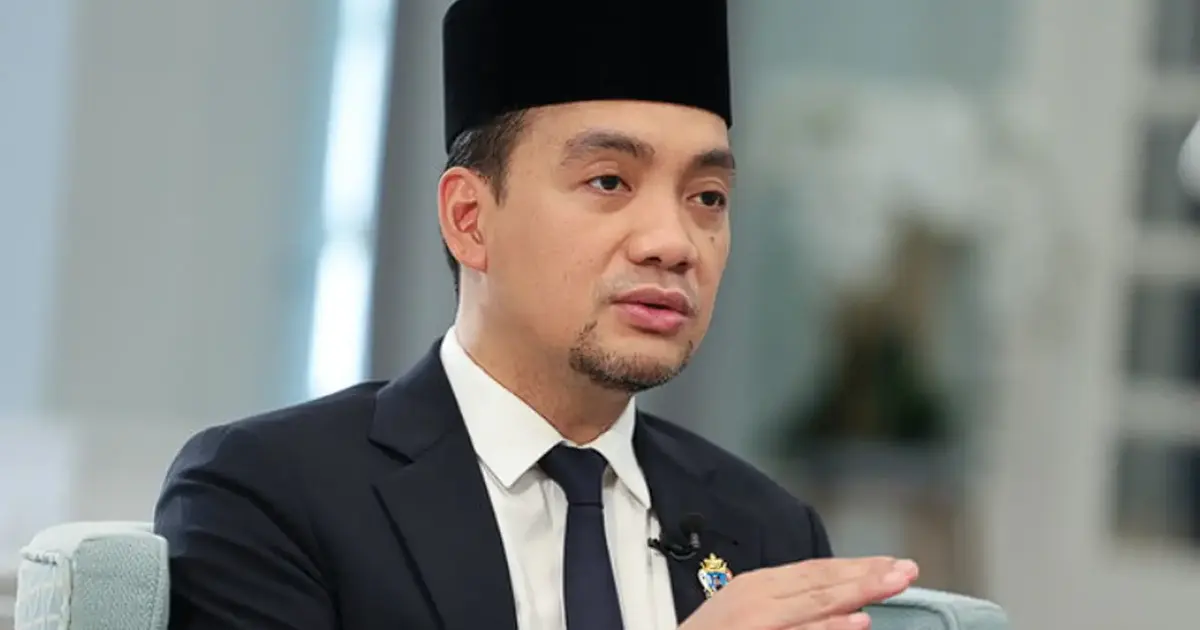
Johor's caretaker menteri besar Onn Hafiz has pushed back against suggestions that the sultan's approval for dissolving the state assembly represents an inappropriate incursion into political matters, characterising the process instead as a standard constitutional obligation rooted in Malaysia's governance framework.
The distinction Onn Hafiz draws is significant within the context of ongoing discussions about institutional checks and balances in Malaysian politics. When a menteri besar requests the dissolution of a state assembly, the reigning monarch must formally grant this permission—a procedure embedded in both the federal constitution and state constitutions. This royal assent is not discretionary intervention but rather a mandatory procedural step that gives legislative force to the request. The menteri besar cannot unilaterally dissolve the assembly without the sultan's formal approval, making the monarch's role fundamentally administrative rather than political in nature.
The clarification addresses a broader sensitivity in Malaysian politics around the relationship between the monarchy and elected government. Accusations of palace interference carry serious implications for democratic governance, potentially undermining public confidence in institutions if the sovereign power were perceived as arbitrarily overruling elected representatives. By framing royal assent as constitutional machinery rather than discretionary judgment, Onn Hafiz seeks to reassure stakeholders that procedural regularity has been observed. The monarch acts on advice and request from the elected government, following procedures laid out in written law rather than exercising independent political will.
Johor's particular constitutional arrangement derives from its status as a sultanate with specific historical arrangements. The relationship between the menteri besar and the Sultan of Johor involves multiple layers of consultation and approval, particularly regarding matters affecting the state assembly. These arrangements reflect Malaysia's hybrid constitutional system, which vests sovereignty in the people but reserves certain ceremonial and formal powers to the monarchy. The sultan cannot veto a dissolution request on whim; rather, the monarch must perform the formal action that legitimises it within the constitutional structure.
The timing of Onn Hafiz's remarks matters considerably. Johor politics has been volatile in recent years, with successive changes in government and leadership upheavals that have drawn public scrutiny. Dissolution announcements inevitably trigger speculation about behind-the-scenes manoeuvring, particularly when power transitions occur. By explicitly stating that the process is constitutional rather than political, the caretaker menteri besar attempts to dampen conspiracy theories and maintain institutional credibility during a sensitive period.
For Malaysian readers, understanding this distinction illuminates how federal and state systems actually function. The average observer may conflate royal involvement with political interference, but the constitutional mechanism separates formal assent from substantive decision-making. The elected government makes the political choice to dissolve; the monarchy provides the constitutional machinery to execute it. This separation preserves the theory that the monarch reigns above partisan politics whilst simultaneously ensuring that no single elected official possesses unilateral power over assembly dissolution.
The implications for Southeast Asian governance frameworks extend beyond Johor itself. Several countries in the region maintain constitutional monarchies, and debates about appropriate royal involvement in governmental processes remain relevant across jurisdictions. Malaysia's approach—where royal assent is required but essentially ceremonial—offers a middle path between absolute sovereignty vesting entirely in elected officials and monarchies that retain genuinely discretionary political authority. This model attempts to preserve institutional checks whilst respecting democratic principles.
Onn Hafiz's intervention also reflects changing expectations regarding transparency in Malaysian politics. Previous decades saw such matters handled with less public explanation; the decision to explicitly clarify the constitutional nature of royal assent suggests recognition that institutional legitimacy now requires public education about how systems operate. When procedures appear opaque or mysterious, scepticism flourishes. Clear explanation of what is merely procedural—versus what involves genuine political choice—helps restore confidence in institutions that have faced credibility challenges.
The caretaker status itself adds nuance to this discussion. During caretaker periods, government functions continue but the authority of the caretaker administration is technically limited to essential business. Dissolving the assembly and calling elections would seem to stretch beyond purely administrative duties, yet the constitutional requirement for royal assent arguably constrains how arbitrarily this power could be exercised. The sultan's involvement, even if merely formal, theoretically provides a safeguard against a caretaker administration overreaching its mandate.
For Johor specifically, this clarification matters because the state has experienced significant political turbulence. Multiple leadership changes and assembly elections within a compressed timeframe have generated public concern about governmental stability. Reassurances that procedures remain constitutional and that institutional checks continue operating—even during transitional periods—can help stabilise confidence in state institutions. Citizens who understand that the monarch's role is procedurally mandated may feel more assured that governance follows established rules rather than arbitrary decisions.
The broader Malaysian political conversation around royal assent continues to evolve. Whilst the monarchy's constitutional role remains largely ceremonial and procedural in practice, the formal requirement for royal approval preserves a layer of institutional review. Whether this mechanism ever functions as a genuine check on elected governments' power remains theoretically open, even if practical circumstances have rarely demanded it. Onn Hafiz's clarification affirms that the current dissolution follows standard constitutional pathways, asking the public to trust in institutional design rather than suspect hidden political manoeuvring.

