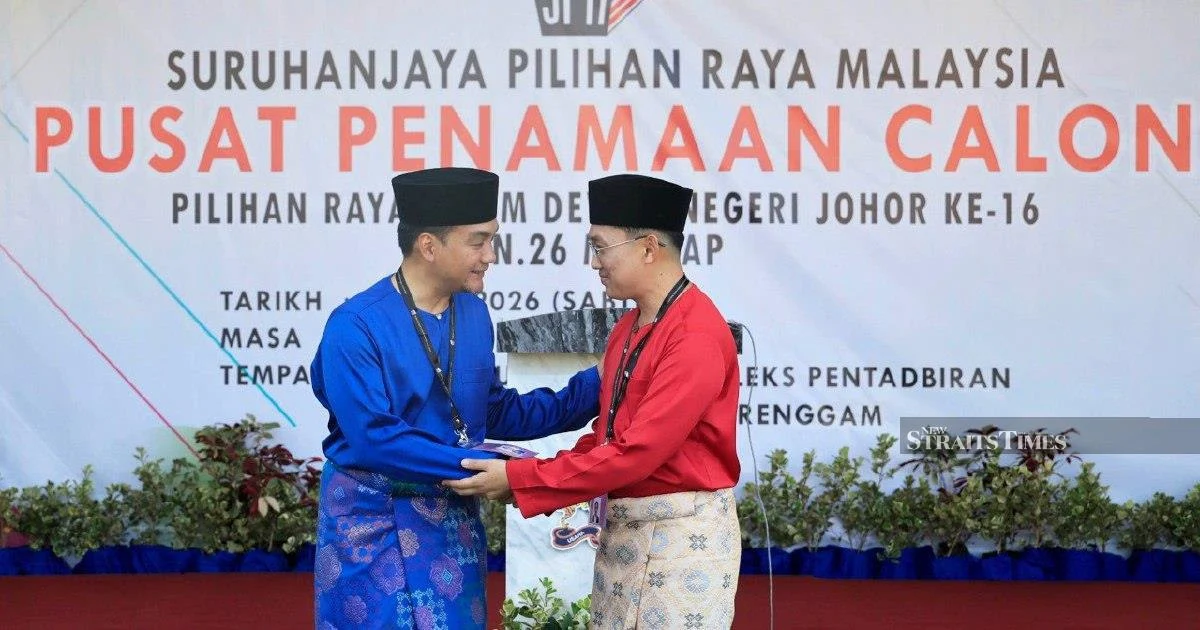
Caretaker Johor Menteri Besar Datuk Onn Hafiz Ghazi has acknowledged that the fortunes of the state's critical Machap constituency remain far from certain, cautioning supporters and observers alike that electoral outcomes in the region can defy expectations. Speaking in Simpang Renggam, the senior Barisan Nasional figure declined to project confidence about his second-term ambitions in the July 11 election, instead emphasising the volatile nature of political contests in the southern state.
The measured tone struck by Onn Hafiz reflects a broader recognition within Johor's political establishment that the Machap seat, despite its historical alignment with Barisan Nasional, faces genuine competitive pressure from opposition forces seeking to breach what has long been considered coalition stronghold territory. His acknowledgement that "anything can happen" serves as a reality check for both his own party machinery and external observers monitoring the state election dynamics ahead of polling day.
Machap has emerged as one of the focal points of the Johor election campaign, with heightened grassroots activity and campaign intensity suggesting that all contesting parties recognise the seat's strategic importance. The constituency's composition and voting patterns have made it symbolically significant for both Barisan Nasional's continued dominance in Johor and the opposition's efforts to make electoral inroads in the region, transforming what might otherwise be routine state elections into a contest with implications for national political calculations.
Onn Hafiz's political standing in Johor gives him substantial organisational resources and party machinery support, advantages that have traditionally benefited Barisan Nasional candidates in state-level contests across Malaysia. Yet his willingness to acknowledge electoral unpredictability suggests an awareness that such structural advantages no longer guarantee victory with the certainty they once did, reflecting broader shifts in Malaysian electoral behaviour where local issues and candidate-specific factors exercise greater influence over voter behaviour than in previous decades.
The Johor election arrives as the state continues to play an outsized role in Malaysian politics, given its size, population, and economic significance. Control of the state government carries implications that ripple far beyond Johor's borders, influencing not only policy priorities in the southern region but also factional dynamics within Barisan Nasional itself and the opposition coalition's strategic positioning ahead of any future national elections. Johor's electoral trajectory has thus become a closely watched barometer of broader political sentiment and party fortunes.
Onn Hafiz's caution reflects his experience navigating Johor's complex political terrain, where factional disputes within Barisan Nasional and between the coalition and opposition forces create an unusually fluid electoral environment compared to some other Malaysian states. The Machap contest specifically brings together these dynamics in microcosm, with local development priorities, incumbency factors, and personality-driven politics all playing a role in how voters ultimately cast their ballots.
Opposition parties contesting the Machap seat have invested considerable resources in voter outreach and campaign activities, sensing an opportunity to demonstrate their competitive viability in a state where Barisan Nasional has long exercised electoral dominance. The engagement from multiple opposition quarters in what might be a three-cornered or multi-cornered contest adds layers of complexity to the electoral mathematics, creating scenarios where vote splitting across opposition camps could benefit the incumbent, or conversely, where consolidated opposition support could pose serious challenges to Barisan Nasional's traditional hold on the constituency.
The caretaker period itself has created both opportunities and constraints for candidates across party lines. While Onn Hafiz benefits from the machinery and resources of the state government apparatus, he is also bound by conventions limiting what sitting ministers can do while caretaker status technically restricts executive action on politically sensitive matters. This creates a peculiar campaign environment where incumbency carries both advantages and limitations that candidates must carefully navigate.
Voter sentiment in Machap, like elsewhere in Johor, has been shaped by economic conditions, healthcare access, education provision, and infrastructure development priorities that directly affect household welfare. The July 11 election will ultimately turn on whether constituents believe Onn Hafiz and Barisan Nasional have adequately addressed these bread-and-butter concerns, or whether opposition candidates have successfully articulated a compelling alternative vision that resonates with local populations across different demographic segments.
Onn Hafiz's public acknowledgement of electoral unpredictability also serves a strategic communication purpose, potentially mobilising Barisan Nasional supporters who might otherwise assume victory is assured and therefore skip voting or conduct insufficient grassroots campaigning. By emphasising that the contest remains genuinely contested, the caretaker menteri besar may be attempting to generate the urgency and momentum needed to translate party organisational advantages into actual voter turnout and ballot-box success.
The Machap contest thus stands as a microcosm of Johor's broader electoral narrative, encapsulating the tensions between traditional Barisan Nasional dominance and emerging political forces challenging that hegemony. As polling day approaches, all parties recognise that voter choice in this single constituency will reverberate through state-level politics and contribute to broader assessments of Malaysia's shifting electoral preferences and the durability of long-established political alignments.

