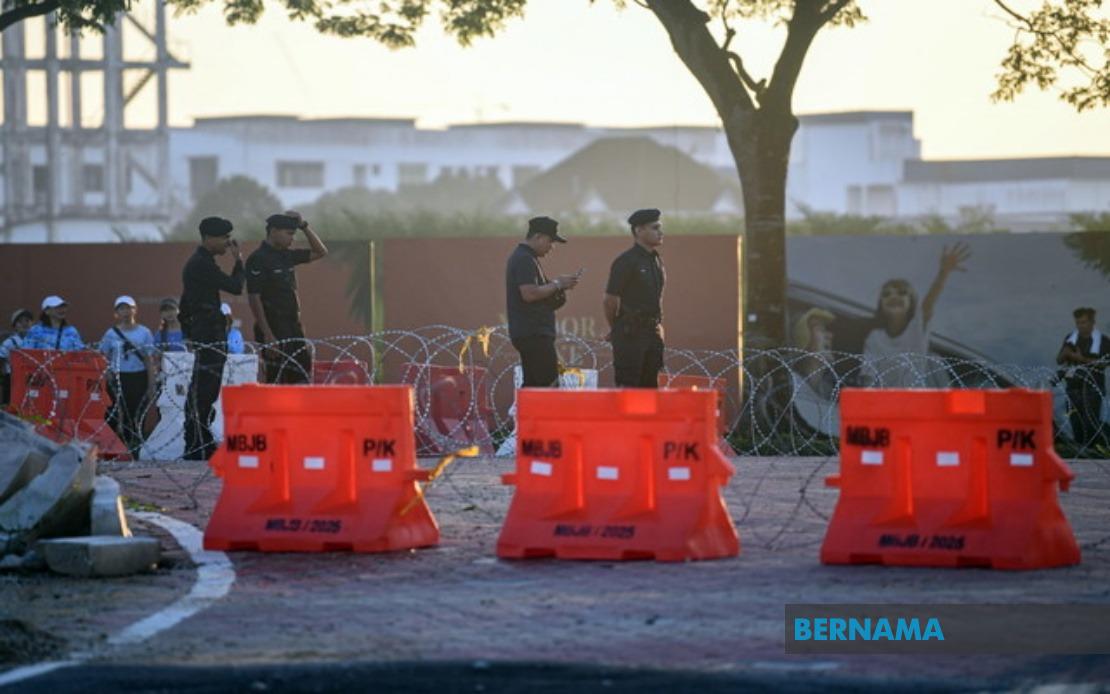
The nomination process for Johor's 16th state election unfolded without disruption on June 27, as favourable weather conditions and robust security arrangements enabled smooth candidate registration across all 56 nomination centres throughout the state. The Election Commission maintained an organised atmosphere at polling venues, with officials completing final administrative preparations before receiving nomination papers from 9am to 10am, setting a positive tone for the electoral exercise ahead.
Candidates and their supporters demonstrated considerable enthusiasm for the nomination period, with some party loyalists arriving at centres as early as 7.30am to lend visible support to their preferred contenders. This early mobilisation reflected the competitive nature of the election, with various political factions keen to project momentum during this crucial juncture. Security arrangements proved adequate throughout the day, with uniformed personnel positioned strategically at all nomination venues to prevent disruptions and maintain the orderly conduct essential for an election of this magnitude.
Weather conditions favoured the nomination proceedings, with the Malaysian Meteorological Department forecasting predominantly dry conditions throughout the morning hours in most Johor districts. The agency did issue warnings of afternoon thunderstorms in selected areas, yet these did not materially interfere with the nomination schedule or deter participation. This clement weather marked a fortunate circumstance for the administration, as poor conditions could have created logistical challenges in managing the volume of candidates and supporters expected across such a wide geographic area.
The Johor State Legislative Assembly comprises 56 seats, and the exercise follows the dissolution of the state assembly announced on June 1. The Election Commission has scheduled early voting for July 7, with the main polling day fixed for July 11. This compressed timeline means candidates had limited opportunity to mount campaigns, making the nomination day particularly significant as the formal launch of competitive electioneering across the state.
The electoral rolls reveal a substantial voting population that will determine the outcome. Commission statistics indicate 2,727,926 registered voters across Johor, comprising 2,703,175 ordinary electors, 12,041 military personnel and their family members, and 12,710 police officers and their spouses. This electorate represents a diverse cross-section of Malaysian society, spanning urban and rural constituencies with varying demographic profiles and political allegiances.
The orderly nomination process carries implications for Malaysia's broader electoral system and democratic culture. A smooth nomination day suggests institutional capacity within the Election Commission to manage large-scale electoral events efficiently, an important reassurance for stakeholders concerned about electoral integrity and administrative competence. The visible presence of security personnel and the disciplined behaviour of party supporters indicate a political environment where constitutional rules governing elections command respect across competing organisations.
Johor's state election holds particular significance within Malaysian politics, as the state represents a substantial population centre and electoral battleground. The outcome carries implications for national political dynamics, as shifts in Johor's political alignment can influence broader coalition calculations at federal level. Several major political parties have invested considerable resources in the state, anticipating a competitive contest that could reshape regional power balances.
The nomination process itself serves as a barometer of candidate quality and party organisational capacity. The presence of strong candidate slates across multiple parties indicates active political competition, with various organisations confident enough to contest most or all 56 seats. This breadth of participation suggests genuine electoral competition rather than a predetermined outcome, a factor that contributes to public engagement and perceived legitimacy of the final result.
As Johor moves toward the final stages of its electoral cycle, the successful nomination day provides administrative foundation for subsequent phases. The efficient handling of candidate registrations across 56 geographically dispersed centres demonstrates operational planning and coordination capabilities. The Election Commission's performance during this phase will likely set expectations for the management of early voting and polling day itself, making this smooth inauguration of the electoral process symbolically important for public confidence.
The coming weeks will test whether the discipline and order evident during nomination day carries through to the campaign period and ultimately the ballot itself. Political campaigns often generate intensity and passion that can strain institutional frameworks, yet the professionalism displayed by election officials and the cooperation demonstrated by party organisations suggests capacity to manage this electoral exercise within constitutional bounds. Malaysian observers will be monitoring Johor closely as an indicator of the country's ongoing commitment to free and fair elections.

