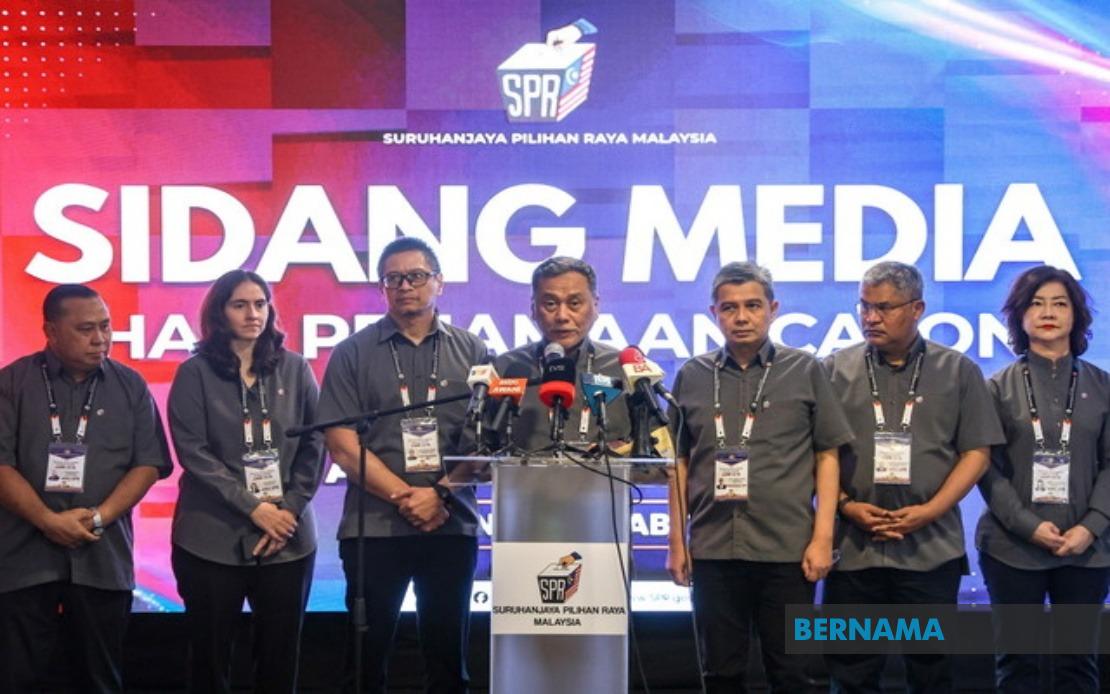
The Election Commission announced on June 27 that exactly 172 candidates have been approved to contest the 16th Johor state election, completing the nomination process across all 56 nomination centres without any disqualifications. This marks a significant moment in the state's electoral cycle, as voters prepare for what is expected to be a closely watched contest reflecting broader political dynamics across Malaysia.
Election Commission chairman Datuk Seri Ramlan Harun disclosed that all nomination papers submitted were accepted following the closure of nominations at 10 am. The candidate roster comprises 138 men and 34 women, reflecting ongoing gender representation patterns within Malaysia's political parties. The acceptance of every submission without a single disqualification suggests that administrative requirements were met uniformly across the nomination period.
The two major coalitions have emerged as the frontrunners in terms of candidate deployment. Barisan Nasional and Pakatan Harapan are each contesting the maximum number of seats, with 56 candidates apiece. This equal distribution indicates both coalitions are committed to a comprehensive campaign across the entire state. Perikatan Nasional, which has gained significant ground in recent Malaysian elections, is fielding 33 candidates, positioning itself as a substantial third force in the competition.
Smaller political entities are also participating in the electoral contest. Parti Bersama Malaysia is contesting 15 seats, suggesting it has prioritised certain constituencies over others. The Malaysian United Democratic Alliance (MUDA), a relative newcomer to Malaysian politics that has gained traction among younger voters, is putting forward four candidates. Both Parti Orang Asli Malaysia (Asli) and Parti Sosialis Malaysia (PSM) have nominated single candidates, likely in constituencies where they perceive particular strength or symbolic importance. Additionally, six independent candidates are contesting, representing individuals who have chosen not to align with any registered political party.
The distribution of contests across the 56 seats reveals a varied competitive landscape. Fourteen seats are expected to feature straight fights between just two candidates, the simplest electoral scenario. These contests typically emerge in constituencies where one candidate faces a single primary challenger, often indicating areas of established political strength or weakness for particular parties. The majority of seats—27 in total—will see three-cornered contests involving three candidates each, representing the most common competition format. Twelve constituencies will feature four-candidate contests, while three seats will see five candidates competing, creating more fragmented contests where no single candidate may achieve a clear majority of votes.
For Malaysian political observers, the Johor election carries considerable weight beyond the state itself. Johor is Malaysia's second-most populous state and has historically served as a barometer for broader political sentiment. The state's electoral outcome often influences national political calculations and coalition-building strategies. The relatively high number of three-cornered and multi-candidate contests suggests that traditional two-coalition polarisation has been disrupted by the emergence of multiple political alternatives, particularly Perikatan Nasional's significant presence.
The gender composition of the candidate field merits examination within Malaysia's broader political context. The 34 female candidates represent approximately 19.8 percent of the total field, reflecting persistent gender imbalances in political representation despite increasing calls for greater inclusion. This proportion, while notable, remains below parity and suggests that Malaysian political parties continue to face internal barriers or strategic considerations affecting women's nomination rates.
The nomination process itself, conducted simultaneously across 56 centres nationwide, represents a considerable logistical undertaking by the Election Commission. The successful completion without disqualifications indicates that political parties had carefully vetted their candidates beforehand to ensure compliance with electoral requirements. This reflects an understanding that disqualifications can damage party credibility and signal internal organisational problems.
For Johor's electorate, the diversity of candidates and parties presents both opportunity and complexity. Voters in certain constituencies will enjoy expanded choice, while those in straight-fight areas will face more limited options. The multi-party competition, while offering ideological and policy diversity, may also fragment the vote and create scenarios where winners emerge with relatively modest vote shares relative to total votes cast.
The timing of the Johor election and its specific configuration—following recent national political developments and conducted during a period of ongoing political realignment—means the results will likely reverberate across Malaysia's political landscape. State elections frequently serve as testing grounds for national strategies, and the performance of the various coalitions and parties in Johor will provide indicators for how different constituencies and demographic groups respond to current political offerings.
Looking ahead, the campaign phase will determine which of these 172 candidates ultimately secure victory. The Election Commission has established the framework; political parties must now mobilise their resources and messaging to secure voter support across the distinctive terrain of Johor's 56 constituencies, each with its own demographic profile, historical voting patterns, and local issues.

