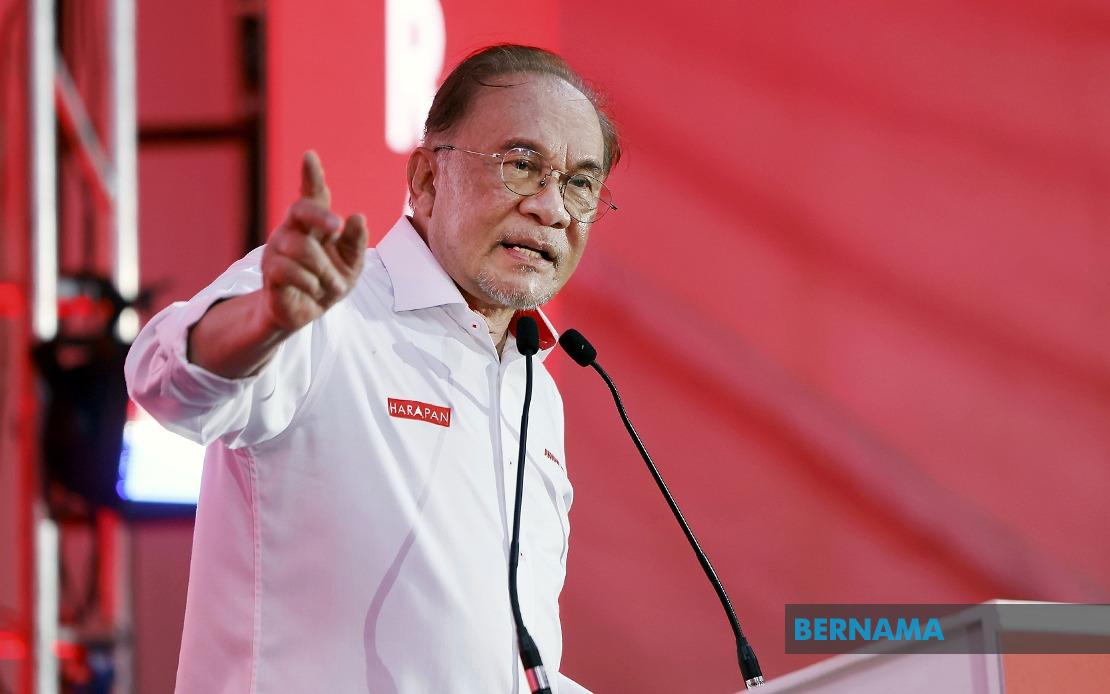
Prime Minister Datuk Seri Anwar Ibrahim has called on voters in Johor to elect leaders capable of navigating complex priorities and making difficult decisions while remaining attuned to community concerns. Speaking in Johor Bahru on July 4, the Pakatan Harapan chairman emphasised that the state requires representatives who combine intellectual rigour with decisiveness and authentic grassroots understanding. His message signals PH's determination to position itself as a serious governing alternative ahead of the 16th Johor state election scheduled for July 11.
Anwar's appeal reflects broader anxieties within Malaysia's political landscape regarding leadership quality and responsiveness. The framing of leadership competence as a central campaign message suggests PH believes voters are increasingly focused on tangible governance outcomes rather than partisan loyalty alone. This strategic pivot acknowledges shifting voter expectations, particularly in economically significant states like Johor, which has historically served as a bellwether for broader Malaysian political trends. By emphasising wisdom and courage, Anwar positioned his coalition as the custodian of pragmatic, results-oriented governance.
The Prime Minister stressed that Pakatan Harapan remains committed to advancing Johor's development while safeguarding the state's distinct interests within the Malaysian federation. He articulated a vision of collective progress transcending ethnic and religious lines, calling for Malays, Chinese, Indians and other communities to work collaboratively in nation-building. This multi-ethnic framing carries particular weight in Johor, where demographic diversity and economic interdependence create both opportunities and tensions that require sophisticated political management. Anwar's emphasis on inclusive development signals an attempt to build consensus across traditional political divides.
The coalition has mounted an ambitious campaign effort, fielding candidates in all 56 state constituencies. Pakatan Harapan's candidate distribution reflects its internal coalition structure: PKR fielded 20 candidates, Amanah contributed 19, and DAP presented 17 aspirants. This allocation demonstrates how Malaysia's coalition politics operates through proportional representation among partner parties, each maintaining distinct organisational identity while operating under a common banner. The comprehensive slate suggests confidence in PH's competitive position, though the party faces substantial organisational and resource challenges in a state where it historically struggled against the entrenched Barisan Nasional infrastructure.
Anwar personally inaugurated Pakatan Harapan's campaign with an intensive schedule encompassing seven programmes across multiple Johor locations on the campaign's opening day. This hands-on approach reflects the centrality of the Prime Minister's personal brand to PH's electoral strategy. By personally engaging communities through direct meetings, public addresses and social interactions, Anwar sought to reinforce messages of accessibility and genuine concern for grassroots welfare. Such intensive engagement early in the campaign serves multiple functions: it energises party machinery, provides media momentum, and signals serious investment in victory rather than token participation.
The campaign activities focused heavily on community engagement and voter mobilisation. Programmatic elements included meetings with residents, public talks addressing voter concerns, socialising with community leaders, and participation in local events. These varied activities reflect recognition that electoral competition increasingly depends on demonstrating responsiveness to diverse community needs and building personal connections between representatives and constituents. The emphasis on community engagement over traditional mass rallies suggests evolving campaign tactics within Malaysian electoral politics, reflecting voters' preference for personalised interaction over distant rhetoric.
Despite Pakatan Harapan's comprehensive candidate slate, the Johor election presents a highly competitive landscape. Overall, 172 candidates contested the 56 state seats, indicating that multiple parties and independent candidates were contesting aggressively. This fragmentation creates both opportunities and risks for PH: while opposition splits might benefit the coalition, the sheer number of alternatives suggests voter sentiment remains volatile and unpredictable. The breadth of candidacies reflects ongoing fluidity in Malaysian electoral coalitions, with various parties and local operatives seeking to position themselves advantageously regardless of formal party affiliations.
For Malaysian readers and regional observers, the Johor state election carries significance extending beyond local politics. Johor's economic importance—it hosts major manufacturing and logistics sectors integral to Malaysian commerce—means that governance quality directly affects economic performance. State-level decisions regarding land use, business licensing, infrastructure investment and labour relations influence investment flows and competitiveness. Therefore, the campaign's emphasis on leadership competence resonates with legitimate concerns about whether elected representatives can effectively manage complex economic governance challenges.
The election schedule provides voters with limited deliberation time. Early voting occurred on July 7, with general polling day on July 11, compressing the formal campaign period into approximately one week. This accelerated timeline reflects Malaysian electoral commission procedures and state-specific scheduling but creates challenges for voter information gathering. During compressed campaigns, established parties with existing communication infrastructure and brand recognition, like both PH and its competitors, enjoy substantial advantages over new entrants or less-resourced candidates.
Anwar's campaign messaging strategically emphasised inter-communal cooperation and shared development objectives rather than divisive identity politics. This rhetorical choice reflects Pakatan Harapan's foundational commitment to inclusive governance while acknowledging Johor's demographic complexity. In a state where Chinese and Indian populations represent significant voting blocs, messaging that explicitly welcomes and values minority participation carries practical electoral weight. Simultaneously, reaffirming commitment to Malay and Muslim interests prevents accusations of abandoning any community's interests—a constant challenge for multi-ethnic coalitions in Malaysian politics.
The broader context of Johor state politics involves ongoing tensions between federal and state governance, particularly regarding resource distribution and policy autonomy. Johor's relationship with the national government influences voter calculations, as residents consider whether state representatives can effectively advocate for local interests within federal structures. Anwar's emphasis on defending Johor's interests alongside driving development suggests PH recognises this dynamic and seeks to position itself as a capable interlocutor between state constituents and national governance structures.
Packaging the campaign through social media, particularly Anwar's official Facebook announcement, reflects adaptation to contemporary communication preferences. Digital platforms enable direct candidate-to-voter communication bypassing traditional media filtering, though they simultaneously facilitate rapid rumour propagation and information fragmentation. The choice to launch campaign messaging through social channels indicates PH's recognition that significant voter segments, particularly younger demographics, receive political information through digital networks rather than traditional broadcasting or print media.
As Johor voters prepare to cast ballots, the fundamental question underlying Anwar's messaging remains whether contemporary Malaysian voters prioritise leadership competence and responsiveness or other factors including partisan loyalty, identity considerations, and performance evaluations of previous administrations. The election results will provide important indicators regarding voter preferences and the effectiveness of PH's campaign positioning, with implications for broader Malaysian electoral dynamics and federal-state political relationships heading into future national balloting.

