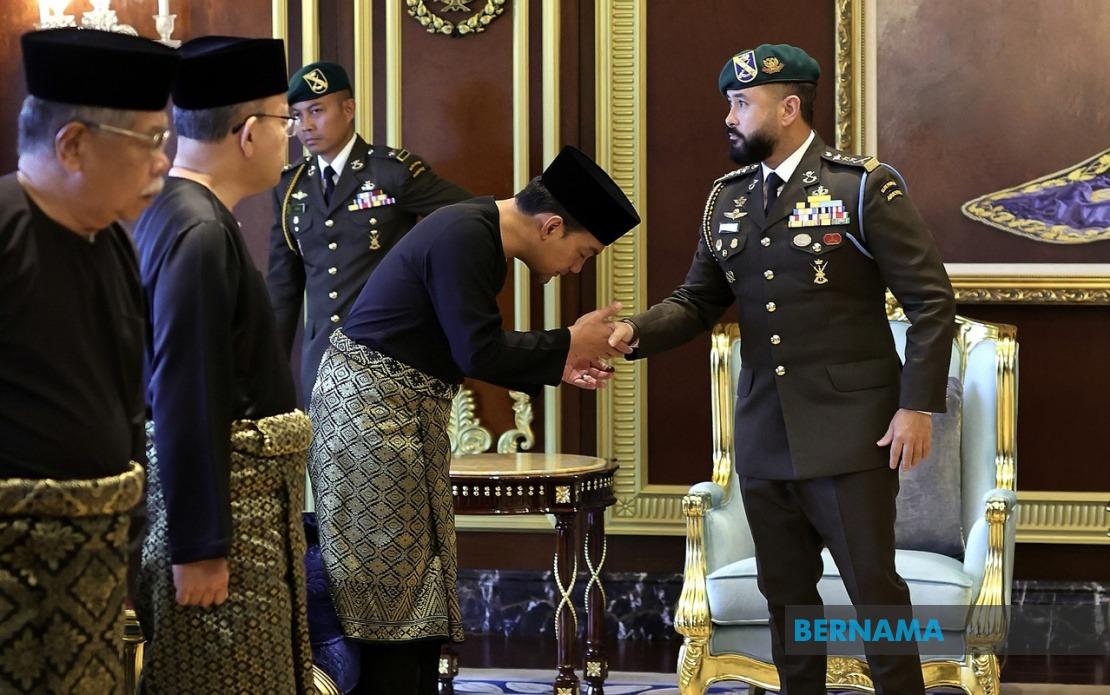
Members of Johor's reconstructed State Executive Council will formally assume office on July 17 in a ceremony at Istana Bukit Serene, marking the culmination of the state's recent electoral process. The Regent of Johor, Tunku Mahkota Ismail, will preside over the swearing-in event, underscoring the constitutional significance of the occasion. The gathering represents a key moment of transition as Johor's new administration prepares to govern the state following decisive electoral endorsement.
The ceremonial proceedings have been scheduled to commence at 9.30 am, with media access granted through both primary entrances to the palace. Distinguished attendees will include Menteri Besar Datuk Onn Hafiz Ghazi, who recently commenced his fresh term leading the state government, alongside Johor Council of Royal Court president Datuk Dr Abdul Rahim Ramli and state secretary Datuk Mohammed Ridha Abd Kadir. The presence of these senior officials underscores the formal nature of the proceedings and their role in witnessing the constitutional oath-taking of the executive contingent.
This ceremony arrives shortly after Datuk Onn Hafiz Ghazi's personal inauguration as Menteri Besar on July 12, an event that itself followed a resounding mandate delivered through the electoral ballot. The political momentum behind the new administration stems from Barisan Nasional's emphatic performance in the 16th Johor State Election, where the coalition captured 48 of the state's 56 legislative seats. Such a substantial parliamentary majority provides the incoming executive council with considerable legislative latitude to implement governance priorities across the coming term.
The scale of BN's triumph in Johor carries particular significance within Malaysia's contemporary political landscape. The state represents one of the nation's most crucial political battlegrounds, historically alternating between competitive multi-party contests and periods of dominant-party governance. The coalition's decisive performance therefore signals substantial voter confidence in its platform and regional political standing, while simultaneously establishing a stable governmental foundation for addressing Johor-specific development challenges and constituent needs.
For Malaysia's broader political ecosystem, the Johor results offer important indicators regarding public sentiment and coalition strength heading into future national electoral cycles. As the second-most populous state and an economic powerhouse anchoring Malaysia's southern corridor, Johor's political direction influences national political calculations. The comprehensive nature of BN's victory suggests the coalition has successfully reconnected with substantial portions of the electorate, reversing previous electoral setbacks and rebuilding its organizational capacity at the state level.
The incoming executive council will inherit a portfolio of ongoing development initiatives and administrative challenges typical of a state of Johor's scale and complexity. Economic diversification, infrastructure modernization, inter-district connectivity, and social service delivery remain perennial governance priorities. The council's composition and allocation of ministerial portfolios, to be publicly revealed during the swearing-in ceremony, will signal the administration's policy emphasis and reveal how it intends to distribute responsibilities among its members.
The institutional framework within which the new executive council will operate reflects Malaysia's constitutional system of state governance, whereby the Menteri Besar exercises chief executive authority subject to the Yang di-Pertuan Agong's constitutional prerogatives and the state assembly's legislative oversight. The formal oath-taking ceremony reinforces this constitutional structure by invoking the Regent's role as ceremonial embodiment of state sovereignty. Such constitutional formalism, while occasionally appearing merely procedural, carries substantive weight in affirming governmental legitimacy and continuity.
Johor's electoral outcome also reflects broader voting patterns within Malaysia's peninsula states, where the electorate has demonstrated willingness to reward effective governance and punish perceived administrative shortcomings. The decisive margin suggests voters responded positively to BN's campaign messaging and governance record, whilst effectively rejecting alternative political offerings. Understanding these voter preferences requires examining specific local issues, campaign effectiveness, incumbent performance records, and the comparative appeal of competing manifestos within Johor's particular socioeconomic and demographic context.
The swearing-in ceremony itself represents a moment of administrative renewal and institutional continuity. While political competition remains vigorous within democratic systems, the peaceful transfer of executive authority and the constitutional framework governing such transitions constitute foundational elements of stable governance. The ceremonial dimensions—the oath-taking, the Regent's presence, the formal gathering of state officials—all serve to emphasize these constitutional and democratic foundations even as the newly installed council pursues its governing agenda.
Looking forward, the council's performance over the coming term will shape Johor's developmental trajectory and potentially influence subsequent state and national electoral contests. Early policy announcements and administrative appointments will signal the administration's priorities and competence. Regional observers and stakeholders across Southeast Asia maintain interest in Malaysian state governance, viewing it as indicative of the nation's broader democratic health and institutional functionality. Johor's new executive council thus assumes office not merely as a state-level administrative body but as a significant element within Malaysia's democratic and constitutional architecture.

