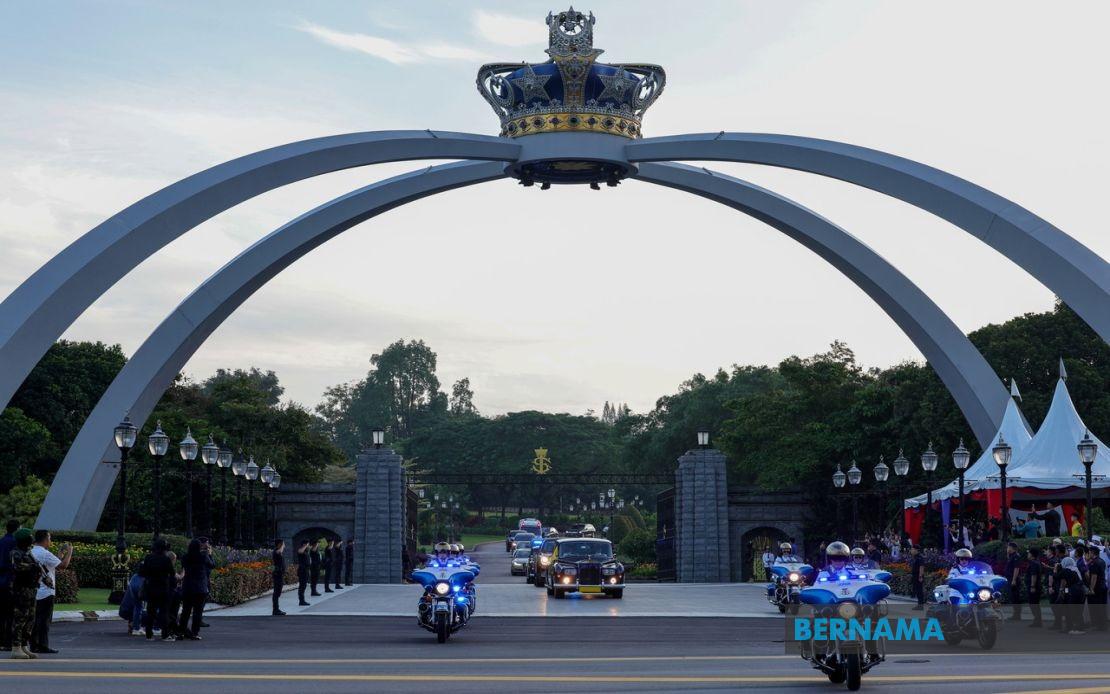
A swearing-in ceremony for Johor's new Menteri Besar is set to take place at Istana Bukit Serene this afternoon at 3 pm, the Johor Palace confirmed through invitations distributed to media outlets. The ceremonial event marks the formal investiture of the state's chief executive following the Barisan Nasional's emphatic performance in yesterday's state elections, though the palace announcement stopped short of publicly naming the individual designated for the position ahead of the official proceedings.
According to the palace notification, journalists and photographers will be granted access to cover the historic moment from the Crown Arch entrance, known locally as Pintu Mahkota, ensuring media representation at this significant constitutional ceremony. The tightly controlled media arrangements reflect standard protocols for such high-level state functions, where access points are typically designated in advance to manage logistics and security at the royal residence.
The announcement came after Sultan Ibrahim Iskandar received Barisan Nasional chairman Datuk Seri Ahmad Zahid Hamidi at Istana Pasir Pelangi earlier in the day. The extended audience, lasting approximately one hour, also included Johor's BN state chairman Datuk Onn Hafiz Ghazi, signalling the culmination of post-election negotiations and consultations that would determine the composition of the new state administration. These background meetings with the Sultan represent a critical stage in Malaysia's constitutional process, where the monarch formally assesses the political landscape before directing the appointment of the chief minister.
Barisan Nasional's electoral dominance provides substantial legitimacy for the incoming administration's mandate. The coalition captured 48 of the 56 state seats contested in yesterday's election, delivering a clear-cut victory that grants the new government considerable room for legislative action without dependence on independent representatives or cross-party support for routine parliamentary business. This decisive outcome strengthens the incoming Menteri Besar's authority in steering state policy across the five-year term and managing the state's administrative machinery with minimal internal political constraints.
For Malaysian federalism, Johor's political outcome assumes particular significance given the state's status as the country's second-largest by population and its position as an economic powerhouse anchoring Malaysia's southern corridor. The state government's decisions on infrastructure, land development, investment attraction, and inter-state coordination directly influence regional prosperity and national growth trajectories. The strong mandate secured by BN reflects voter sentiment in the state and provides the new leadership with electoral legitimacy to pursue its governance agenda without the complications that minority or fragile governments often encounter.
The timing of today's swearing-in ceremony follows established constitutional conventions, occurring swiftly after the electoral verdict to minimise periods of governmental interregnum. Media personnel had already begun positioning themselves at the Menteri Besar's official residence in Saujana and around Istana Bukit Serene's perimeter since midday, tracking unfolding developments and awaiting confirmation of the appointment. This intensive news coverage underscores the public interest in determining which political figure would helm the state administration and shape Johor's trajectory over the coming years.
The palace's decision to withhold the appointee's name until the formal ceremony itself reflects traditional Malaysian constitutional practice, whereby the Sultan makes the official designation in a formal setting rather than through public announcement beforehand. This ceremonial approach maintains the dignity of the process and ensures that the Ruler's constitutional prerogative receives appropriate recognition, even in an era of contemporary political transparency. The formal swearing before His Majesty transforms the appointment from political selection into constitutional obligation, binding the office-holder to uphold the state constitution and discharge duties faithfully.
Barisan Nasional's commanding performance in Johor carries implications extending beyond the state itself. As one of Malaysia's most politically significant state contests, Johor's result provides momentum for the federal coalition and demonstrates the party machinery's capacity to mobilise support across diverse constituencies. The coalition's previous experience in managing the state—having held power for decades before recent opposition gains—means substantial administrative continuity in state operations, with many officials and structures remaining consistent with prior BN administrations.
The new Menteri Besar will inherit a state government apparatus managing economic zones, agricultural lands, seaports, and industrial corridors that generate substantial revenue for both the state and federal governments. The successful execution of development projects, maintenance of investor confidence, and effective delivery of public services will define the new administration's performance metrics during its tenure. Additionally, the state government's relationship with the federal administration, particularly on matters involving resource allocation, infrastructure funding, and coordinated development planning, will significantly impact Johor's capacity to realise its growth potential and address pressing challenges in education, healthcare, and urban planning.
The formal ceremony at Istana Bukit Serene will formally complete the constitutional process initiated by Sultan Ibrahim Iskandar's electoral mandate assessment. Once the oath is administered, the new Menteri Besar gains full constitutional authority to exercise executive powers on behalf of the state, form a cabinet, direct civil servants, and initiate the legislative agenda that will define the administration's priorities and policy direction for its constituents.

